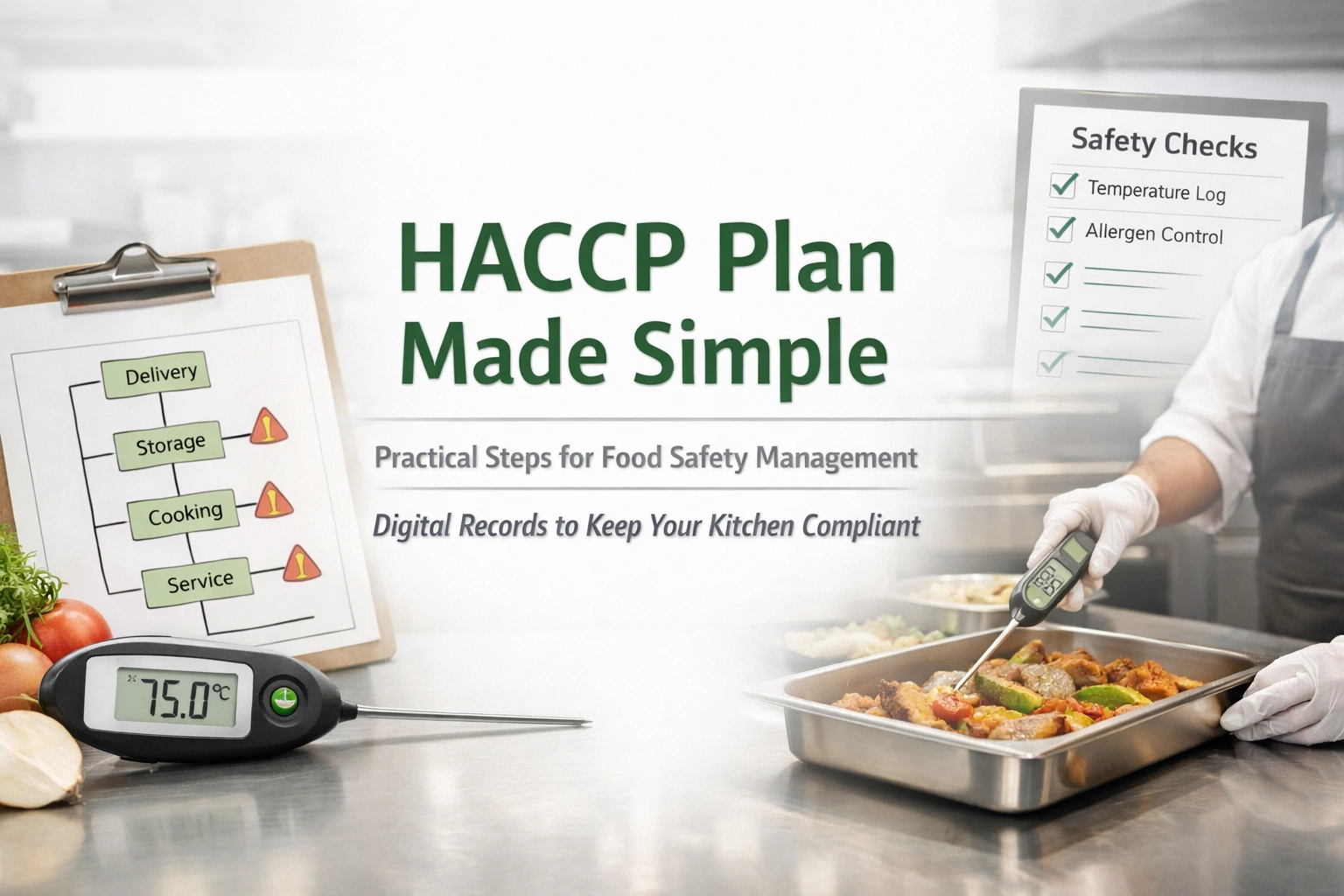
Busy food business owners can manage food safety management more easily with practical HACCP records, digital food safety records, and simple tools that fit real kitchens.
Table of Contents
- What a HACCP Plan Is and Why It Matters
- HACCP and Legal Compliance in the UK
- Why Traditional HACCP Records Often Fail
- How to Build a Practical HACCP Plan
- Everyday Catering Examples
- Using Digital Tools and Free HACCP Support
- Conclusion: Making Food Safety Easier
What a HACCP Plan Is and Why It Matters
If you run a café, restaurant, takeaway, or catering business in the UK, you’re legally required to have food safety management procedures based on HACCP principles. HACCP (Hazard Analysis and Critical Control Points) is simply a structured way of thinking about what could go wrong with food safety and how you prevent it.
A good HACCP plan doesn’t sit on a shelf gathering dust. It supports how food is handled day to day, helping staff understand risks and controls while protecting customers. When done properly, it forms the backbone of effective food safety management.
HACCP and Legal Compliance in the UK
UK food law requires food businesses to identify hazards, put controls in place, and keep appropriate HACCP records. Environmental Health Officers don’t expect complicated paperwork, but they do expect evidence that risks are understood and managed.
Your food hygiene rating depends heavily on how well you manage food safety, not just how clean the kitchen looks. Clear HACCP records help demonstrate that controls are in place, monitored, and reviewed. Poor or missing documentation is a common reason businesses struggle to improve food hygiene ratings.
Why Traditional HACCP Records Often Fail
Many catering businesses rely on paper folders or generic templates that don’t reflect how they actually work. Common problems include:
- HACCP documents that are copied from elsewhere and don’t match the menu
- Records that are hard to update when dishes or processes change
- Staff unsure what the paperwork means in practice
- Reviews forgotten because they feel like extra admin
Even businesses handling food safely can run into trouble if their HACCP records don’t clearly show how risks are controlled.
How to Build a Practical HACCP Plan
A workable HACCP plan doesn’t need technical language or complex charts. It needs to reflect real kitchen activity.
Step 1: Map Out What You Do
Write down the main steps for your food, such as delivery, storage, preparation, cooking, cooling, and service. This helps you see where problems could occur.
Step 2: Identify the Risks
At each step, consider:
- Bacteria growth from poor temperature control
- Cross-contamination between raw and ready-to-eat food
- Chemical contamination from cleaning products
- Allergen management risks, such as shared equipment
Step 3: Decide How You Control Those Risks
Controls might include cooking temperatures, cleaning routines, separation of allergen ingredients, or fridge temperature checks. These controls should reflect what already happens in your kitchen.
Step 4: Record and Monitor
Decide how you’ll prove controls are working. This is where HACCP records matter. Temperature logs, cleaning schedules, and allergen checks all support your plan.
Step 5: Review and Update
Menus change, staff change, and equipment changes. Your HACCP plan should be reviewed whenever something changes, not just once a year.
Everyday Catering Examples
For example, if you run a takeaway:
- Delivery checks protect your chilled storage limits
- Cooking temperature checks control bacteria risks
- Cleaning schedules reduce cross-contamination
- Allergen labelling and separation support allergen management
These everyday tasks already exist. A HACCP plan simply ties them together so inspectors can clearly see how food safety is controlled.
Using Digital Tools and Free HACCP Support
Managing HACCP records on paper can be time-consuming and inconsistent. Digital food safety records help by keeping everything in one place, making it easier to update plans and show compliance during inspections.
If you’re starting from scratch or want help structuring your plan, you may find it useful to try a free HACCP planning tool. This detailed HACCP planner can help you think through hazards, controls, and records step by step, without needing technical knowledge.
For ongoing day-to-day management, Food-Safety.app is a food safety management system for UK catering businesses designed to support digital food safety records, HACCP records, allergen management, and routine checks in a practical way that fits busy kitchens.
Conclusion: Making Food Safety Easier
HACCP planning doesn’t have to be complicated or overwhelming. When plans are built around real processes, supported by clear records, they become a useful working tool rather than a box-ticking exercise.
Using simple digital systems and free planning tools can make food safety management easier, more consistent, and less stressful. For businesses looking to improve food hygiene ratings and keep compliance under control, a structured food safety app can be a helpful next step in making HACCP work in practice.