
Why food risk levels matter day to day
Not all foods behave the same way. Some allow bacteria to grow very quickly. Others don’t support bacterial growth at all. Treating all foods the same can lead to mistakes, especially in busy environments.
Most food poisoning cases come from a small number of foods that weren’t handled correctly. This might be food left out too long, cooled too slowly or contaminated by raw ingredients.
Knowing which foods are high-risk helps you focus your time and attention where it matters most. That means safer food, fewer problems and less stress during inspections.
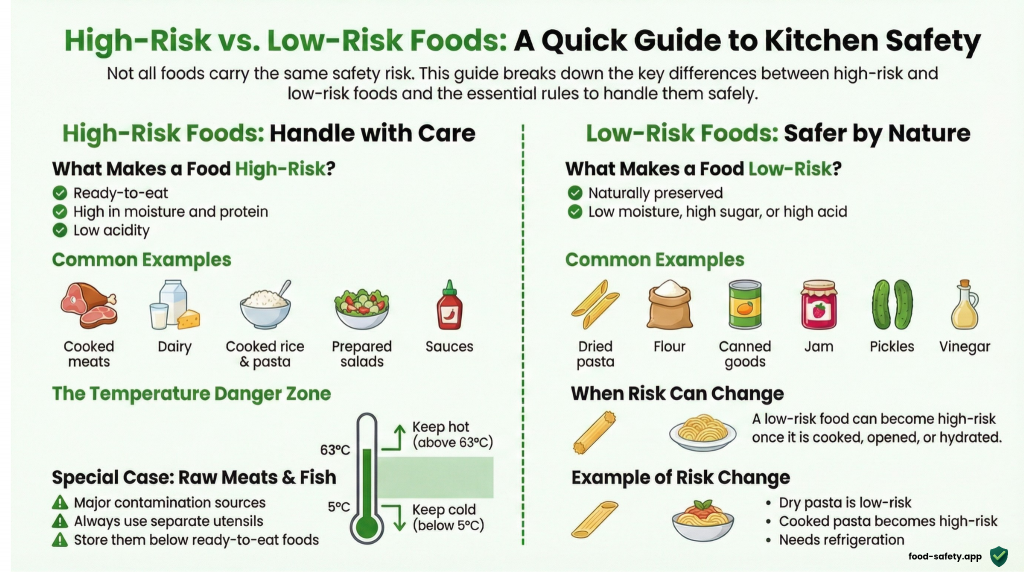
What actually makes a food high-risk or low-risk?
Food risk isn’t random. It’s based on a few clear factors:
- Moisture
- Protein
- Temperature
- Acidity or sugar levels
- Whether the food is ready to eat
Bacteria grow best in warm, moist, protein-rich foods. If that food is ready to eat and won’t be cooked again, the risk increases even more.
Foods that are dry, very sugary or acidic don’t allow bacteria to grow easily, which is why they are usually classed as low-risk.
High-risk foods explained in plain English
High-risk foods are the ones most likely to cause food poisoning if something goes wrong. These foods are usually:
- Ready to eat
- High in protein
- High in moisture
- Low in acid
Because bacteria grow quickly in these foods, they need strict controls around temperature, time and hygiene.
Common high-risk foods in food businesses
Most food businesses handle high-risk foods every day, including:
- Cooked meat and poultry
- Dairy products like milk, cream and soft cheese
- Cooked rice and pasta
- Fish, shellfish and seafood
- Prepared salads and sandwiches
- Cooked sauces and gravies
If a food needs refrigeration to stay safe, there’s a good chance it’s high-risk.
Everyday situations where risk creeps in
High-risk food problems often come from normal routines, such as:
- Cooked food left cooling at room temperature
- Sliced cooked meat left uncovered during service
- Cream desserts not chilled quickly enough
These situations don’t feel dangerous at the time, which is why they’re so common.
Raw foods and natural contamination
Raw foods are a different type of risk. They aren’t always high-risk themselves, but they naturally carry harmful bacteria.
Raw foods that commonly cause issues include:
- Raw meat and poultry
- Raw fish and shellfish
- Unwashed fruit and vegetables
The main danger here is cross-contamination. Bacteria from raw foods can spread to ready-to-eat foods, hands, equipment and surfaces.
Simple habits that make a big difference
A few basic rules prevent most problems:
- Store raw meat below ready-to-eat food in the fridge
- Use separate chopping boards and knives
- Wash hands immediately after handling raw foods
- Clean and disinfect surfaces straight away
One small slip, like raw chicken juices dripping onto prepared food, can undo hours of good work.
Low-risk ambient foods and why they’re safer
Some foods are naturally low-risk because bacteria can’t grow easily in them. These foods are often dry or shelf-stable.
Common low-risk foods include:
- Dried pasta and rice
- Flour
- Sugar
- Dried herbs and spices
- Canned foods before opening
These foods don’t support bacterial growth because they contain very little moisture.
When low-risk foods become high-risk
Low-risk doesn’t mean no risk.
Once these foods are cooked, opened or mixed with water, milk or other ingredients, they can quickly become high-risk.
For example:
- Dry rice is low-risk, cooked rice is high-risk
- A sealed can is low-risk, but once opened it needs proper storage
This change is often missed and is a common cause of poor storage decisions.
Acidic and sugary foods as natural protection
Some foods last longer because bacteria struggle to survive in them.
High sugar foods include:
- Jam
- Syrups
- Honey
High acid foods include:
- Vinegar
- Pickles
- Chutneys
Sugar and acid slow down bacterial growth, which lowers the risk.
Still needs good handling
These foods can still become unsafe if:
- Dirty utensils are used
- They are diluted
- Fresh ingredients like cream or yoghurt are added
Good hygiene still matters, even with preserved foods.
Handling rules for high-risk foods
High-risk foods need clear, consistent routines. These controls protect customers and help meet UK food safety law.
Key rules every food business should follow
- Keep chilled food at 5°C or below
- Keep hot food at 63°C or above
- Reduce time at room temperature as much as possible
- Use clean and sanitised utensils
- Cover and label food clearly
- Follow stock rotation using FIFO
Cooling cooked food quickly is especially important. The longer food sits warm, the more time bacteria have to grow.
Where things usually go wrong
Problems often happen during pressure points, such as:
- Busy service periods
- Overfilled or poorly organised fridges
- Skipping cleaning tasks when time is tight
These are system issues, not attitude issues. Clear routines reduce mistakes.
Why understanding food risk saves time and hassle
When people understand which foods are high-risk, they make better decisions without being told. They know what needs chilling first and what needs the most care.
This reduces mistakes, improves inspection outcomes and lowers food waste. It also cuts down on uncertainty and last-minute checks.
Food safety becomes part of how the business runs, not an extra job added on.