
If you want to improve your food hygiene rating and achieve a 5, this guide explains exactly what inspectors look for and how a food safety app can help you stay compliant without adding extra paperwork.
- What does a 5 food hygiene rating mean?
- How inspections are scored
- Strengthening your food safety management
- Practical steps to improve food hygiene rating
- Common reasons businesses miss out on a 5
- How a food safety app makes it easier
What does a 5 food hygiene rating mean?
A 5 rating under the Food Hygiene Rating Scheme (FHRS) means your business is seen as “very good”. It shows that your food handling, premises standards and management controls all meet legal requirements and are working well in practice.
Ratings are awarded by your local authority environmental health officer (EHO) after an unannounced inspection. In England, Wales and Northern Ireland, the scheme is run by the Food Standards Agency.
To get a 5, it’s not enough to have a clean kitchen on the day. Inspectors look for consistent systems, proper food safety records, and clear evidence that you’re managing risks every day.
How inspections are scored
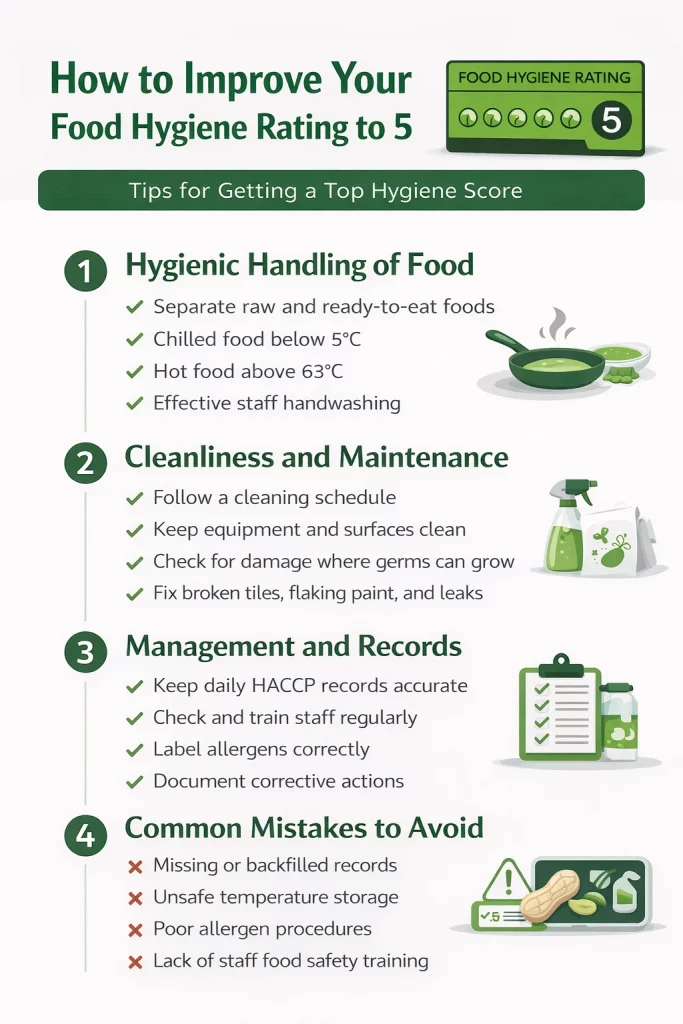
Your rating is based on three main areas:
1. Hygienic handling of food
This covers how you prepare, cook, cool, store and reheat food. For example:
- Are raw and ready-to-eat foods properly separated?
- Are fridges holding food at safe temperatures?
- Are staff washing hands correctly?
A small café with excellent cleaning but poor raw meat separation won’t score highly here.
2. Cleanliness and condition of the premises
Inspectors look at:
- Cleanliness of equipment and surfaces
- Condition of walls, floors and ceilings
- Pest control arrangements
A damaged floor that can’t be cleaned effectively may affect your score, even if the rest of the kitchen looks tidy.
3. Confidence in management
This is where many businesses lose marks. Inspectors assess your food safety management system and whether it’s actually being followed.
They’ll check your HACCP-based system (often Safer Food, Better Business) and your HACCP records. If monitoring sheets are incomplete, backfilled or inconsistent, it can reduce confidence in management.
Strengthening your food safety management
If your goal is to improve food hygiene rating to a 5, focus first on your systems.
Keep HACCP records accurate and up to date
Daily checks should reflect what really happens in your kitchen. That includes:
- Fridge and freezer temperature checks
- Cooking and reheating temperatures
- Cleaning schedules
- Opening and closing checks
If there’s a problem, record the corrective action. For example, if a fridge reads 9°C, note what you did: adjusted the thermostat, moved food, called an engineer.
Train and supervise staff properly
Food handlers should have appropriate food hygiene training for their role. More importantly, they should understand why the rules matter.
A takeaway that relies on one trained manager but doesn’t supervise weekend staff properly may struggle to show consistent control.
Take allergen management seriously
Strong allergen management is essential. This includes:
- Clear allergen information for customers
- Accurate labelling for prepacked for direct sale (PPDS) food
- Preventing cross-contamination
Mistakes in allergen control can significantly affect your inspection outcome.
Practical steps to improve food hygiene rating
If you’re currently rated 3 or 4 and aiming higher, focus on practical improvements.
Review your last inspection report
Start with the officer’s comments. Address every issue, even minor ones. If they highlighted poor documentation, that’s a management confidence issue, not just paperwork.
Check temperature control
Chilled food must legally be kept at 8°C or below, but good practice is 5°C or lower. Hot holding must be 63°C or above.
Make sure thermometers are calibrated and staff know how to use them.
Improve structure and maintenance
Look at your kitchen as an inspector would:
- Are seals on fridges intact?
- Are there gaps around pipework?
- Is there flaking paint near food areas?
Small repairs can make a noticeable difference to your score.
Do a mock inspection
Walk through your business and check:
- Are records fully completed?
- Is cleaning up to date?
- Are staff confident answering basic food safety questions?
This simple exercise can highlight weak spots before the next visit.
Common reasons businesses miss out on a 5
Some of the most common issues include:
- Incomplete or missing food safety records
- Fridges consistently running too warm
- Poor raw and ready-to-eat separation
- Out-of-date or generic HACCP documentation
- Lack of evidence that management checks staff performance
Often, the kitchen looks clean, but paperwork and systems don’t demonstrate control. Inspectors need to see proof that standards are maintained every day, not just before an inspection.
How a food safety app makes it easier
Paper systems can work, but they’re easy to forget, misplace or complete inconsistently. That’s where digital systems can help.
Food-Safety.app is a food safety management system for UK catering businesses. It helps you manage daily checks, maintain digital food safety records and keep everything in one place.
Using digital food safety records means:
- Temperature checks are logged consistently
- Cleaning schedules are easier to monitor
- Corrective actions are recorded clearly
- You have a clear audit trail for inspectors
This supports stronger food safety management and makes it easier to demonstrate confidence in management during an inspection.
Final thoughts
To improve food hygiene rating to a 5, focus on consistent systems, accurate HACCP records and strong day-to-day management. Clean premises matter, but documented control and staff understanding are just as important.
With the right processes in place, and support from a practical digital system, maintaining high standards becomes part of your routine rather than a last-minute rush. If you’re looking to make compliance more consistent and reduce paperwork pressure, exploring a dedicated food safety app could be a sensible next step for your business.
One response to “How to Improve Food Hygiene Rating to 5”
[…] Loss of your food hygiene rating […]