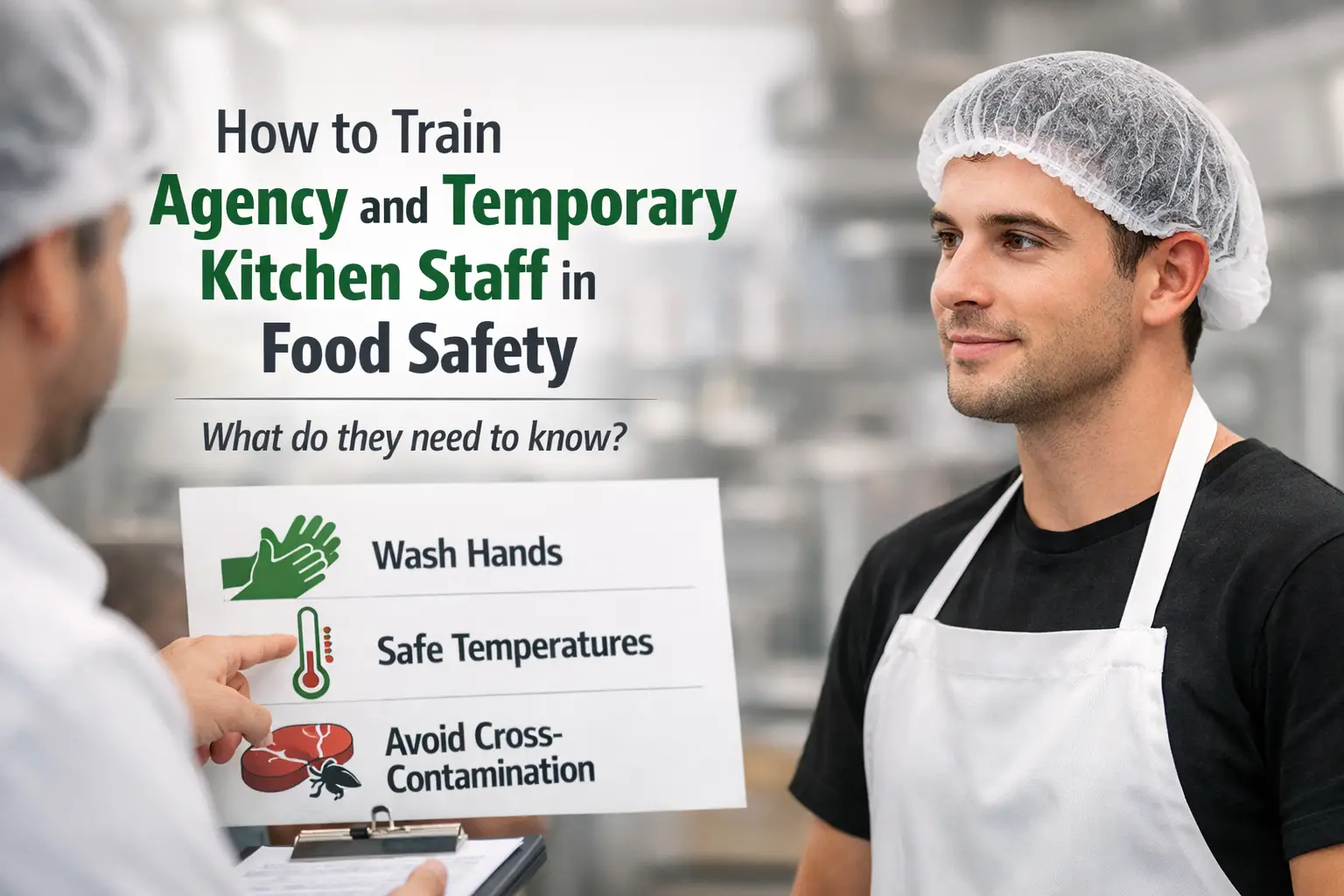
Agency and temp kitchen staff can help cover busy periods, but they bring unfamiliarity that heightens safety risk. This guide shows how to induct non‑permanent workers quickly yet effectively, focusing on high‑risk tasks first and keeping simple records that support inspections and day‑to‑day management. Expect concise checklists, practical supervision plans and ready‑to‑use examples you can adapt to your kitchen.
Why temporary staff increase risk
The fastest start isn’t the safest start.
Temporary workers may be unfamiliar with your site layout, equipment, allergen locations and reporting lines. They might not know which cleaning standards apply or where to find essential safety resources. In a busy service, there is pressure to start quickly, which can lead to missed checks and the formation of risky habits.
A clear, quick onboarding that prioritises safety habits helps prevent common micro‑failures that inspectors notice.
- Unfamiliarity with layout and equipment
- Unknown allergen locations and reporting lines
- Pressure to start quickly, increasing chances of skipped checks
What must be covered first
The first 24 hours set the tone for safety habits across weeks of service.
A concise, practical checklist ensures nothing essential is missed during a rush.
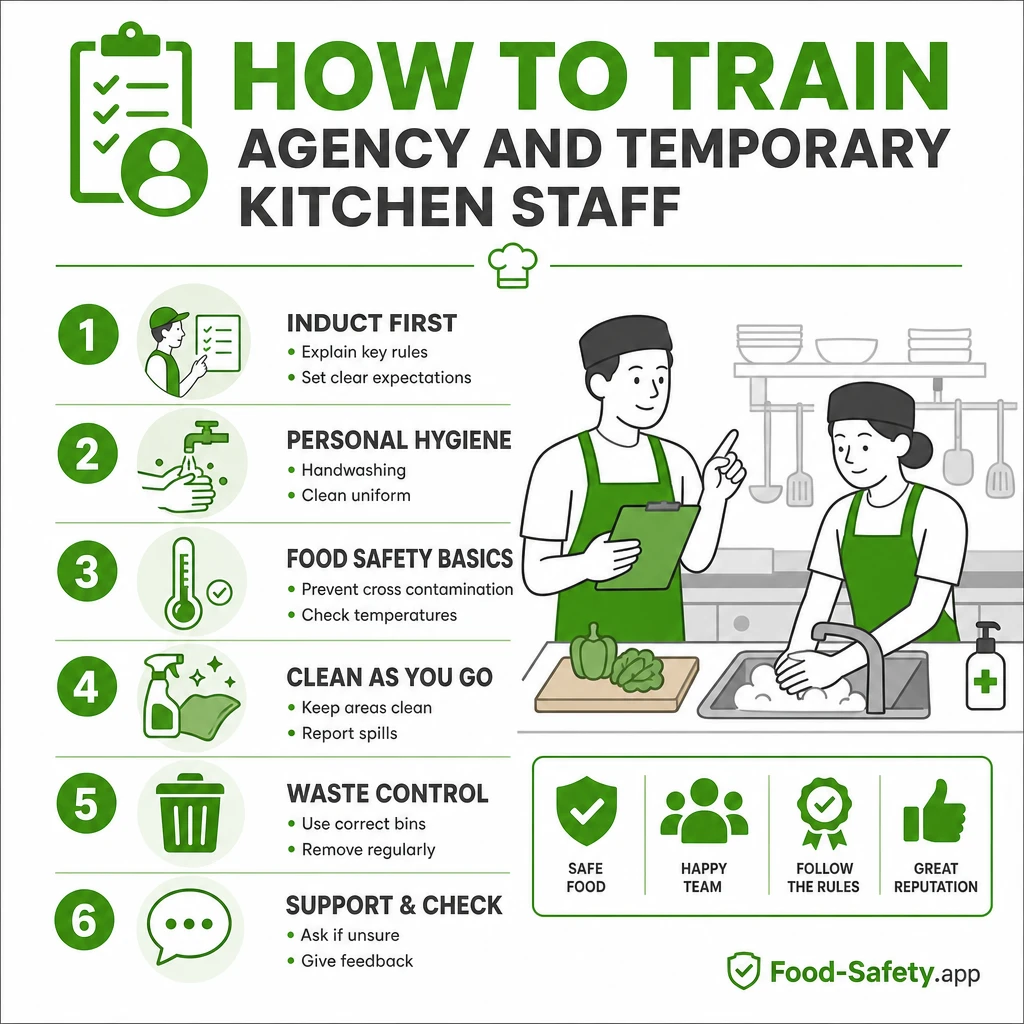
- Handwashing and personal hygiene
- Allergen awareness and cross‑contact controls
- Cleaning duties and sanitiser use
- Temperature controls for refrigeration, hot holding and cooking
- How to report defects or faults
- Where to find chilled storage, probes, sanitiser points, waste areas and emergency contacts
Safe methods they must know before working alone
Safe practice means clear, repeatable steps that anyone can follow, even under pressure.
Before assigning tasks to agency staff without supervision, they should know:
- Safe use of knives and hot equipment
- Colour‑coded boards and how they reduce cross‑contamination
- How to perform accurate probe checks and read date labels
- Stock rotation and first‑in, first‑out principles
- Basic rules for cooking, cooling, reheating, hot holding and cold storage
Practical scenarios for safe methods
- A temp prep chef starts on a busy Friday service and is shown only the pass: what gets missed
- An agency KP is asked to cool food without being told the target temperature or record format
- A weekend porter is sent to clean a fridge without knowing the approved chemical or cleaning log
These scenarios highlight the gaps that quick inductions can create and why standardised practices matter.
Who should supervise closely
Supervision isn’t about policing; it’s a safety net that prevents a small error from becoming a serious incident.
A simple plan for each shift helps maintain consistent expectations.
- Designate a supervising person for the initial period
- Use short, task‑based sign‑offs to confirm competence
- Schedule follow‑ups to re‑check key safety procedures
Common mistakes from rushed inductions
Rushed inductions create the gaps that inspections will notice.
A disciplined approach to onboarding reduces these mistakes and supports ongoing training.
- No allergen briefing or awareness
- Cleaning standards not clearly explained
- Temperature checks skipped or recorded incorrectly
- Handover information incomplete or missing
- Defect reporting not communicated or logged
Simple records for temporary staff
The records you keep today inform future service and inspections, so keep them tidy and easy to retrieve.
Keep induction records clear, dated and easy to file. Use task‑specific checklists for temperatures and agency staff, link induction to HACCP principles, allergen controls, cleaning schedules and temperature logs, and record who supervised, what was covered, and when the staff member was allowed to work independently.
- Short induction checklist (topics listed above)
- Signed training record
- Task restrictions and any limitations
- Allergen acknowledgement
- Supervision notes and shift sign‑offs
Induction Checklist Example
- [ ] Handwashing explained and observed
- [ ] Allergen locations identified
- [ ] Temperature controls reviewed (fridge, cooking, hot holding)
- [ ] Cleaning duties and sanitiser usage demonstrated
- [ ] Reporting defects process explained
- [ ] Emergency contacts provided
Supervision Log Example
Date: ______
Staff: ______ | Supervisor: ______
Tasks covered: ___________________________
Competence observed: Yes / No
Notes: _________________________________