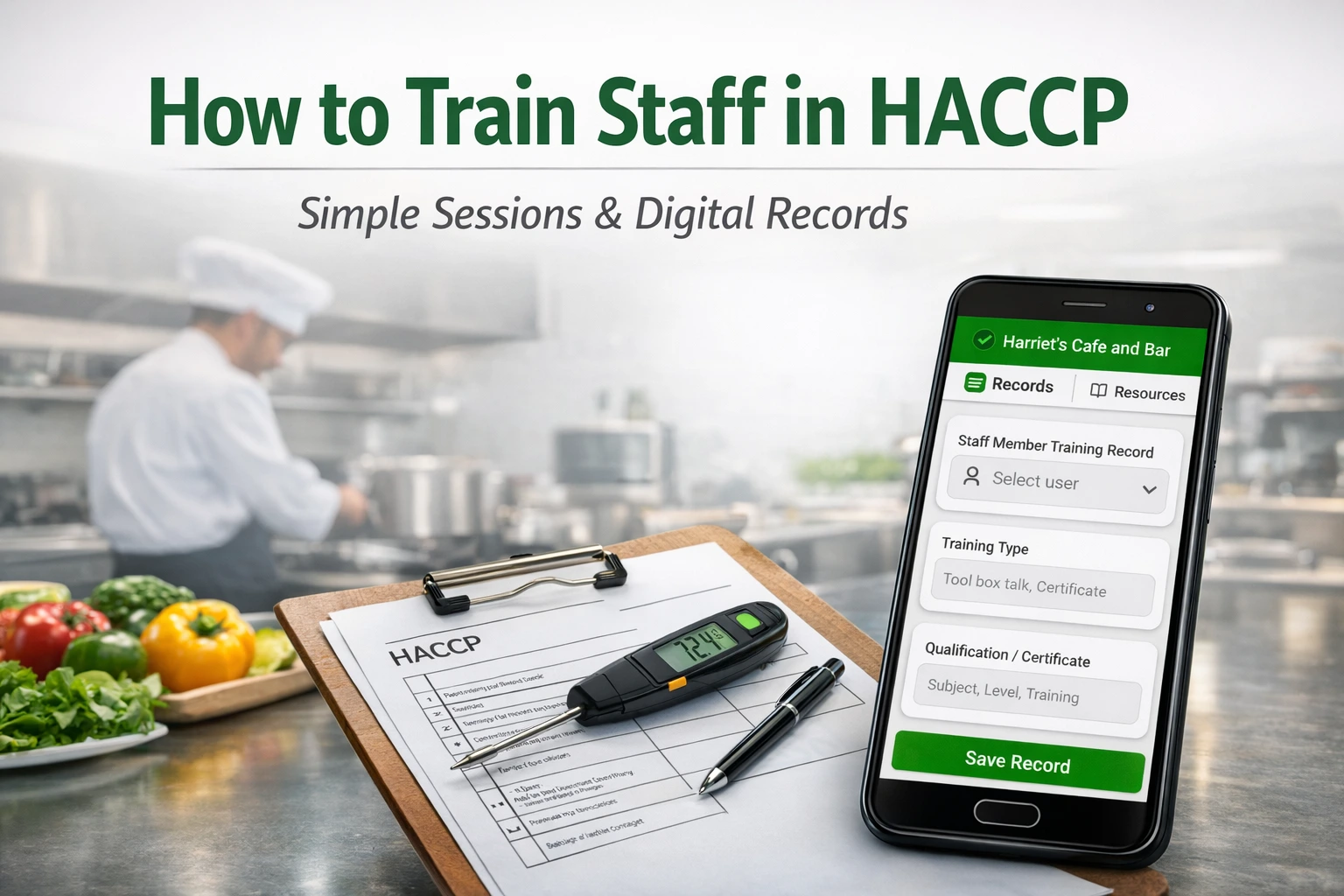
Running a safe kitchen isn’t just about paperwork. This guide shows how to train your team in HACCP using simple routines, clear roles, and digital food safety records.
Table of Contents
- Why does HACCP training matter?
- Can 15-minute HACCP training sessions work?
- What is a HACCP responsibility matrix?
- How does this support food safety management?
- Common HACCP training mistakes
- How to make HACCP training simple and consistent
Why does HACCP training matter?
In UK catering businesses, food safety isn’t just the manager’s job. Everyone handling food plays a role in keeping it safe.
By law, you must have procedures based on HACCP principles and make sure staff are trained for the work they do. You don’t need formal certificates for every role, but you do need to show that your team understands what matters in your kitchen.
That means knowing things like:
- What temperatures to cook and store food at
- How to avoid cross-contamination
- What to do if something goes wrong
If staff don’t understand these basics, your HACCP records quickly become a tick-box exercise instead of a real safety system.
If you’re unsure how your system fits together, it helps to revisit how to write a HACCP plan and connect training directly to your controls.
Can 15-minute HACCP training sessions work?
Yes — if they’re focused and relevant.
Short, regular sessions are often more effective than long, one-off training days. In a busy kitchen, it’s more realistic to build learning into the working week.
A good 15-minute session should focus on:
- One task (e.g. cooking chicken safely)
- One control (e.g. core temperature checks)
- One action (e.g. what to do if it’s undercooked)
For example:
- A quick refresher on probe use during prep
- A reminder on allergen separation before service
- A discussion after a missed fridge check
This approach works well alongside SFBB or similar systems because it reinforces the “safe methods” staff are expected to follow every day.
What is a HACCP responsibility matrix?
A responsibility matrix is a simple way to make sure everyone knows their role.
Instead of everything sitting with the manager, you clearly assign tasks across the team.
For example:
- Chef: carries out cooking temperature checks
- Supervisor: reviews records and signs off
- Manager: investigates issues and updates procedures
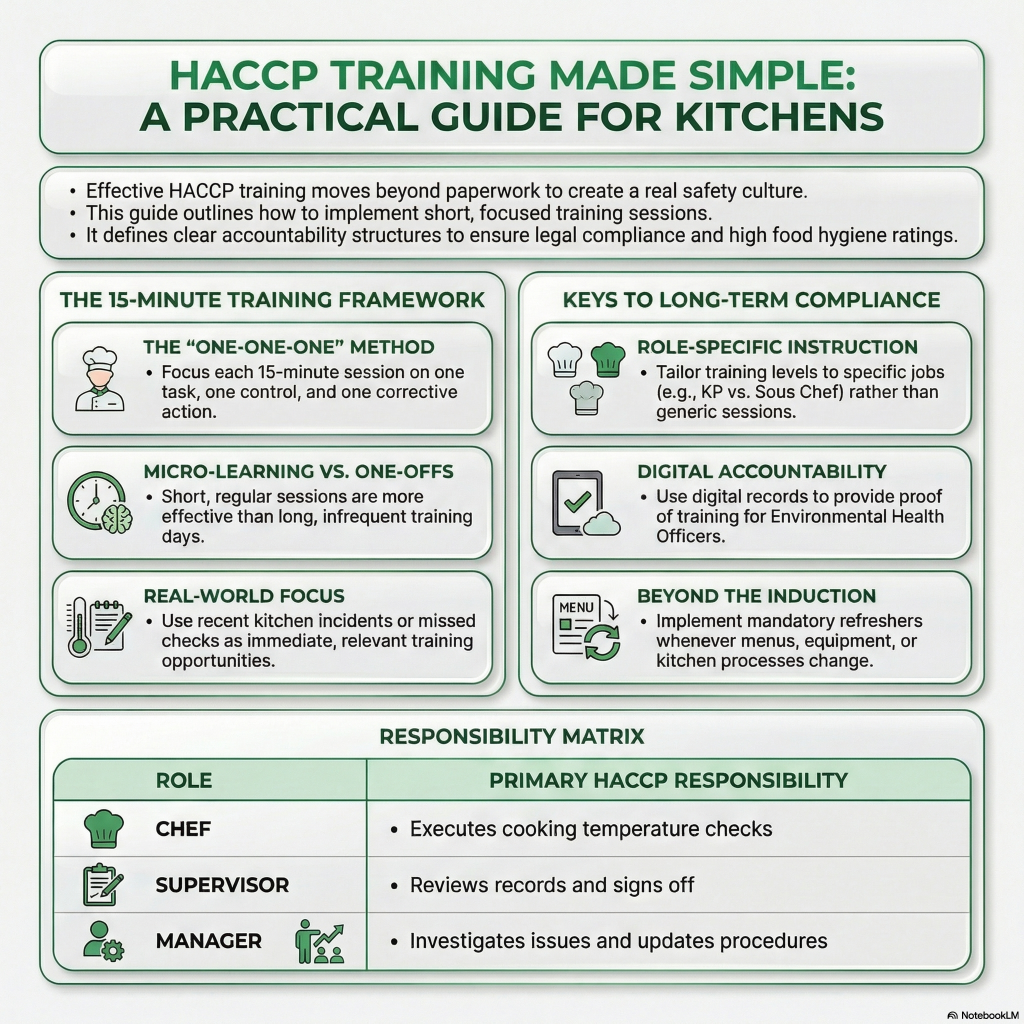
This avoids a common problem where checks are done, but no one takes ownership when something goes wrong.
It also supports consistency in your food safety management, which is something Environmental Health Officers look at during inspections.
How does this support food safety management?
Good training turns your HACCP system into something people actually use.
When staff understand their role:
- Checks are more likely to be done properly
- Problems are spotted earlier
- Records reflect what’s really happening
This has a direct impact on your food hygiene rating, as inspectors assess how well your system is implemented — not just whether it exists.
It also strengthens your overall approach to food safety management culture, where staff feel responsible and confident in what they’re doing.
The Food Standards Agency guidance on HACCP makes it clear that training and supervision must match the role. In practice, that means making training specific, regular, and relevant.
Common HACCP training mistakes
1. Treating training as a one-off
Induction alone isn’t enough. Staff need refreshers, especially when menus, equipment or processes change.
2. Generic training that doesn’t match the job
A KP, chef and supervisor all need different levels of knowledge. Training should reflect that.
3. No clear ownership
Without defined roles, checks get missed or ignored. A responsibility matrix solves this quickly.
4. Poor or missing records
If training isn’t documented, it’s hard to prove compliance. This is where digital food safety records can make a big difference.
5. Ignoring real incidents
Missed checks, incorrect labelling, or cleaning issues should trigger quick team training — not be brushed aside.
How to make HACCP training simple and consistent
The most effective systems are the simplest ones to follow.
A practical approach looks like this:
- Run short weekly training sessions
- Link each session to a real task or recent issue
- Keep a clear record of who attended
- Assign responsibilities clearly
- Review performance regularly
Using tools like video training in food safety management can help standardise training across shifts and locations.
It’s also worth reinforcing key risks regularly, such as cross-contamination controls or allergen handling, as these are common causes of non-compliance.
Conclusion
HACCP training doesn’t need to be complicated or time-consuming. In fact, the most effective approach is often short, focused and built into daily routines.
When everyone understands their role, your system becomes easier to manage, your records become more reliable, and your kitchen runs more safely.
Food-Safety.app is a food safety management system for UK catering businesses that helps teams stay consistent with training, simplify HACCP records, and keep everything in one place.
If you’re looking to make food safety easier to manage day to day, it’s worth exploring how a digital system can support your team and reduce the pressure on manual processes.