Allergen control training is a daily operational discipline in busy catering environments. This article explains how to equip kitchen and front-of-house teams to handle allergens safely every shift, reduce errors, protect customers, and support inspection readiness. From precise order-taking to robust recipe checks, the right routines keep service flowing at peak times while safeguarding guests.
Why allergen training matters in day-to-day service
Allergen control is not merely an induction task; it is a continual part of every shift. A busy service heightens risk when routines slip, labels aren’t checked, or a last-minute substitution isn’t fully reviewed. When staff understand why allergen controls exist—protecting vulnerable customers, reducing inspection findings, and safeguarding the business—you see more consistent practice during peak service and quieter periods alike. The aim is to embed allergen awareness into habit, not just memory.
The operational risks you face every service
- Rushing orders leading to skipped checks
- Inconsistent handovers between shifts
- Unverified recipe changes that leave allergen information outdated
- Assuming a dish is safe because it’s similar to another item
Addressing these risks requires clear routines, simple checks, and visible ownership. When everyone knows who checks what and when, errors drop and confidence rises for managers and frontline teams. proper checklists help reduce errors.
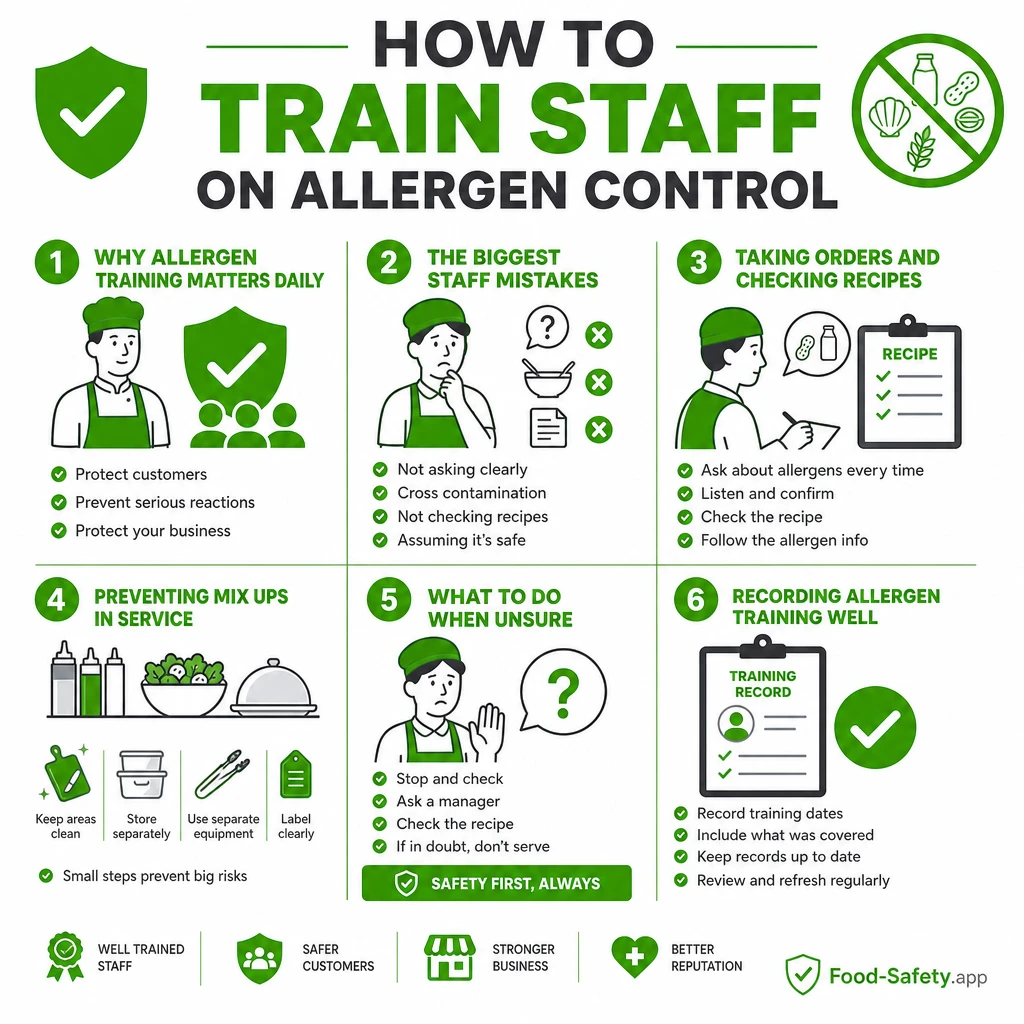
The biggest staff mistakes
Guessing ingredients
Staff may think they know what a sauce or garnish contains, especially during busy service. Guessing can hide a serious allergen exposure risk. Always re-check the ingredients list in the kitchen and confirm with the chef or supplier updates when in doubt. For practical labeling guidance, see clear allergen labelling on packaged food.
Swapping products without checking
A new stock item or a different brand can change allergen declarations. Do not substitute without verifying the allergen information and updating the dish record and any menus or boards where relevant.
Forgetting recipe updates
When recipes change—whether for seasonal menus or cost-control reasons—do not rely on memory. Update the allergen lists immediately and communicate changes to service staff and the kitchen. For practical guidance on managing allergen information, see Natasha’s Law for small food businesses.
Poor handover between shifts
End-of-shift briefings must capture any allergen concerns from service, including guest notes and any modifications. Weak handovers create gaps that can lead to cross-contact or miscommunication at service start. To reinforce hygiene practices, consider standard handover checklists and training resources like cross-contamination prevention guides.
How to take allergen-aware orders
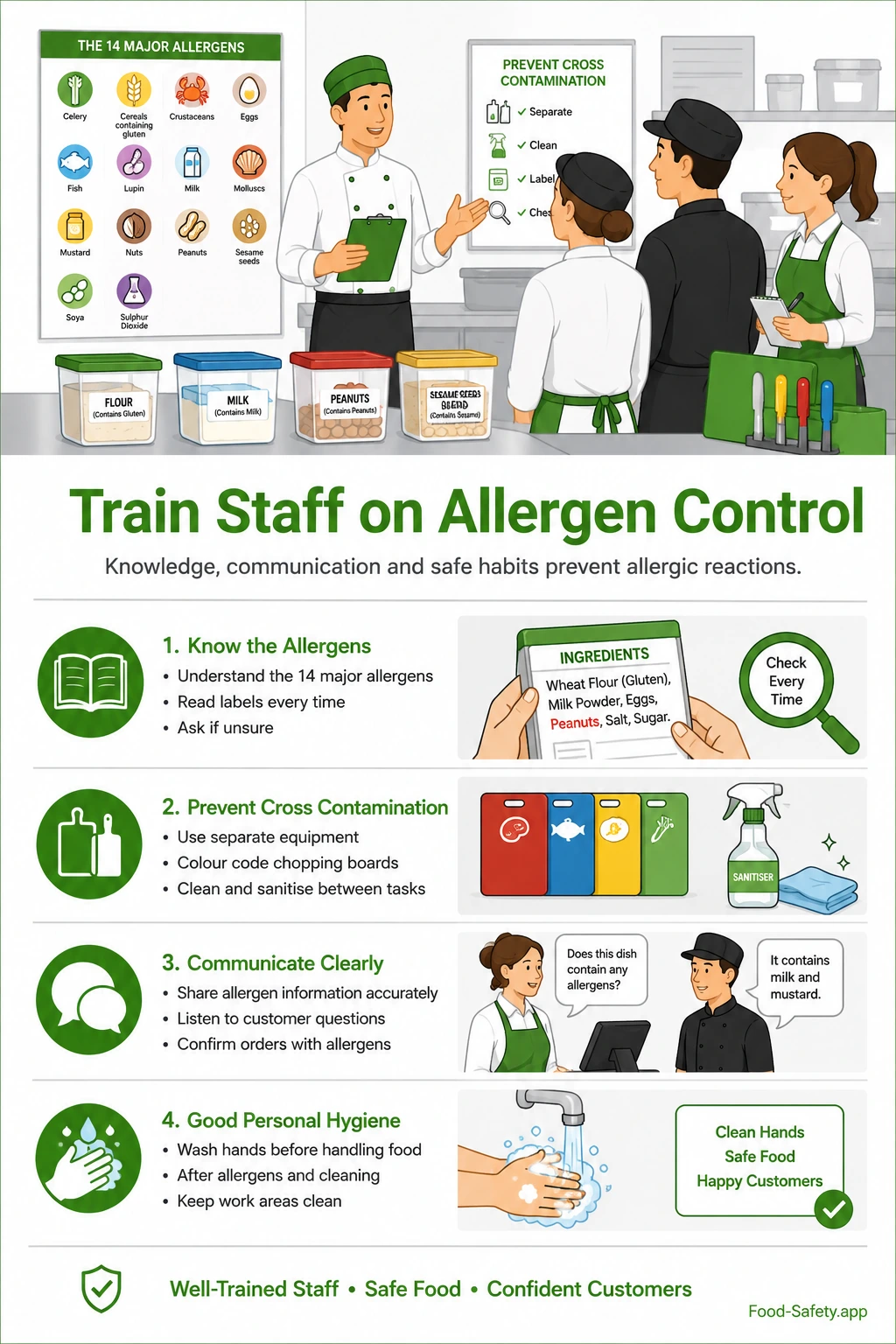
Ask clear questions
Use a structured order process that requires explicit details about allergens (for example, nut, dairy, gluten) and the severity (whether an intolerance or a confirmed allergy). Avoid asking vague questions like “Are you okay with this?” in the heat of service. Use a consistent phrasing to capture accurate profiles and refer to labelling guidelines when in doubt.
Confirm the dish
Repeat the order back to the guest and confirm the exact dish and any substitutions. Ensure the kitchen receives a precise allergy profile for the item as served, not just the dish name. Natasha’s Law considerations and supplier data should inform these confirmations.
Never rely on memory
Record allergen information in the order line, on the ticket, and in the customer-facing menu or allergen matrix. This reduces reliance on recall during busy moments and protects against communication errors. Using digital records can streamline this process, see digital food safety records.
Checking recipes and labels before service
Before service begins, verify that every dish reflects the current allergen information. This includes supplier changes, seasonal specials, and any item that has been reformulated. A quick, formal check at a defined point in the opening routine makes a big difference to safety and compliance.
Supplier changes
Any change to a sauce, spice mix, or ready-made component should trigger a review of the allergen list and the allergen declaration on the menu or board. If in doubt, consult the supplier’s latest label or data sheet and update the kitchen record. For practical hygiene tips, see how to clean to reduce allergen cross-contact.
Specials and menus
Specials boards and daily menus must be cross-checked for allergen statements. If a dish’s allergen profile changes, ensure the front-of-house team is updated and clearly communicates it to guests at the point of ordering.
For an authoritative list of common allergens and guidance on managing them, see NHS guidance: NHS guidance.
Preventing mix-ups in prep, storage, plating, and delivery
Cross-contact is a leading cause of allergen incidents. Implement practical, kitchen-wide controls to minimise risk across all stages of service, from prep to plate and delivery. Clear labelling, dedicated utensils, and strict separation of allergen-containing items are essential during busy lunch and service periods.
Prep and equipment controls
- Assign dedicated prep areas and utensils for common allergen groups where feasible.
- Colour-code containers and label all ingredients with dish names and allergen declarations.
- Use separate chopping boards and knives for allergen-free prep where possible or ensure rigorous sanitisation between uses.
Storage and labelling
Store allergen-containing ingredients separately from non-allergens, with clearly visible labels. Label all prepared dishes with allergen information at the plating station and on any take-away packaging. Maintain clean as you go procedures to reduce cross-contact risk during peak periods.
Plating and delivery
Verify the final dish against the order, confirming all allergens are correctly declared on the plate and any packaging. Use separate utensils for serving items with allergens to avoid cross-contact during plating and delivery. Communicate any allergen-related notes clearly to the guest as the dish is served.
What to do when staff are unsure
Stop, check, escalate
If there is any doubt about an allergen, stop the service item, check the recipe, and consult the kitchen lead or supplier documentation. Do not promise a safe meal until you have verified every ingredient and potential cross-contact risk. For practical safety checks, refer to cross-contamination prevention guidance.
Never promise a safe meal without confirmation
Assurances must be backed by current data. If necessary, offer an alternative dish that has a verified allergen profile or revert to a known safe option until clarifications are obtained.
Reinforcing training through refreshers, toolbox talks, and shift briefings
Refreshers schedule
Set a regular rhythm for allergen training refreshers—for example, quarterly briefings or monthly micro-trainings during quieter periods. Use these sessions to review common mistakes, update staff on changes, and reinforce memory-friendly routines.
Toolbox talks contents
Keep toolbox talks concise and practical. Include a real-world scenario, the corrective action taken, and a reminder of the steps to verify all allergen-related information before service.
Shift briefings
End-of-shift and pre-service briefs should highlight any allergen issues from the previous period, changes to recipes or suppliers, and any guest-specific notes. A consistent briefing process reduces omissions and keeps allergen controls visible on every shift.
Operational checks that support consistent practice can include opening checks, mid-shift reminders, and closing notes to capture learning and track improvements over time.
Record allergen training, store staff records, and keep menu allergen information organised in one place.
Food-Safety.app is a food safety management system for catering businesses.
Improve allergen controls in your operation
Use Food-Safety.app to keep allergen training, staff records, recipe checks, and menu information organised in one practical system. Clear workflows help catering teams reduce avoidable mistakes, support safer service, and maintain inspection-ready evidence across busy shifts.