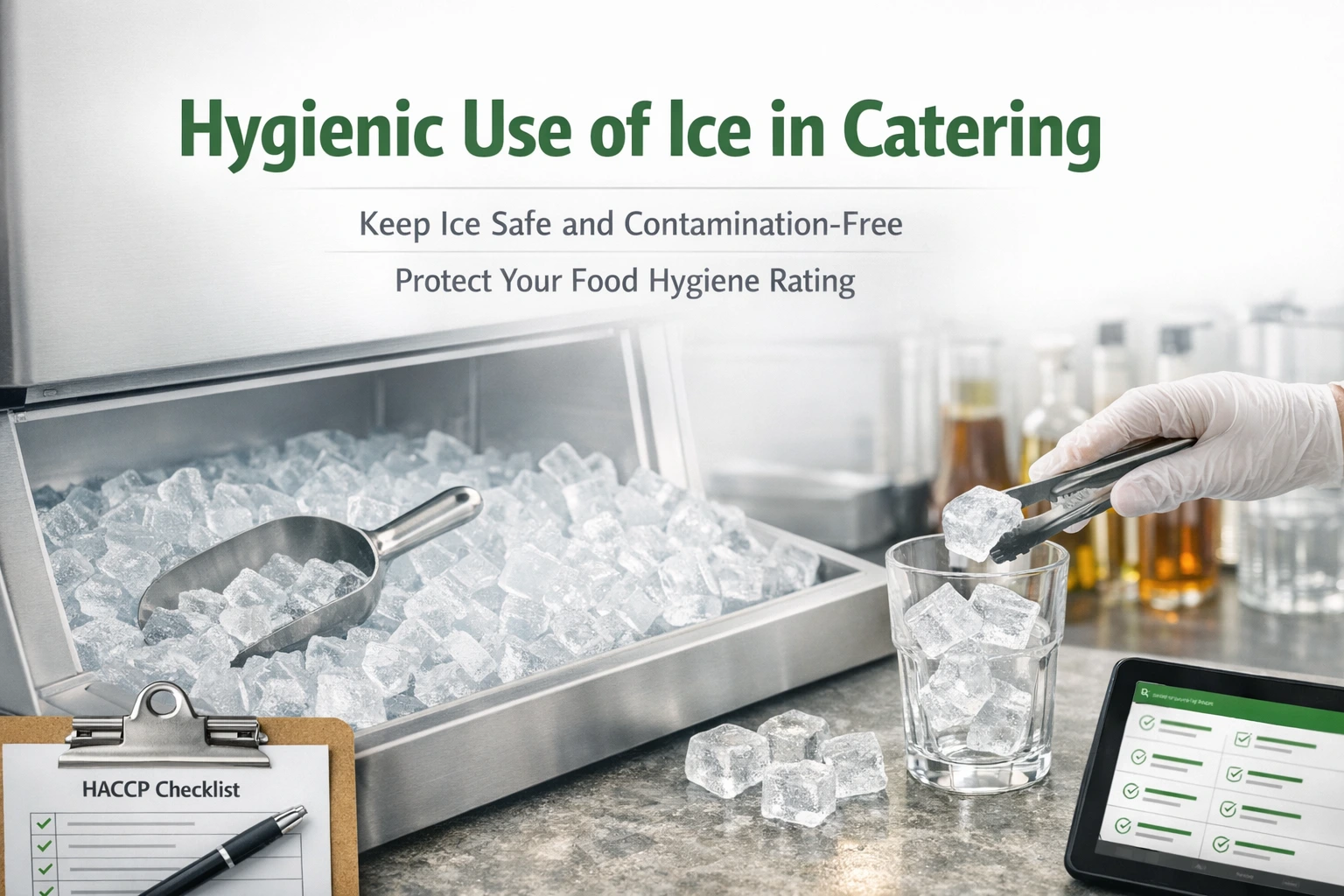
Running a busy kitchen or bar? This practical guide explains how to handle ice safely, meet food safety management duties, and keep digital food safety records simple and inspection-ready with Food-Safety.app.
- Why ice matters for food safety
- Your legal duties when handling ice
- Making and storing ice safely
- Serving ice hygienically
- Cleaning, checks and HACCP records
- Common mistakes to avoid
- Using digital tools to stay compliant
Why ice matters for food safety
Ice is easy to overlook, especially in pubs, cafés and restaurants where it’s used constantly. But ice is classed as food under UK law. If it becomes contaminated, it can pass bacteria or viruses straight into drinks, ready-to-eat foods, or display units.
Environmental health officers regularly find issues with ice handling during inspections. Poor practices can affect your improve food hygiene rating score, even if the rest of the kitchen is well run. That’s why ice should be fully included in your food safety management approach.
Your legal duties when handling ice
UK food hygiene law requires businesses to protect all food from contamination. This includes ice used in drinks, food displays or chilling bottles.
In practice, this means:
- Ice must be made from potable (drinking) water
- It must be stored and handled hygienically
- Risks must be covered in your food safety management procedures
Ice handling should be part of your documented controls, alongside HACCP records, cleaning schedules and staff training. The Food Standards Agency guidance makes it clear that contamination risks apply to all food, including ice.
Making and storing ice safely
Ice machines
Ice machines should be kept clean, closed, and used only for making ice. They must never be used to chill bottles, cans or food containers, as this introduces contamination from hands, packaging and spillages.
Lids should stay closed when not in use, and machines should be positioned away from sinks, waste areas or cleaning chemicals.
Bagged ice
If you buy ice in bags, treat it like any other food delivery. Store bags off the floor, in clean freezers or designated storage areas. Avoid dragging bags across floors or storing them near raw foods.
Serving ice hygienically
Most ice contamination happens during service, not production. Simple habits make a big difference.
- Never handle ice with bare hands
- Always use a clean, dedicated scoop or tongs
- Keep scoops in a clean holder, not buried in the ice
- Never return unused ice to the machine or container
In busy bars, it’s common for staff to rush. Clear procedures and training help prevent shortcuts that could undermine your food safety management system.
Cleaning, checks and HACCP records
Ice machines, scoops, buckets and wells all need regular cleaning and sanitising. Manufacturers’ instructions should always be followed, but many businesses clean ice machines monthly, or more often in high-use settings.
Cleaning should include:
- Internal surfaces and removable parts
- Seals, drains and touch points
- Ice buckets and display wells
These tasks should be logged as part of your digital food safety records. Clear records show due diligence and make inspections smoother.
Common mistakes to avoid
Environmental health officers often see the same ice-related issues:
- Staff scooping ice with glasses or hands
- Dirty or cracked scoops that aren’t cleaned daily
- Bottles stored directly in ice machines
- No written procedures covering ice handling
These problems are usually down to poor systems, not bad intentions. Including ice clearly in your food safety management and training helps prevent them.
Using digital tools to stay compliant
Managing ice safely doesn’t need to add paperwork or stress. When ice handling is built into your daily checks, cleaning schedules and food safety management routines, it becomes part of normal service.
Food-Safety.app is a food safety management system for UK catering businesses. It helps teams keep consistent records, track cleaning tasks, and show inspectors that controls are in place — whether that’s for ice, allergen management, or wider kitchen hygiene.
For busy operators, digital systems reduce missed checks, improve visibility, and support teams to work safely even during peak service.
Conclusion
Ice may seem simple, but it carries real food safety risks if it’s not handled properly. Clear procedures, good staff habits and reliable records all play a part in protecting customers and your business.
If you’re looking to make compliance easier and more consistent, a digital food safety app can help bring everything together in one place. Taking a closer look at a system like Food-Safety.app could be a practical next step towards safer service and a stronger inspection outcome.