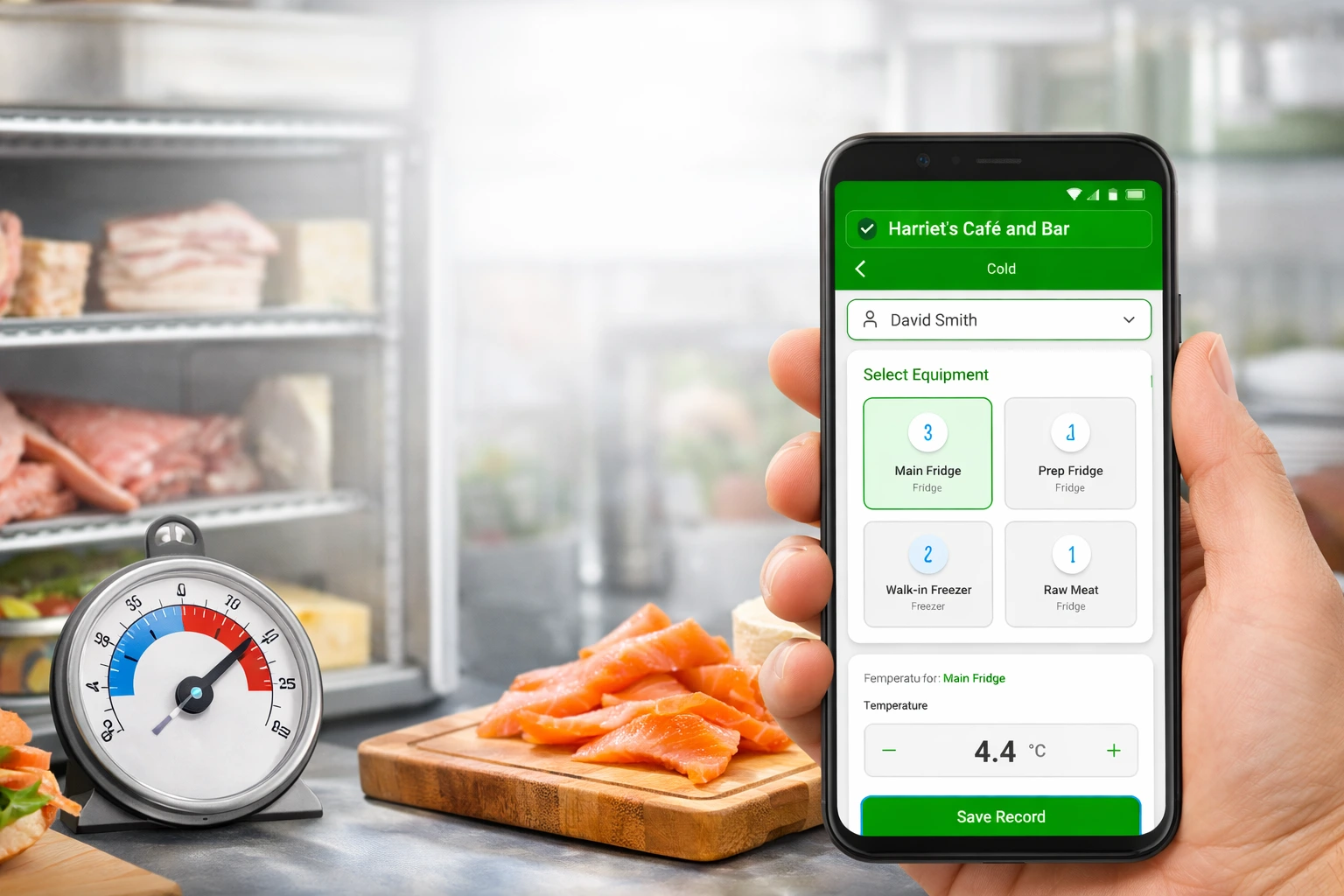
Struggling to manage Listeria risks in chilled foods? This guide explains practical food safety management steps and how digital food safety records can help.
Table of Contents
- What is Listeria and why does it matter?
- What is the fridge temperature danger zone?
- Which ready-to-eat foods are high risk?
- What shelf-life rules should you follow?
- Common Listeria control mistakes
- How to manage Listeria in your business
What is Listeria and why does it matter?
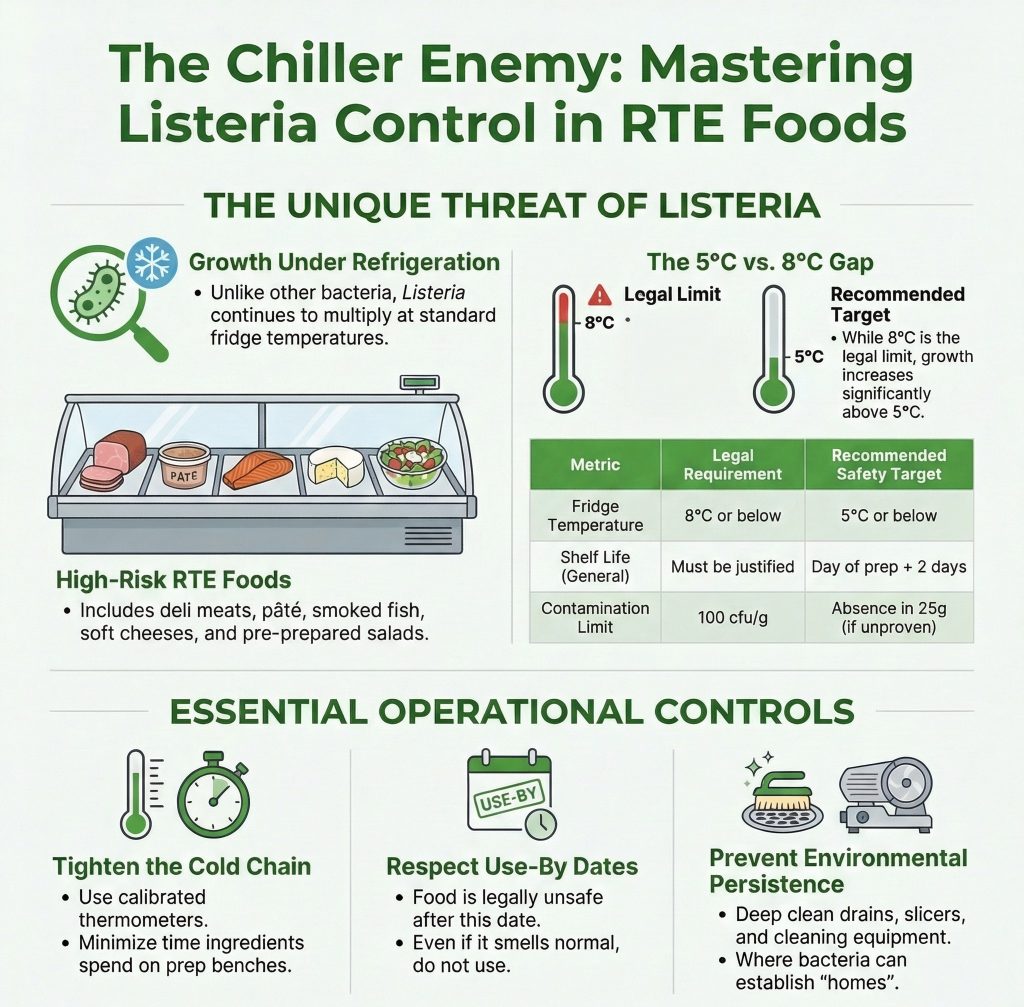
Listeria monocytogenes is a food poisoning bacteria that behaves differently from most others. The key issue for catering businesses is that it can grow in chilled conditions, even inside your fridge.
That makes it a serious concern for ready-to-eat foods such as sandwiches, cooked meats and salads. These foods won’t be cooked again before serving, so there’s no final step to kill bacteria.
For food safety management, this means your controls need to focus on prevention, temperature, and time. Once Listeria gets into your environment, it can survive on surfaces like slicers, fridge seals and drains if cleaning isn’t thorough.
You can find official guidance from the Food Standards Agency, which highlights chilled ready-to-eat foods as a key risk area.
What is the fridge temperature danger zone?
Most businesses know about the general “danger zone” for bacterial growth, but Listeria changes the rules slightly.
It can still grow at refrigeration temperatures, especially above 5°C. While UK law allows chilled food to be held at up to 8°C, that doesn’t mean it’s best practice.
In real kitchens, this creates a hidden risk:
- A fridge reading 7°C might be legally compliant
- But it still allows Listeria to multiply over time
That’s why good food safety management aims for 5°C or below wherever possible.
Poor temperature control is a common issue, especially where checks aren’t consistent. If you’re relying on manual logs, it’s easy to miss trends or small failures. This is where tools like fridge check guidance and digital food safety records can make a real difference.
Which ready-to-eat foods are high risk?
Not all chilled foods carry the same risk. The biggest concern is ready-to-eat foods that support bacterial growth and are handled after cooking.
Common high-risk items include:
- Cooked sliced meats and deli products
- Smoked fish and sushi
- Soft cheeses (e.g. brie, camembert)
- Prepared salads and sandwich fillings
- Pre-packed sandwiches and wraps
- Cooked shellfish
These foods become even riskier once opened, sliced or mixed. For example, slicing ham on a contaminated slicer or storing opened smoked salmon in a poorly controlled fridge can introduce Listeria with no further cooking step to remove it.
Understanding high-risk vs low-risk foods helps you prioritise controls where they matter most.
What shelf-life rules should you follow?
There’s no single shelf-life rule that applies to every food business, but there are clear expectations you need to follow.
First, use-by dates are about safety, not quality. Food must not be served or sold after this date, even if it looks fine.
Second, when preparing food on site:
- The finished product must not outlast its shortest-life ingredient
- Opened or prepared foods need clear labelling
- Staff must know when to discard items
In higher-risk settings, guidance suggests using food on the day it’s made, or within two days unless you’ve validated a longer shelf life.
Many businesses struggle here, especially when relying on memory or paper notes. Clear labelling and consistent date marking practices are essential to avoid accidental breaches.
Common Listeria control mistakes
Listeria risks often come from small gaps rather than major failures.
Some of the most common issues include:
Relying on 8°C as a target
Using the legal limit instead of aiming for 5°C gives bacteria more opportunity to grow.
Poor stock rotation
Without proper systems, older food gets missed. This is where stock rotation practices become critical.
Unlabelled prepared food
No prep date or discard date means staff are guessing.
Cross-contamination during prep
Slicers, utensils and hands can transfer bacteria onto ready-to-eat food. This is a key issue highlighted in cross-contamination guidance.
Food left out too long
Buffets, sandwich prep and service periods can leave chilled food out of control for extended periods.
How to manage Listeria in your business
Good food safety management doesn’t need to be complicated, but it does need to be consistent.
Focus on these practical steps:
- Keep fridges at 5°C or below where possible
- Check and record temperatures regularly
- Label all opened and prepared foods clearly
- Use strict stock rotation (FIFO)
- Minimise time food spends out of refrigeration
- Clean and disinfect food contact surfaces thoroughly
Systems like SFBB (Safer Food Better Business) help structure these controls, but many businesses find paper-based systems difficult to maintain day-to-day.
That’s where digital food safety records can help. They make it easier to:
- Keep accurate HACCP records
- Track fridge temperatures in real time
- Standardise checks across your team
- Stay ready for inspections and maintain your food hygiene rating
Conclusion
Listeria is often called the “chiller enemy” for a reason. It doesn’t rely on obvious mistakes like undercooking — it takes advantage of small gaps in temperature control, hygiene and shelf life.
For busy catering teams, the challenge is staying consistent. That’s where having a clear system in place makes all the difference.
Food-Safety.app is a food safety management system for UK catering businesses, designed to simplify daily checks, improve consistency and support compliance. If you’re looking to make Listeria control easier and more reliable, it’s worth exploring how a digital approach could support your team.