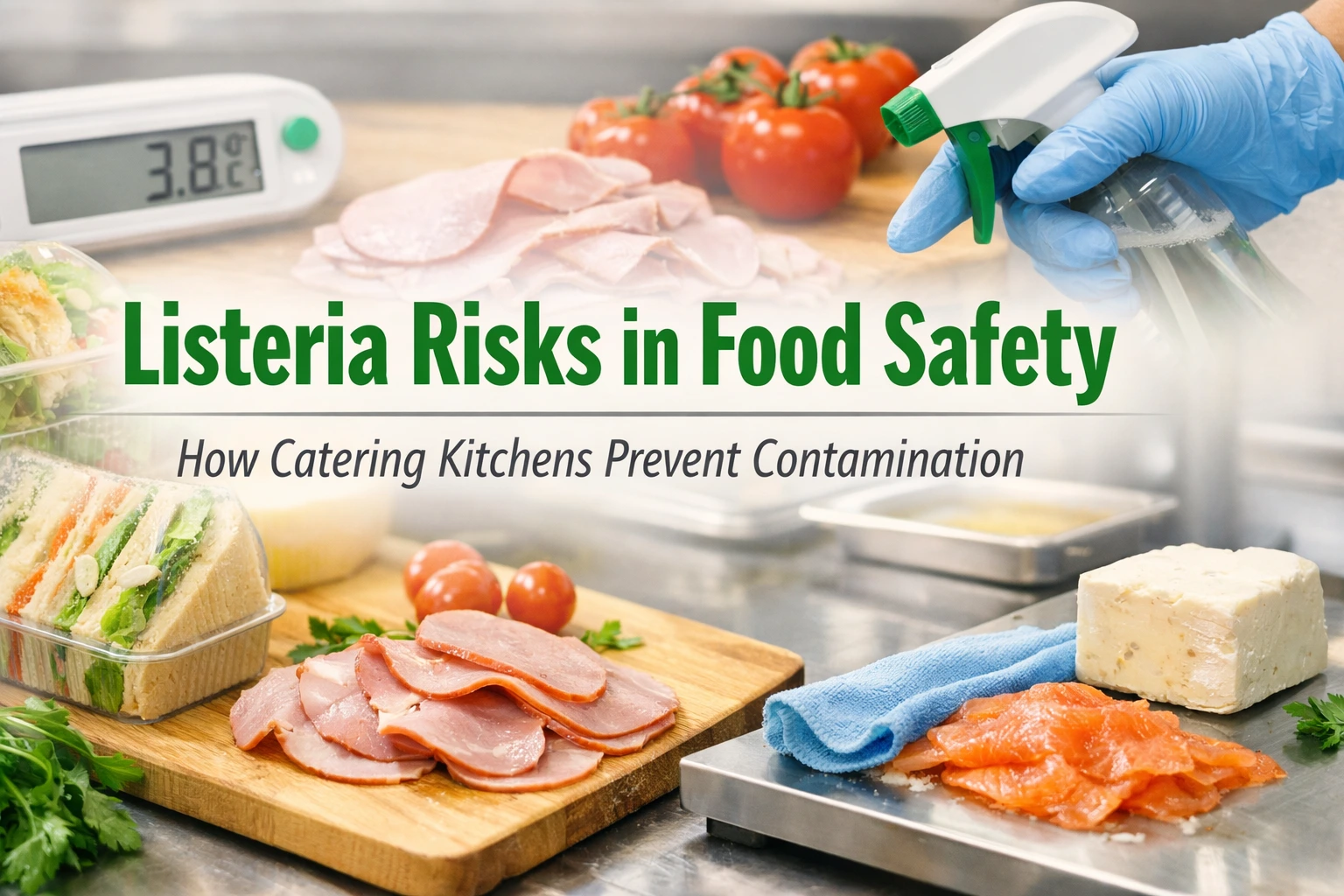
If you run a catering business, understanding Listeria is an important part of good food safety management. This guide explains what causes Listeria, where the risks appear in kitchens, and how digital food safety records can help you stay compliant.
Table of Contents
- What is Listeria?
- What causes Listeria contamination?
- High-risk foods for Listeria
- How catering businesses can control Listeria
- Using HACCP records and digital systems
- Final thoughts
What is Listeria?
Listeria is a type of bacteria that can cause a serious foodborne illness known as listeriosis. While infections are relatively rare, they can be severe, particularly for older adults, pregnant women, and people with weakened immune systems.
Unlike many other bacteria linked to food poisoning, Listeria has a few unusual characteristics. The most important for catering businesses is that it can survive and grow at refrigeration temperatures.
This means chilled food isn’t automatically safe from Listeria. If contamination occurs, the bacteria can slowly multiply while the food is stored in the fridge.
For businesses in hospitality and catering, Listeria is mainly a concern in ready-to-eat foods — foods that customers eat without further cooking.
The UK’s Food Standards Agency guidance on Listeria highlights the importance of managing this risk in chilled foods with longer shelf lives.
What causes Listeria contamination?
Listeria bacteria are common in the natural environment. They’re found in soil, water, vegetation, and animal faeces. Because of this, they can enter the food chain in several ways.
In catering environments, contamination usually happens through one of the following routes.
Contaminated raw ingredients
Raw vegetables, meat, dairy products, and fish can carry Listeria from farms or processing environments. If these ingredients are not handled carefully, the bacteria can spread to other foods.
Cross-contamination in the kitchen
One of the most common causes of Listeria in food businesses is cross-contamination.
For example, using the same chopping board for raw chicken and salad ingredients can transfer bacteria to ready-to-eat foods. Good separation procedures and cleaning routines are essential parts of HACCP records and daily kitchen checks.
Poor cleaning and sanitation
Listeria can survive in food preparation environments for long periods if cleaning isn’t thorough. It can hide in drains, refrigerator seals, slicers, and other hard-to-reach areas.
If cleaning schedules aren’t followed properly, bacteria can gradually build up and contaminate food.
Long storage times
Because Listeria grows slowly at chilled temperatures, food that stays in the fridge for several days can become riskier over time.
This is why clear date labelling and shelf-life control are essential in professional kitchens.
High-risk foods for Listeria
Some foods are more commonly linked to Listeria because they are stored chilled and eaten without further cooking.
Examples often found in catering environments include:
- Pre-packed sandwiches
- Prepared salads and coleslaw
- Sliced cooked meats
- Smoked fish
- Soft cheeses
- Cooked chilled ready meals
For example, a deli counter slicing cooked ham throughout the day could spread contamination if equipment isn’t cleaned properly.
Similarly, a café preparing sandwich fillings in advance for the next day needs to manage storage temperatures and shelf life carefully.
These types of risks are why structured food safety management systems are required for food businesses.
How catering businesses can control Listeria
The good news is that Listeria risks can be controlled effectively with the right procedures.
Maintain strict temperature control
Chilled food should normally be stored at 5°C or below. Consistent fridge monitoring is an important part of safe food storage.
Recording temperatures regularly helps demonstrate that food has been stored safely.
Prevent cross-contamination
Separate raw and ready-to-eat foods wherever possible. Use colour-coded chopping boards and dedicated preparation areas when space allows.
Cleaning and sanitising between tasks also helps reduce the risk.
Follow clear cleaning schedules
Regular cleaning of equipment, fridges, and food preparation surfaces is essential. Areas such as slicers and fridge seals should be included in deep-clean routines.
These checks should be documented so staff know exactly what needs to be done and when.
Manage shelf life carefully
Prepared foods shouldn’t be kept longer than their safe shelf life. Date labels and stock rotation systems help prevent food from being stored too long.
Using HACCP records and digital systems
Managing food safety effectively depends on keeping reliable records.
This includes temperature logs, cleaning schedules, and daily safety checks. These are all part of maintaining proper HACCP records.
However, paper records can easily be missed, damaged, or completed incorrectly during busy service periods.
Many catering businesses are now switching to digital food safety records to make compliance easier. Digital systems guide staff through checks, store records securely, and make it easier to show inspectors how food safety procedures are being followed.
Clear records can also support wider compliance tasks, including allergen management and other day-to-day food safety requirements.
Final thoughts
Listeria is a serious food safety risk, particularly in chilled ready-to-eat foods. But with proper procedures, good cleaning routines, and consistent monitoring, the risk can be managed effectively.
For catering businesses, the key is making food safety systems practical and easy for staff to follow every day.
That’s where digital tools can help. Food-Safety.app is a food safety management system for UK catering businesses designed to simplify daily checks, maintain reliable records, and support consistent compliance.
If you’re looking to make food safety processes easier to manage and more reliable, it may be worth exploring how a digital food safety management system could support your kitchen.