Food poisoning can damage your reputation and food hygiene rating if it happens in your business. This guide explains the main bacteria and viruses responsible for food poisoning in the UK and how a food safety management system can help you control the risks.
- What causes food poisoning?
- Most common food poisoning bacteria and viruses
- How contamination happens in catering kitchens
- Practical controls for food businesses
- Using digital food safety tools to stay compliant
What causes food poisoning?
Food poisoning usually happens when harmful bacteria or viruses contaminate food that people eat. In catering kitchens, this often comes down to everyday issues such as poor hygiene, cross-contamination, incorrect cooking temperatures, or food being stored for too long.
Most cases in the UK are caused by a relatively small group of pathogens. These microorganisms can be present in raw foods, introduced through infected food handlers, or spread through contaminated equipment and surfaces.
Understanding the main risks helps catering businesses manage hazards properly through a structured food safety management system and good kitchen practices.
Guidance from the Food Standards Agency highlights the importance of temperature control, hygiene, and safe food handling to prevent illness.
Most common food poisoning bacteria and viruses
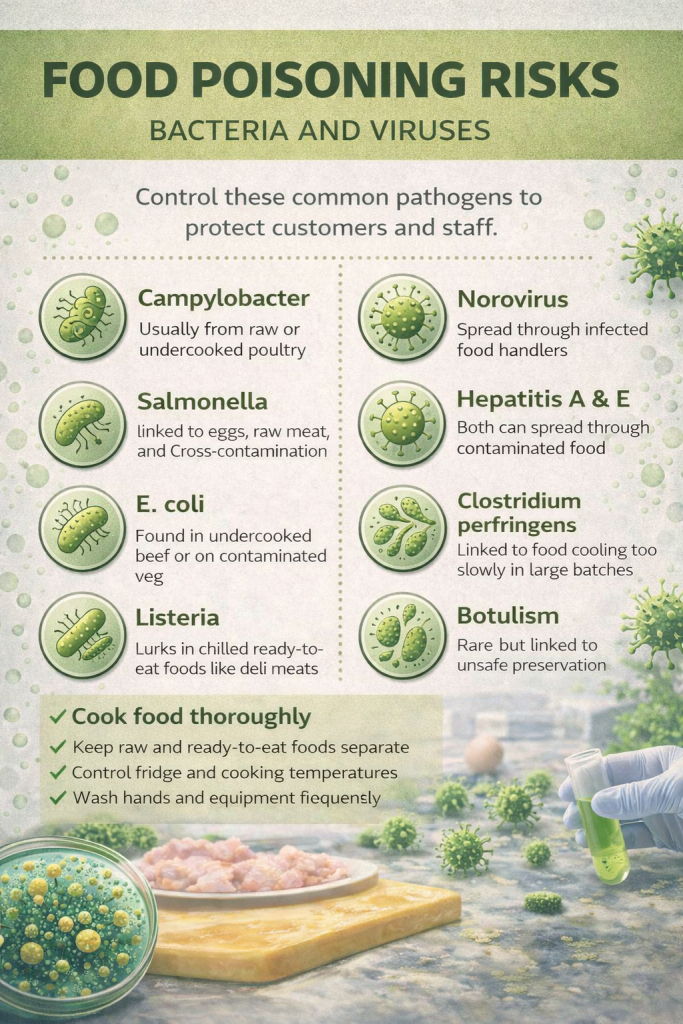
Campylobacter
Campylobacter is one of the most common causes of food poisoning in the UK. It’s frequently linked to raw poultry and cross-contamination in kitchens.
For example, using the same chopping board for raw chicken and salad ingredients without cleaning it properly can spread the bacteria.
Cooking poultry thoroughly and keeping raw meat separate from ready-to-eat foods are essential controls.
Salmonella
Salmonella bacteria are commonly associated with eggs, poultry, and raw meat. Outbreaks often occur when foods are undercooked or cross-contaminated.
In catering environments, risks increase when large volumes of food are handled quickly, such as during busy service periods.
E. coli
Certain strains of E. coli can cause severe illness. They are often linked to undercooked minced beef products such as burgers.
Food businesses must make sure burgers and similar products are cooked all the way through. Proper temperature monitoring and accurate HACCP records help demonstrate that cooking controls are being followed.
Listeria
Listeria monocytogenes is particularly dangerous because it can grow at refrigeration temperatures.
It’s commonly found in ready-to-eat chilled foods such as smoked fish, deli meats, and soft cheeses.
Strict shelf-life management and careful handling of ready-to-eat foods are essential to reduce the risk.
Norovirus
Norovirus spreads easily through infected people. It’s often introduced into food businesses when a food handler works while ill.
Symptoms include vomiting and diarrhoea, and the virus spreads easily through contaminated surfaces.
Food handlers should stay away from work until at least 48 hours after symptoms stop.
Hepatitis A and Hepatitis E
Hepatitis A can spread through contaminated food or water, particularly when food is handled by someone who is infected.
Hepatitis E is increasingly linked to undercooked pork products, including pork liver.
Proper cooking and strong personal hygiene controls reduce the risks significantly.
Clostridium perfringens
This bacterium is commonly associated with food that is cooked in large batches and left to cool slowly, such as curries, stews, or gravy.
When food stays too long in the temperature danger zone, bacteria can multiply rapidly.
Botulism
Botulism is rare but extremely serious. It is caused by toxins produced by Clostridium botulinum.
It is most commonly associated with incorrectly preserved or canned foods, although strict food safety procedures make it very uncommon in commercial kitchens.
Antimicrobial resistance (AMR)
Antimicrobial resistance refers to bacteria that are resistant to antibiotics. These bacteria can enter the food chain through livestock production.
While AMR does not directly cause food poisoning, it makes infections harder to treat if they occur.
How contamination happens in catering kitchens
In many food businesses, contamination happens through everyday kitchen routines rather than unusual events.
Common examples include:
- Raw meat touching ready-to-eat foods
- Food handlers not washing hands properly
- Cooked food cooling too slowly
- Incorrect fridge temperatures
- Shared equipment not being cleaned between tasks
These issues often appear during food hygiene inspections and can affect your ability to improve food hygiene rating scores.
Recording checks consistently and reviewing them regularly helps businesses identify problems before they become serious.
Practical controls for food businesses
Most food poisoning risks can be controlled with a few core food safety practices.
Separate raw and ready-to-eat foods
Use colour-coded equipment and clear preparation areas to prevent cross-contamination.
Cook food thoroughly
Foods should reach safe internal temperatures to kill harmful bacteria.
Control temperature
Chilled foods should be stored below 8°C and hot foods held above 63°C.
Maintain strong hygiene
Handwashing, cleaning schedules, and proper waste management all reduce contamination risks.
Manage allergens properly
Clear procedures for allergen management also help improve overall food safety controls and reduce the chance of cross-contact.
Using digital food safety tools to stay compliant
Keeping food safety checks organised can be challenging, especially during busy services.
Many catering businesses now use digital food safety records to simplify compliance and maintain consistent documentation.
Food-Safety.app is a food safety management system for UK catering businesses that helps teams manage daily checks, maintain HACCP records, and keep food safety tasks organised in one place.
By recording temperature checks, cleaning schedules, and safety procedures digitally, businesses can stay organised and demonstrate compliance more easily during inspections.
Conclusion
Food poisoning risks are a reality for every catering business, but most can be prevented with good hygiene, proper cooking, and strong food safety procedures.
Understanding the main bacteria and viruses that cause illness helps you focus on the controls that matter most in everyday kitchen operations.
Using a structured food safety management approach, supported by reliable records and clear procedures, makes it much easier to stay consistent.
Many businesses find that a digital system simplifies the process and helps staff stay on top of checks. Food-Safety.app is a food safety management system for UK catering businesses designed to make compliance easier and support safer kitchens every day.