
Personal hygiene is one of the most important food safety controls in any UK food business. It’s also one of the easiest to get wrong when things are busy. This short toolbox-style guide is designed for food handlers, supervisors, managers and owners who want clear reminders they can use every day.
Poor personal hygiene is a common cause of food poisoning. People spread bacteria, viruses and allergens without realising it. A missed hand wash, dirty clothing or coming to work ill can put customers at risk and damage your business.
The good news is that good hygiene doesn’t need to be complicated. It’s about simple habits, done properly, every single shift.
Why personal hygiene matters
Under UK food law, food handlers must keep themselves clean and behave in a way that prevents contamination. Environmental Health Officers expect to see good hygiene as standard, not as an extra.
When hygiene slips, food can become unsafe very quickly. Hands touch raw food, bins, phones, faces and money. Clothes pick up bacteria from outside. Illness spreads fast in kitchens. Good hygiene protects customers, colleagues and the reputation you’ve worked hard to build.
Getting ready before you start work
Good personal hygiene starts before you even step into a food area.
Fingernails must be short, clean and free from nail polish. Long or painted nails trap dirt and bacteria and can chip into food. False nails aren’t allowed for the same reason.
Hair should be clean and tied back. Long hair must be secured and covered where required. Loose hair is a physical contamination risk and customers notice it straight away.
Jewellery should be kept to a minimum. Rings, bracelets and watches collect dirt and make hand washing less effective. Strong perfumes or aftershaves shouldn’t be worn, as they can contaminate food and cause customer complaints.
Wearing protective clothing properly
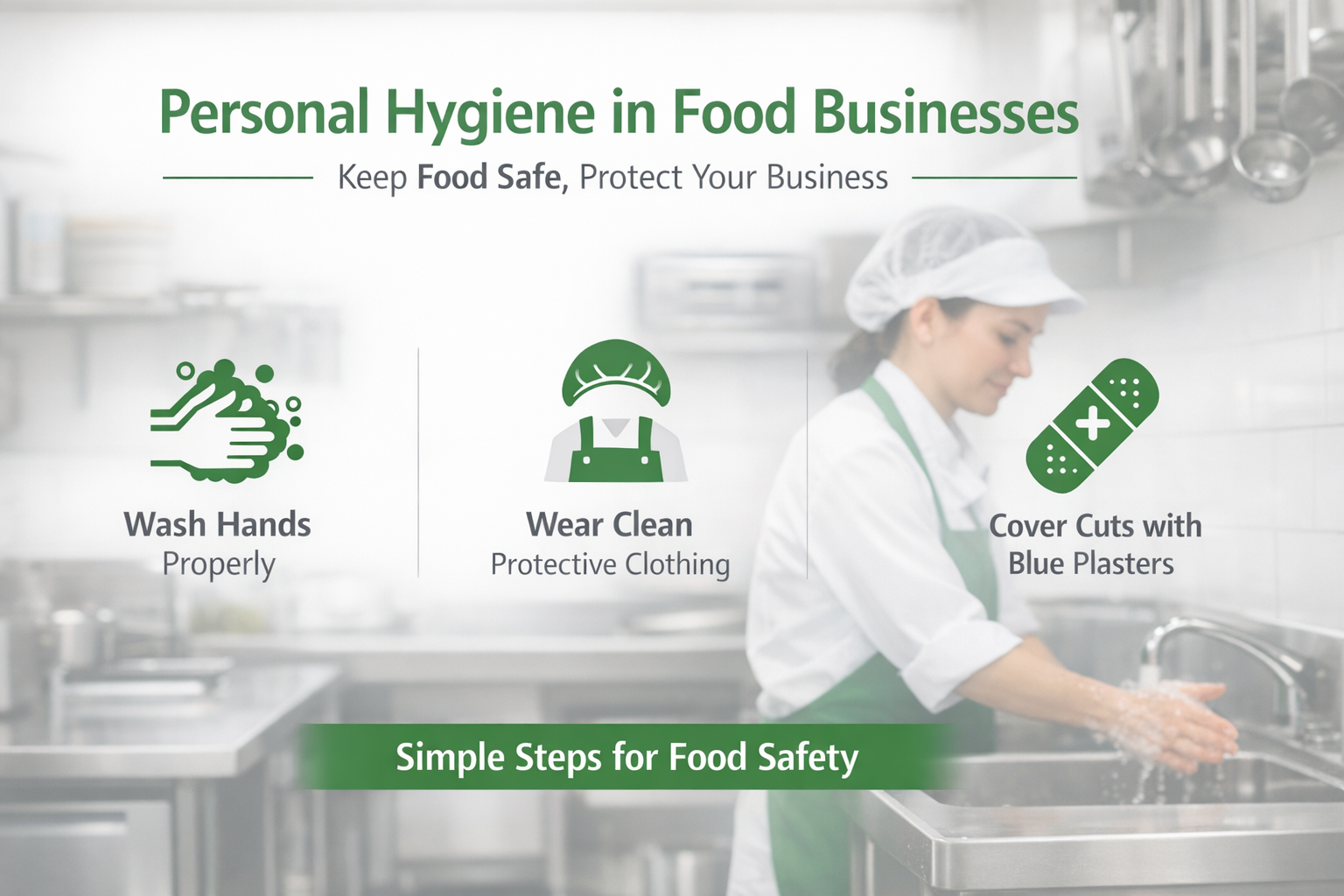
Protective clothing helps stop bacteria from your clothes and body getting into food. This includes uniforms, aprons and hair coverings.
All protective clothing must be clean at the start of every shift. If it becomes dirty, it must be changed straight away. Wearing yesterday’s apron or wiping hands on your uniform is never acceptable.
Protective clothing must always be removed before using the toilet, going outside or taking breaks. This stops outside contamination being brought back into food areas.
Hand washing is non-negotiable
Hand washing is the single most important hygiene practice in any food business. It’s also the one most often rushed or skipped.
Hands must be washed before starting work, before handling food and especially before ready-to-eat food. They must also be washed after handling raw food, after using the toilet and after touching bins, phones, money or your face and hair.
Effective hand washing means doing it properly, not quickly. Use warm water and soap. Scrub all areas of your hands for at least 20 seconds, including thumbs, fingertips and between fingers. Rinse thoroughly and dry fully using disposable paper towels.
Gloves never replace proper hand washing. Dirty gloves spread contamination just like dirty hands.
Everyday behaviour in food areas
Personal hygiene isn’t just about washing hands. It’s also about how you behave during your shift.
Eating, chewing gum, smoking or vaping in food preparation areas isn’t allowed. These activities increase the risk of contamination and look unprofessional.
Personal mobile phones should not be used in food areas. Phones carry bacteria just like unwashed hands. If devices are used for food safety tasks, they must be kept clean and wiped regularly with antibacterial wipes.
If you need to cough or sneeze, turn away from food, cover it properly and wash your hands straight away. Touching your face, nose or hair should be avoided, as bacteria transfer straight onto your hands and then onto food.
Cuts, wounds and blue dressings
Cuts and wounds must always be dealt with correctly.
All cuts must be fully covered with blue waterproof dressings. If the cut is on your hand or finger, the dressing must also be covered with a glove.
Blue dressings are used because they’re easy to spot if they fall into food. Skin-coloured plasters can be missed and lead to physical contamination complaints. These incidents often mean food has to be thrown away and customer trust is lost.
Check dressings regularly during your shift to make sure they’re still secure.
Illness and the 48-hour rule
If you’re ill, you must report it to your manager immediately. This is not optional.
Symptoms like diarrhoea, vomiting, fever with sickness or infected skin conditions mean you must not handle food. These illnesses spread very easily in food environments.
For vomiting or diarrhoea, the 48-hour rule applies. You must be completely symptom-free for at least 48 hours before returning to food handling duties. Coming to work while ill puts customers, colleagues and the whole business at risk.
Managers should make it easy for staff to report illness and understand that staying off work protects everyone.
Simple responsibilities that protect everyone
Good personal hygiene comes down to a few simple actions done well.
Wash your hands properly and often. Wear clean protective clothing. Keep cuts covered correctly. Report illness straight away. Avoid habits that contaminate food.
If you’re ever unsure, stop and ask your manager. It’s always better to check than to guess.
Making hygiene easier to manage
Keeping on top of daily hygiene standards can feel hard when you’re busy. Clear systems help staff remember what’s expected and give managers confidence that checks are being done properly.
If you want a simpler way to manage food safety checks, training records, illness reporting and daily hygiene controls, it’s worth exploring how the Food Safety App can support your business. It’s designed for busy UK food businesses and helps keep records clear, organised and inspection-ready without adding extra stress.
Good hygiene protects your customers and your reputation. A little consistency every day makes a big difference.