
Keeping pests out of your food business starts with spotting the signs early. It’s not about being an expert. It’s about knowing what looks wrong and speaking up straight away.
In cafés, restaurants, takeaways, food trucks and small producers, pest activity can appear quietly. A single dropping. A strange mark on a wall. One insect in dry stock. These small signs matter more than many people think.
This guide focuses only on pest identification. You’ll learn what to look for, where to look and why reporting is never optional. Getting this right protects your food, your customers and your business.
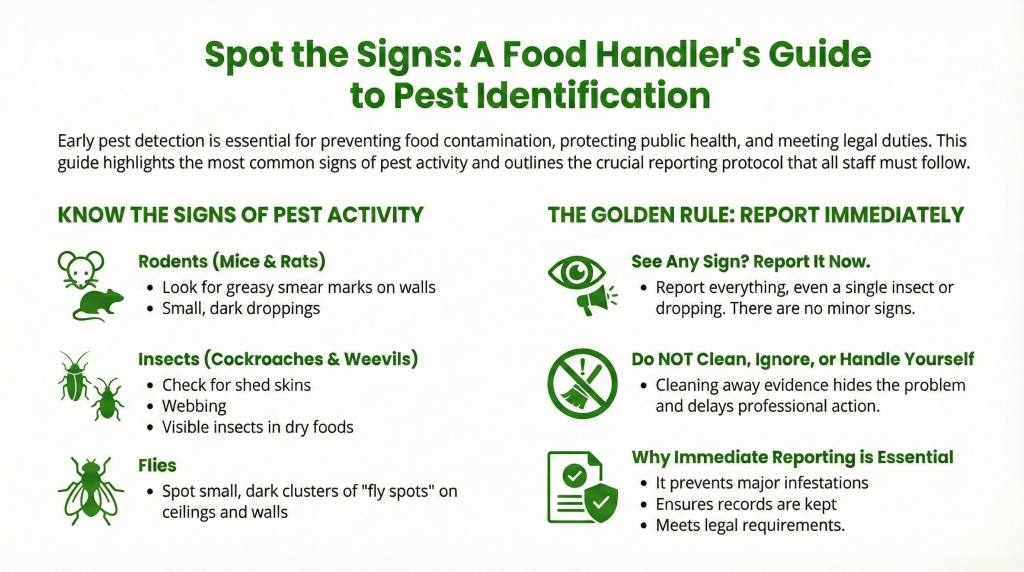
Why early pest identification matters
Pests contaminate food. They damage packaging. They spread bacteria. Even light activity can lead to serious food safety risks if it’s missed or ignored.
From a legal point of view, food businesses must take reasonable steps to prevent pests. That includes monitoring, acting quickly and keeping records. If staff don’t report signs early, problems grow fast and inspectors will expect answers.
The good news is that most infestations give warning signs. You just need to know what they look like.
Rodents: mice and rats
Rodents are one of the highest food safety risks you’ll face. They carry disease and contaminate surfaces through urine, droppings and hair. They’re also excellent at hiding.
You’re unlikely to see a mouse or rat during a busy shift. Instead, you’ll spot the evidence they leave behind.
Common signs of rodent activity include:
✅ Smear marks. Dark, greasy marks along walls, skirting boards, pipes and floor edges. These come from dirt and oil in the rodent’s fur
✅ Droppings. Mouse droppings are small and pointed, about the size of a grain of rice. Rat droppings are larger and blunt
✅ Gnaw marks on food packaging, wood, plastic containers, insulation or cables
✅ Runs and disturbance. Clear paths along walls or behind equipment where rodents travel regularly
Places worth checking regularly:
✅ Behind and underneath kitchen equipment
✅ Along wall edges and corners
✅ Dry stores and storage rooms
✅ Bin areas and external doors
If you find any of these signs, it’s already a problem. One dropping is never just one.
Insects: cockroaches, ants and flour pests
Insects breed quickly and hide well. By the time you see lots of them, the issue is already established. Early signs are often small and easy to miss.
Cockroach activity may show as:
✅ Shed skins left behind as they grow
✅ Small dark droppings that look like ground pepper
✅ Movement in warm, dark areas such as behind fridges, dishwashers and motors
Cockroaches prefer warmth, moisture and darkness. That’s why they’re often found around equipment rather than open areas.
Flour weevils and similar insects are common in dry goods. You might notice small beetles crawling in flour, rice, pasta, cereals or spices. Sometimes you’ll see fine powder, webbing or movement inside packaging.
Ants are usually easier to spot. Look for clear trails leading from cracks, doors or walls straight to food or water sources.
High-risk insect areas include:
✅ Dry food storage
✅ Under sinks
✅ Cracks, joints and crevices
✅ Electrical equipment housings
Any insect found in food or food storage must be taken seriously, even if it’s just one.
Flies and fly spotting
Flies are a major contamination risk. They feed and breed in waste and then land on food and food contact surfaces.
You may not always see flies during service, especially in cooler months. What you will often see are fly spots.
Fly spots are small dark marks made up of vomit and faeces. They’re commonly found on:
✅ Light fittings
✅ Ceilings
✅ High-level walls near windows and doors
These marks show regular fly activity. They’re not caused by a single fly passing through. If fly spots are present, flies are active in your premises.
This matters because flies can transfer bacteria directly onto food and surfaces.
Stored Product Insects
Stored Product Insects, often called SPIs, are usually brought in through deliveries. They affect dry goods and can spread quickly between products.
Signs to watch for include:
✅ Webbing inside bags or containers
✅ Larvae or insects in flour, grains, cereals, rice or spices
✅ Clumping, damaged packaging or unusual smells
Key times to check include:
✅ On delivery, before stock is accepted
✅ When opening new bags or containers
✅ During routine stock rotation and checks
If contaminated stock is missed, it can spread across the whole dry store.
Where pest activity is most likely to hide
Pests prefer quiet, undisturbed areas. That’s why regular checks matter.
Focus on places that aren’t cleaned or moved daily. Behind fixed equipment. Under shelving. Inside cupboards. Around pipework and drains.
External areas matter too. Bin stores, delivery doors and damaged seals are common entry points.
If something feels out of place, trust that instinct and report it.
Reporting pest activity and using the right pest controller
Here’s the most important rule. Any pest sighting or sign must be reported immediately.
This includes:
✅ A single dropping
✅ One insect
✅ Smear marks
✅ Fly spotting
✅ Suspected contaminated stock
Staff must not:
✅ Ignore the issue
✅ Assume someone else has reported it
✅ Clean away evidence before reporting
✅ Try to deal with it themselves
Once reported, pest issues must be handled by an accredited pest control contractor. This is essential. Accredited pest controllers are trained to work safely in food premises and use approved methods and products.
They also provide proper records of visits, findings and actions taken. These records are often checked by Environmental Health Officers.
DIY treatments or unaccredited contractors can contaminate food, break the law and leave you with no proof that the issue was managed properly.
Using the right pest control support protects your business and shows you’re taking food safety seriously.
Common mistakes that cause big problems
Many pest issues grow because of simple mistakes:
✅ Thinking small signs aren’t serious
✅ Removing droppings or insects without telling anyone
✅ Not checking dry goods properly
✅ Using the wrong pest control support
✅ Assuming pest control is someone else’s job
Pest identification is everyone’s responsibility. Front of house. Kitchen staff. Managers. Delivery checks. It all counts.

Building good pest awareness into daily work
The best businesses treat pest checks as part of normal routines. A quick look during opening checks. A glance behind equipment when cleaning. Careful checks during deliveries.
Talking openly about pest signs helps staff feel confident reporting them. No blame. No embarrassment. Just quick action.
When everyone knows what to look for and understands the importance of using accredited pest control support, pests have far fewer places to hide.
Final thought
Pest control doesn’t start with traps or treatments. It starts with people noticing small signs and reporting them straight away so the right professionals can act.
If you want an easier way to record pest sightings, track actions and keep clear records for pest control visits, the Food Safety App can help make food safety simpler and save you time while keeping your business compliant.