
A short briefing can stop serious mistakes. Keep front of house aligned before service starts.
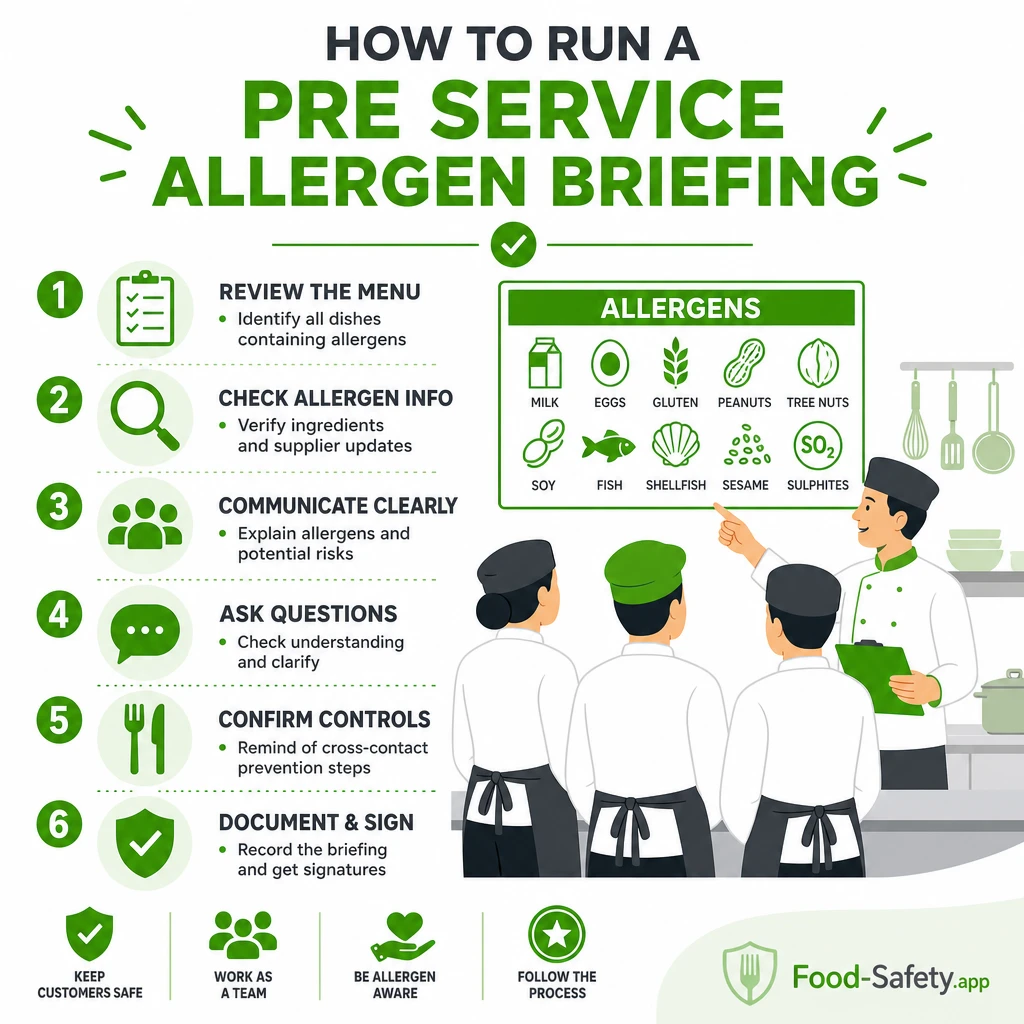
Pre-service prep and briefing scope
The pre-service allergen briefing starts with a quick, task-focused review of any menu changes and the latest allergen information. The aim is to crystallise objectives for the shift, confirm who will lead the briefing, and ensure every team member understands their role. In practice, this means checking the allergen matrix against the day’s menu, confirming sub-ingredients and garnishes, and agreeing what constitutes a high-risk item for the service period. how to create an allergen matrix for your menu.
Key tasks before service
- Review the day’s menu for changes and confirm allergen data in the system.
- Align on briefing objectives: what must be communicated and what requires escalation.
- Assign an allergen lead and outline staff responsibilities for the session.
Designated allergen lead and roles
Assign a supervisor or senior cook to run the briefing. Clear roles reduce confusion during busy service and help maintain a steady traceable record. The lead should coordinate updates, field guest questions, and capture any deviations in real time. Supporting roles include a recorder (documenting conversations and decisions) and a front-of-house liaison to relay guest needs accurately.
Roles and responsibilities
- Allergen lead: run the briefing, resolve conflicts, ensure allergen data accuracy.
- Recorder: log decisions, timestamps, and actions taken.
- Front-of-house liaison: capture guest inquiries and communicate needs to the kitchen.
What to cover during the briefing
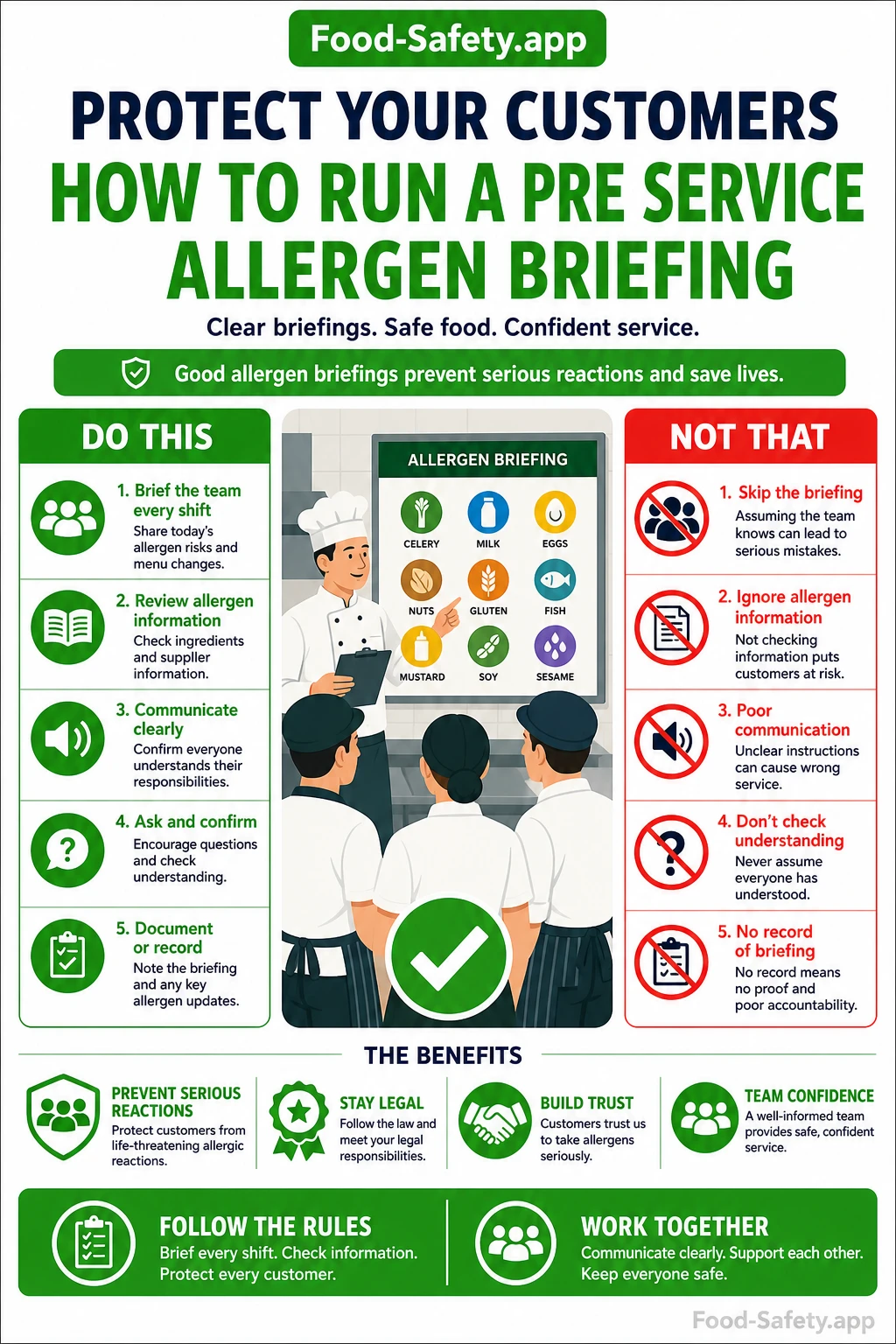
A thorough briefing should cover key allergens, dish ingredients, cross-contact risks, supplier notes, and any sub-ingredients or garnishes. Staff should understand which items are high risk, how to handle shared equipment, and where to find the latest allergen records in the app. Use a concise checklist to ensure nothing is missed during a fast-paced service window. For fundamentals, see the 4 Cs of food hygiene.
Core briefing elements
- List of all guests’ allergen concerns for the shift.
- Allergen highlights for each menu item and daily specials.
- Cross-contact safeguards and equipment sharing rules.
- Supplier notes or substitutions that affect allergen data.
- Documentation expectations and how to access references in the app.
Dish changes and updates
Communicate new or altered dishes promptly. Update allergen records and staff references in the app to ensure everyone is working from the same data. When a dish changes, the briefing should include a quick risk assessment and a plan to inform all teams, including any new sub-ingredients or garnishes that alter allergen status. Record who approved the change and when. See the allergen management protocol for detailed guidance on changes.
Practical steps for changes
- Annotate the allergen matrix with updated dish items.
- Distribute a short briefing note to all service teams.
- Verify that printed or digital menus reflect the change where used by staff.
| Dish | Allergens | Record timestamp | Notes |
|---|---|---|---|
| Maple-glazed salmon | Fish, Soy | 2026-08-20 14:15 | Confirmed no cross-contact with dairy |
| Mediterranean veggie lasagne | Gluten, Milk | 2026-08-20 14:17 | Substitute spinach for enhanced allergen clarity |
| Beef bourguignon | Gluten | 2026-08-20 14:20 | Verified thickening agent contains gluten |
Practical scenarios
Use real-world scenarios to reinforce the briefing process and test your team’s response. These examples illustrate how to apply the framework under pressure.
Scenario 1: a new menu item is added
- Lead updates the allergen matrix, briefing covers the item, and staff acknowledge changes; records saved automatically.
Scenario 2: a customer reports a severe allergy
- Kitchen verifies ingredients, implements cross-contact controls, and logs the interaction for audit.
Scenario 3: supplier substitution with incomplete data
- Escalate to procurement, pause use until information is confirmed; document the decision and communicate with the team.
Compliance focus and tooling
Maintain a current allergen matrix linked to every menu item, standardise staffing questions and guest inquiry handling, and ensure time-stamped briefing records are readily exportable for inspections. For practical management of these processes, consider adopting a formal food safety management system that centralises all records and supports offline access when needed.
Further reading
Food-Safety.app, a food safety management system for catering businesses.
Allergen management resources
Gain access to downloadable templates and guidance that support your allergen briefing program, helping you stay audit-ready and consistent across shifts.