
Running a food business in the UK means inspections are part of the job. For many owners, they’re also one of the biggest worries. You might wonder what the inspector will ask, what they’ll look at and how one visit can affect your reputation.
The good news is inspections don’t need to feel scary. With the right habits in place, they become a chance to show that food safety is part of your everyday work, not something you rush through once a year.
This guide explains how official inspections work, what really affects your Food Hygiene Rating and how to prepare your team so everyone feels confident and ready.
What official inspections are really about
Environmental Health Officers visit food businesses to check that food is safe and that the law is being followed. They’re not there to catch you out. They want to see that risks are understood and controlled day in, day out.
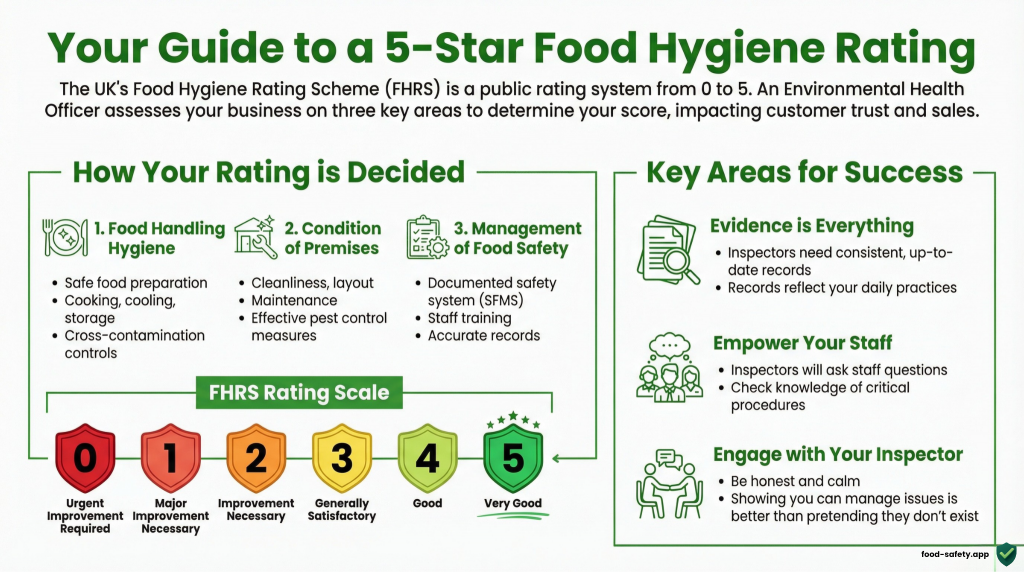
After the visit, your business is given a Food Hygiene Rating from 0 to 5. That rating is published online and many customers check it before deciding where to eat. A strong rating builds trust. A poor one can put people off.
Inspections look at what normally happens. Not your best day. Not a tidy corner you’ve just cleaned. Your usual routines matter most.
How your Food Hygiene Rating is decided
Your rating is based on three main areas. All three matter, but how you manage food safety often carries the most weight.
Food handling and hygiene
This is about how food is prepared and stored. Inspectors look at things like:
- How you prevent cross-contamination
- Whether food is cooked, cooled and reheated safely
- How temperatures are controlled and checked
If food isn’t handled safely, the risk to customers is high. That’s why this area is always closely reviewed.
Condition of the premises and equipment
Clean, well-maintained spaces make safe working easier. Inspectors will check:
- Cleanliness of surfaces and equipment
- Layout and workflow
- Signs of pest activity
- Condition of floors, walls and ceilings
Small issues can add up if they show poor upkeep.
Management of food safety
This is where many ratings are won or lost. Inspectors want to see:
- A working food safety management system
- Staff who understand what they do and why
- Records that match real practice
- Evidence that problems are spotted and fixed
Paperwork alone isn’t enough. What matters is how you use it.
What different ratings actually mean
A 5 means very good compliance and strong control.
A 4 means good, with only minor improvements needed.
A 3 means generally satisfactory but improvements are required.
A 2 or below means significant problems that need fixing.
One common misunderstanding is thinking a good inspection day guarantees a 5. It doesn’t. Inspectors judge your systems, not a one-off performance.
What inspectors always focus on
Some areas come up in almost every inspection. Making these part of your routine helps avoid surprises.
Your food safety management system
Inspectors will check if you have a documented system and if it’s kept up to date. More importantly, they’ll check if staff actually follow it.
Blank pages, filled-in weeks later or records that don’t match reality raise concerns.
Temperature control
You should be able to show that:
- Fridges are kept at 8°C or below
- Freezers are at -18°C or below
- Cooking and reheating reach safe temperatures
If something goes wrong, inspectors expect to see action taken and written down.
Cleaning and personal hygiene
It’s not enough to have a cleaning schedule on the wall. Inspectors want to see that it’s followed.
They’ll also check handwash basins. Soap, paper towels and clear access are essential. Missing any of these is a common failure.
Staff knowledge
Inspectors often speak to frontline staff, not just managers. They may ask:
- How do you know this food is safe
- What would you do if a fridge broke
- How do you handle allergens
Staff don’t need fancy words. Simple, honest answers based on real routines are best.
Allergen management
Allergen controls are taken very seriously. Inspectors will check that:
- Allergen information is accurate and available
- Staff know how to respond to questions
- There’s no guesswork
Mistakes here can have serious consequences.
Common reasons businesses lose marks
Many issues come up again and again during inspections:
- Missing or made-up records
- No proof that problems were fixed
- Dirty equipment waiting to be cleaned later
- Staff unsure of procedures
- Poor allergen awareness
Most of these aren’t hard to fix. They just need consistent habits.
How to respond during an inspection
Your attitude during an inspection matters. Being open and calm helps build trust.
Do be honest.
Do answer clearly and simply.
Do show records when asked.
Do say you’ll check if you’re unsure.
Don’t guess answers.
Don’t argue or get defensive.
Don’t hide issues or blame others.
If something has gone wrong, explain what you did about it. Inspectors prefer honest control over pretending nothing ever goes wrong.
Turning inspection feedback into improvement
If improvements are needed, inspectors will explain what to fix. A clear action plan shows you take food safety seriously.
A good action plan includes:
- What the problem is
- Why it’s a risk
- What action will be taken
- Who is responsible
- When it will be done
Written evidence is just as important as physical fixes. Training, reviews and checks should all be recorded.
Re-inspections and ratings
If your rating is below a 5, you can usually request a re-inspection once all actions are completed and evidence is ready. Acting quickly helps show commitment and protects your reputation.
Key things to remember
Inspections look at everyday practice, not one-off effort.
Management control and staff knowledge are critical.
Records should reflect what really happens.
Honest communication builds trust.
Action plans help improve safety and ratings.
Making inspections easier
Preparing for inspections isn’t about stress or last-minute cleaning. It’s about simple systems that support your team every day.
If you want an easier way to manage records, keep staff on track and stay inspection-ready, take a look at how the Food Safety App can help. It’s designed to save time, reduce stress and support safer food, every day.