
Why personal hygiene matters so much
Personal hygiene is one of the biggest controls in food safety. Many cases of food poisoning don’t start with spoiled food. They start with people.
Hands, hair, clothing and illness can all spread harmful germs. Once these get into food, they can cause serious illness, complaints and inspections.
Common risks include:
- Vomiting and diarrhoea bugs such as norovirus
- Infected cuts, boils or broken skin
- Dirty or badly used protective clothing
- Hair, nails or jewellery contaminating food
UK food law requires food handlers to keep clean and to stay away from food if they’re a risk. This applies to staff, supervisors and business owners. Guidance from the Food Standards Agency makes this very clear.
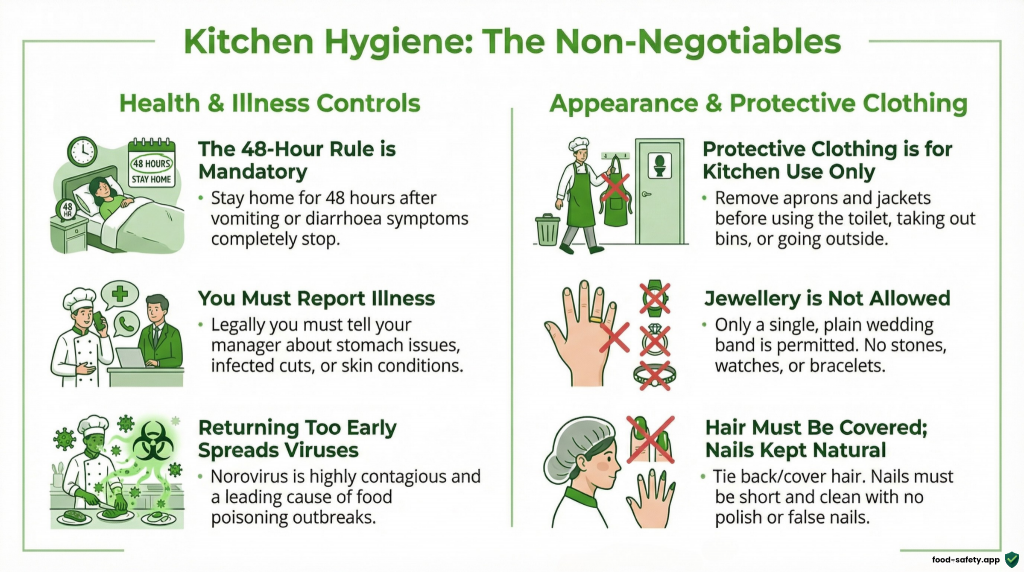
The 48 hour rule explained simply
The 48 hour rule is one of the most important rules in food safety. It’s also one of the most ignored.
If someone has vomiting or diarrhoea, they must not work with food.
What must happen
If a staff member vomits or has diarrhoea, they must
- Stop work straight away
- Leave food areas
- Tell the manager
They must not return to food handling until they’ve been completely symptom free for 48 hours.
This applies even if:
- They feel fine the next day
- Symptoms were mild
- They took tablets or medicine
A realistic example
A chef has diarrhoea during the night. By morning, they feel better.
They still can’t come in to work that day.
They can only return after two full days with no symptoms at all.
Why this rule exists
Bugs like norovirus spread very easily. They can survive on hands, surfaces and clothing. One person coming back too early can infect others and customers.
Common problems include:
- Staff returning early to help out
- Believing medicine cancels the rule
- Not wanting to let the team down
The risk is far bigger than one missed shift. Outbreaks can lead to staff shortages, bad reviews and closure.
Reporting illness is a legal responsibility
Every food handler has a legal duty to report illness. This isn’t optional and it isn’t up to the manager to guess.
What must be reported
Staff must tell their manager if they have:
- Vomiting or diarrhoea
- Nausea or stomach cramps
- Infected cuts, boils or weeping sores
- Skin infections or broken eczema
- Heavy colds with coughing or sneezing near food
Once reported, the manager decides whether the person can work, be moved to other duties or be sent home.
A simple example
A food handler notices a cut on their hand has started leaking.
They must report it straight away.
They may be stopped from food handling until it’s healed or properly covered.
Recording illness properly
Reporting illness isn’t enough on its own. Businesses also need to record what happened and what action was taken. This shows that problems were managed properly and quickly.
Using food-safety.app makes this much easier. Staff illness can be recorded straight away in the corrective actions log, including:
- Who reported the illness
- What symptoms were involved
- When the person was excluded from work
- When they were allowed to return
If an Environmental Health Officer asks how illness is controlled, having this logged clearly can make inspections far less stressful and shows you’re taking food safety seriously.
Where businesses often go wrong
Inspectors frequently see:
- Staff hiding symptoms
- Managers allowing people to work carefully
- No written record of illness being reported
Clear reporting and simple records protect customers, staff and the business.
Protective clothing is kitchen only
Protective clothing is there to protect food. It’s not general workwear.
What counts as protective clothing
This includes:
- Aprons
- Chef jackets or whites
- Tunics or food handling coats
These items must be clean at the start of the shift and changed if they become heavily soiled.
When it must be removed
Protective clothing must be taken off before:
- Taking out bins
- Going outside
- Smoking or vaping
- Using the toilet
Why this matters
Outside areas and toilets carry high levels of bacteria. Wearing aprons in these places brings contamination straight back into the kitchen.
Everyday mistake
A cook empties the bins while still wearing their apron.
That apron can now contaminate food prep areas.
The correct action is to remove the apron and wash hands before returning.
Jewellery rules in food handling
Jewellery is a hidden hygiene risk and rules are strict.
What’s allowed
- One plain wedding band
- No stones
What’s not allowed
- Rings with stones
- Bracelets or bangles
- Watches
- Any other hand jewellery
Why jewellery isn’t allowed
- Bacteria collect under rings
- Jewellery blocks proper handwashing
- Items can fall into food
Wearing gloves doesn’t solve this. Bacteria still build up underneath.
Hair, nails and personal appearance
Hair and nails are a common cause of contamination and customer complaints.
Hair rules
Hair must be:
- Tied back
- Controlled at all times
Hats or hairnets should be worn where needed. Beards should be covered if there’s a risk of hair falling into food.
Nail rules
Nails must be:
- Short
- Clean
- Natural
Not allowed:
- Nail varnish
- Gel nails
- Acrylic or false nails
Clear polish isn’t acceptable either.
A practical example
A food handler has chipped nail varnish.
They must stop handling food until it’s fully removed.
Environmental Health Officers always check nails and hair during inspections.
What inspectors look for in real life
Inspections aren’t just about paperwork. Officers watch how people work.
They expect to see:
- Staff reporting illness honestly
- Sick staff excluded when needed
- Protective clothing worn correctly
- No jewellery apart from a plain band
- Hair and nails controlled
Strong everyday habits show that a business is well run and takes food safety seriously.
Making hygiene rules easier to manage
Most hygiene issues don’t come from bad staff. They come from confusion, pressure and poor systems.
Simple rules, clear training and easy ways to record problems make a big difference. Logging illness in the corrective actions log using food-safety.app helps you stay organised, show due diligence and save time when it matters most.
When food safety is easier to manage, teams are calmer, inspections are smoother and standards stay high every day.