Safe defrosting is a key part of food safety management for UK catering businesses. If you’re unsure about the safest way to thaw food without risking contamination or slipping into the danger zone, you’re in the right place. This guide explains what matters, what to avoid, and how to stay compliant using simple, practical steps.
- Why safe defrosting matters
- Understanding the danger zone
- Biological, chemical and physical risks
- Safe defrosting methods for caterers
- Common mistakes to avoid
- Recording defrosting in your HACCP records
Why safe defrosting matters
Freezing food slows bacterial growth, but it doesn’t kill most harmful bacteria. Once food starts to thaw, bacteria can become active again. If thawing isn’t controlled properly, food can quickly enter temperatures where bacteria multiply rapidly.
For catering and hospitality businesses, unsafe defrosting can lead to food poisoning incidents, failed inspections, or damage to your reputation. It’s also a clear area Environmental Health Officers look at when reviewing your HACCP records.
Defrosting isn’t just about temperature. It also creates risks of cross-contamination, cleaning chemical residue, and foreign objects entering food. Managing all three contamination types is essential.
Understanding the danger zone
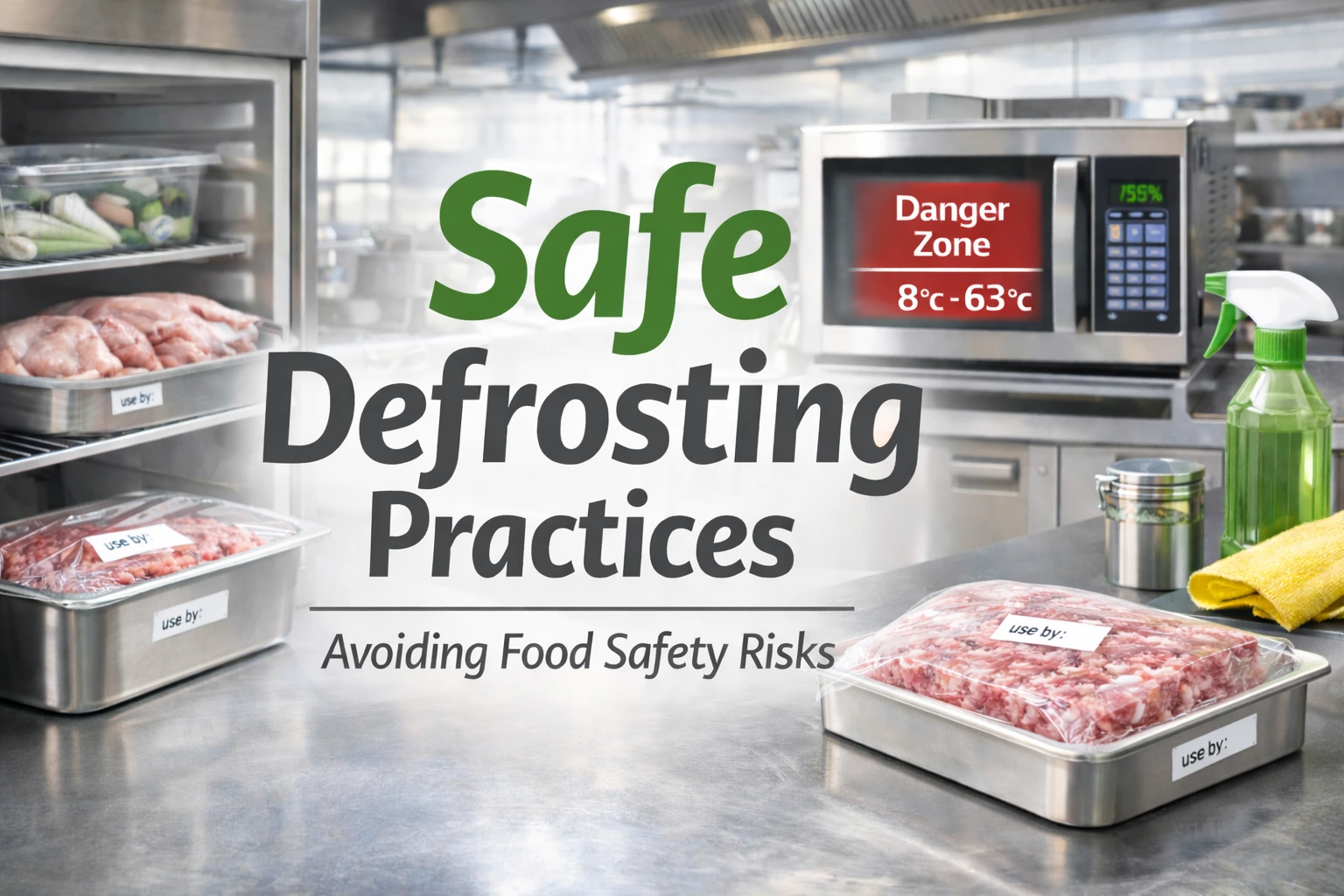
In the UK, the temperature danger zone is between 8°C and 63°C. Within this range, bacteria such as Salmonella, Campylobacter and Listeria can grow quickly.
If frozen food is left out at room temperature to defrost, the outer layers can enter the danger zone while the centre is still frozen. This creates ideal conditions for bacterial growth.
According to the Food Standards Agency, chilled food should be kept at 5°C or below, and freezers should operate at -18°C or colder. Safe defrosting means keeping food out of the danger zone for as long as possible.
Biological, chemical and physical contamination risks
Biological contamination
This is the main concern during defrosting. As food warms, bacteria multiply. Raw meat and poultry are especially high risk.
Defrosting juices can also drip onto ready-to-eat food, work surfaces or equipment. In a busy kitchen, this can easily happen if thawing isn’t planned properly.
Chemical contamination
When staff clean up after defrosting raw food, there’s a risk of using too much sanitiser or not rinsing correctly. Chemical residues can transfer to food if surfaces or containers aren’t handled properly.
Another risk is thawing food in non-food-grade containers, which may leach chemicals into food.
Physical contamination
During defrosting, packaging can tear. Small fragments of plastic, cardboard, or damaged labels can fall into food.
If food is thawed in open areas of the kitchen, it may also be exposed to dust, hair, or other foreign objects. Using clean, covered containers reduces this risk.
Safe defrosting methods for caterers
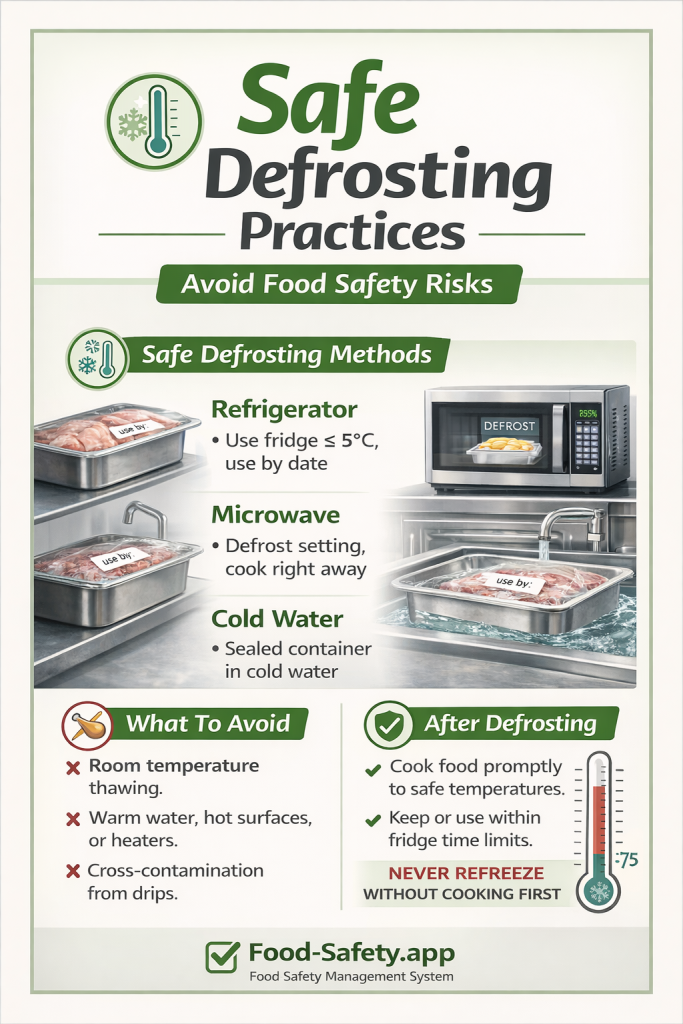
1. Refrigerator defrosting (recommended)
This is the safest method for most catering settings. Place frozen food in a fridge set at 5°C or below.
Always put raw meat or poultry on the bottom shelf in a tray to catch drips. This prevents cross-contamination with ready-to-eat items such as desserts or salad ingredients.
Large joints or bulk items may take 24 to 48 hours to thaw fully, so forward planning is essential.
2. Microwave defrosting
Suitable for smaller items that will be cooked immediately. Microwave defrost settings can partially cook food, creating warm spots where bacteria grow quickly if left standing.
Once defrosted this way, food should go straight into cooking.
3. Cold water defrosting
Food must be sealed in leak-proof packaging and submerged in cold running water. It must be cooked immediately after thawing.
This method requires supervision and isn’t suitable for busy periods unless clearly built into your kitchen procedures.
What to avoid
Never leave food out on a prep counter to defrost. Even a couple of hours at room temperature can push the surface well into the danger zone.
Also avoid using warm water, radiators, or placing food near ovens to “speed things up”. These shortcuts create unnecessary risk.
Common mistakes to avoid
One common issue is poor planning. Staff take frozen food out too late, then leave it on the side because service is approaching.
Another is failing to separate raw and ready-to-eat foods during thawing. This can directly affect your efforts to improve food hygiene rating scores.
Refreezing thawed food without cooking it first is another mistake. Once thawed, food should either be cooked or kept chilled and used promptly.
Finally, some businesses don’t document defrosting controls clearly. If it’s not recorded, it’s difficult to demonstrate due diligence.
Recording defrosting in your HACCP records
Defrosting should be covered in your food safety management system as part of your hazard analysis and critical control procedures.
You should define:
- Approved defrosting methods
- Where food should be placed in the fridge
- Time limits for use after thawing
- Cleaning procedures after handling raw food
Keeping clear digital food safety records makes this easier. Instead of relying on paper notes, you can log fridge temperatures, corrective actions and cleaning checks in one place.
Food-Safety.app is a food safety management system for UK catering businesses. It helps teams document processes consistently, store HACCP records securely, and show Environmental Health Officers that safe defrosting procedures are built into daily operations.
Conclusion
Safe defrosting isn’t complicated, but it does require planning and control. Keeping food out of the danger zone, preventing biological, chemical and physical contamination, and recording your procedures properly are all part of good practice.
When defrosting is managed consistently, it supports safer kitchens, smoother inspections and stronger compliance. If you’re reviewing your current system, using a structured digital approach can make day-to-day food safety management simpler and more reliable for your whole team.