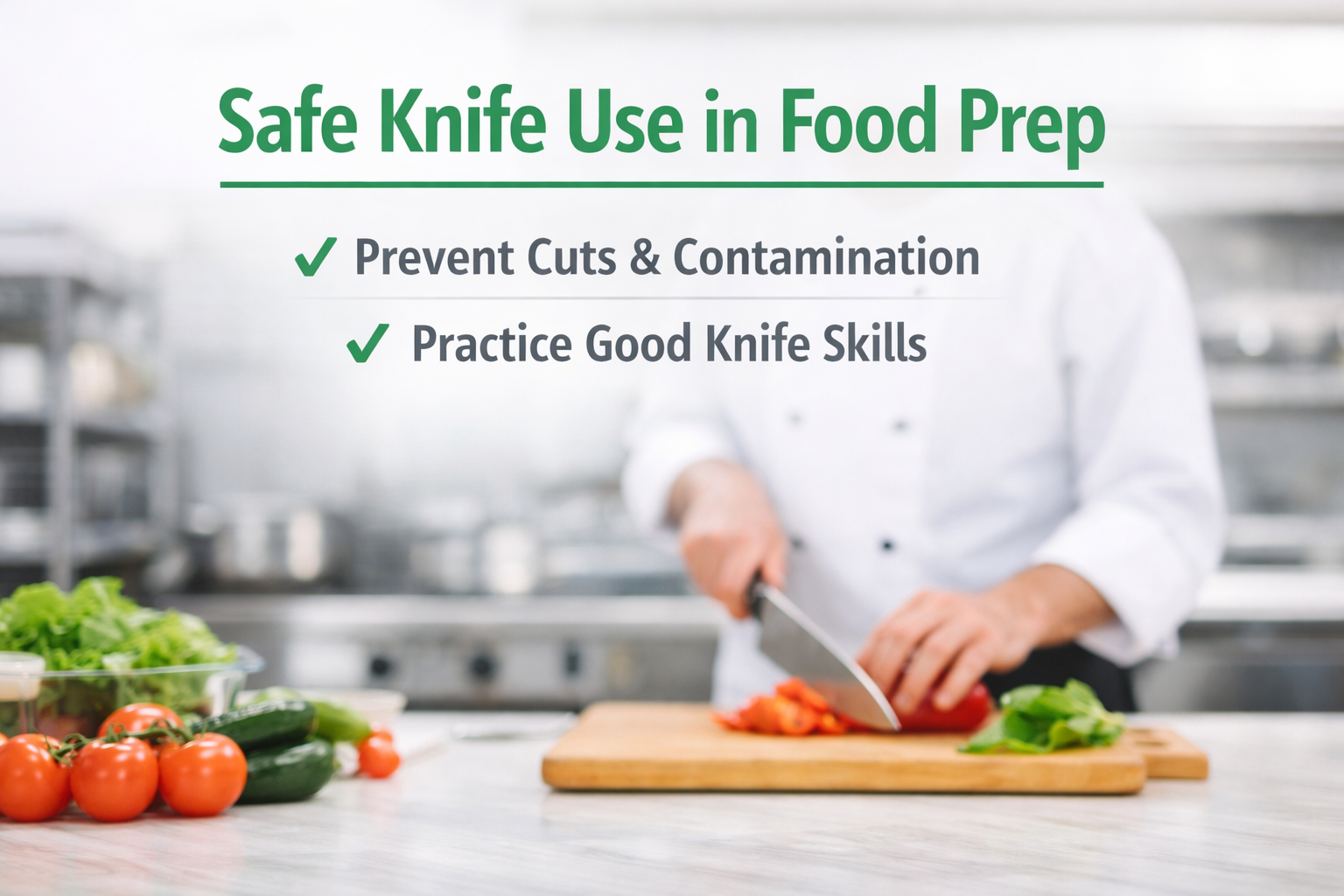
Knives are used all day in cafés, restaurants, takeaways, food trucks and small producers. They help you prep fast and serve on time. They can also cause painful cuts and risks like cross contamination if they’re used the wrong way and without good food safety practices supported by a solid food safety management system.
Why knife safety matters for food safety
Cuts are not just a first aid issue. They’re a food safety risk too. A cut can bleed onto food or equipment. Plasters can fall off and contaminate food. Staff may rush to finish a job while hurt. All of this can affect hygiene and your food hygiene rating.
Good knife safety also supports other controls like preventing cross contamination and managing hazards that could otherwise slip into your daily routines. For more on common contamination risks and how to stop them, see How Cross-Contamination Happens and How to Stop It.
Choose the right knife for the job
Using the wrong knife makes slips more likely. It also makes prep harder than it needs to be. Make sure you have the right knives for the task and remove damaged ones right away.
Sharp knives are safer than blunt ones. A blunt blade needs more force and that’s when hands slip. Build knife sharpening into your routine. It saves time and reduces injuries.
Store knives safely at all times
Knife injuries often happen when people reach into sinks or drawers. Use safe storage such as wall mounted magnetic strips, knife blocks or sheaths for drawers.
Never leave knives in washing up bowls or sinks. When carrying a knife, keep the blade pointed down and close to your side. Let others know you’re moving behind them in tight spaces.
Use the correct cutting technique
Good technique protects hands and speeds up prep. Train staff to keep fingers tucked under using a claw grip, cut away from the body and focus on the task. Rushing causes accidents. If service is busy, it’s better to slow prep slightly than deal with an injury.
Always use a stable chopping board
A moving board is a major cause of knife slips. Place a damp cloth or non slip mat under boards to keep them steady. Replace boards that are badly worn or cracked.
Use colour coded boards correctly to help prevent cross contamination and support your digital food safety controls.
Keep knives clean and dry
Greasy or wet handles are easy to lose grip on. Wash knives one at a time and dry them straight away before storing. Never leave knives on edges of sinks, worktops or prep tables.
Train every staff member properly
Knife safety should be part of staff induction and refreshers throughout the year. Cover knife types, correct use, safe handling, storage and cleaning rules. Include what to do if an injury happens.
Using good digital food safety training resources makes this simpler and helps you track that training has been completed.
Know what to do if someone gets cut
Even with good habits, accidents can happen. Have a clear process that includes stopping work, cleaning and covering the wound with a blue plaster, and changing gloves. Discard any food that may be contaminated and record the incident properly as part of your food hygiene paperwork.
Make knife safety part of daily checks
Add simple daily checks to your routine such as ensuring knives are in good condition, boards are clean and stable, and staff follow safe techniques. This fits well with paperless checks and supports what inspectors look at for a strong food hygiene rating.
How digital systems help knife safety
Paper systems often get missed during busy shifts. Digital food safety tools help you keep training records in one place, schedule checks, log incidents quickly and show inspectors clear evidence of control.
Digital food safety also reduces paperwork stress and helps staff follow consistent practices every day.
Simple habits that protect your team
Knife safety is built on small actions done well:
- Use the right knife
- Keep it sharp
- Store it safely
- Focus when cutting
- Train everyone properly
These habits protect hands, food and your business. For more on building strong food safety habits across your business, check the blog regularly at the Food Safety App Food Safety Blog.
Wrap up
Using knives safely supports better hygiene, fewer injuries and smoother service. It also helps protect your food hygiene rating and shows you take safety seriously.