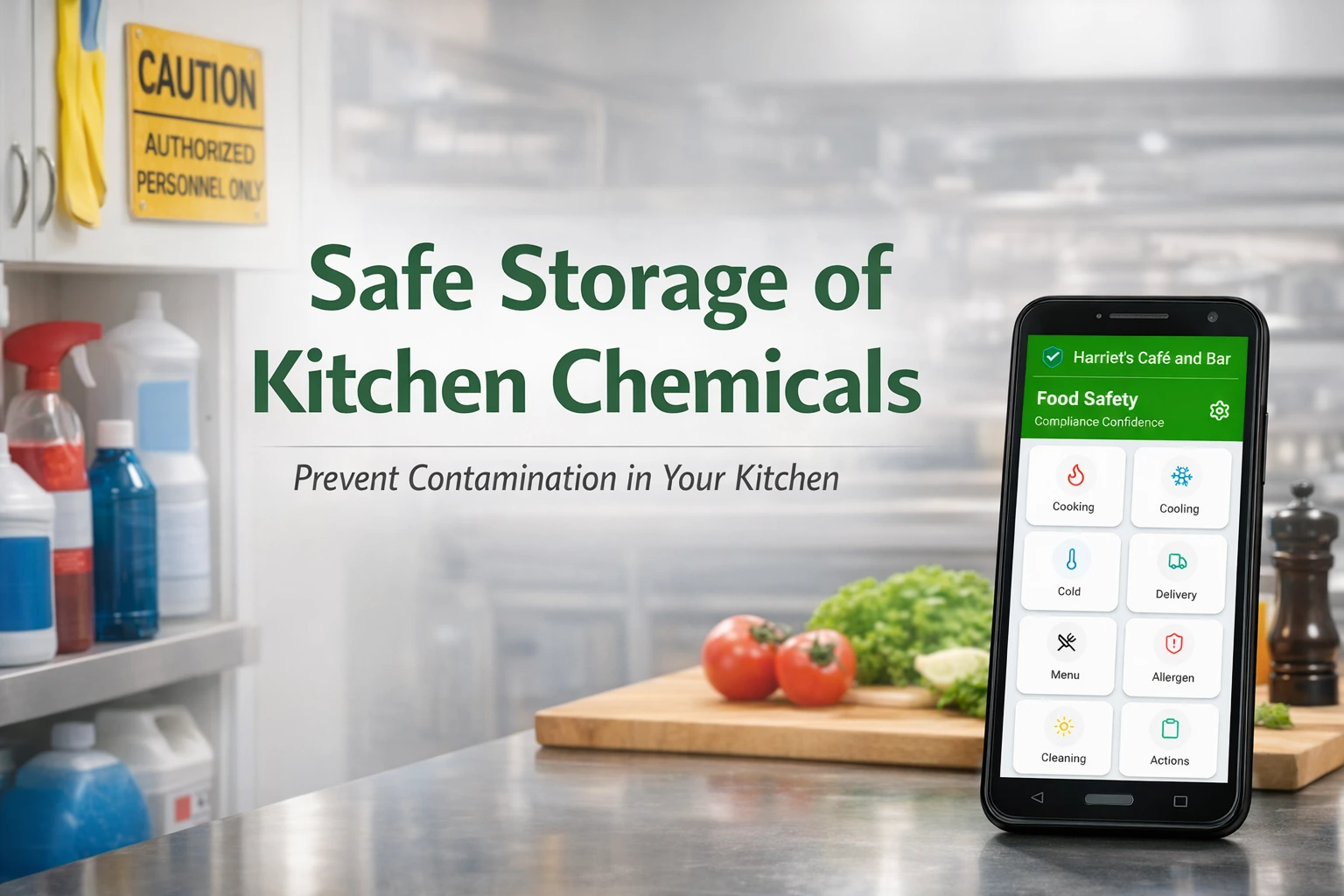
Running a kitchen means handling cleaning chemicals safely every day. This guide explains how safe storage supports food safety management, helping UK food businesses prevent contamination and stay compliant.
Table of Contents
- Why safe chemical storage matters
- COSHH basics for food businesses
- How to store kitchen chemicals safely
- Common mistakes to avoid
- Managing records and compliance
Why safe chemical storage matters
In a busy kitchen, cleaning products are essential, but they also carry risks. If chemicals are stored or used incorrectly, they can contaminate food, equipment or surfaces.
This isn’t just a hygiene issue. Under UK law, food must be protected from contamination that could make it unsafe or unfit to eat. Even a small splash of disinfectant on a prep surface can lead to serious consequences.
Safe storage is therefore a key part of your food safety management system. It helps protect customers, staff, and your business reputation.
COSHH basics for food businesses
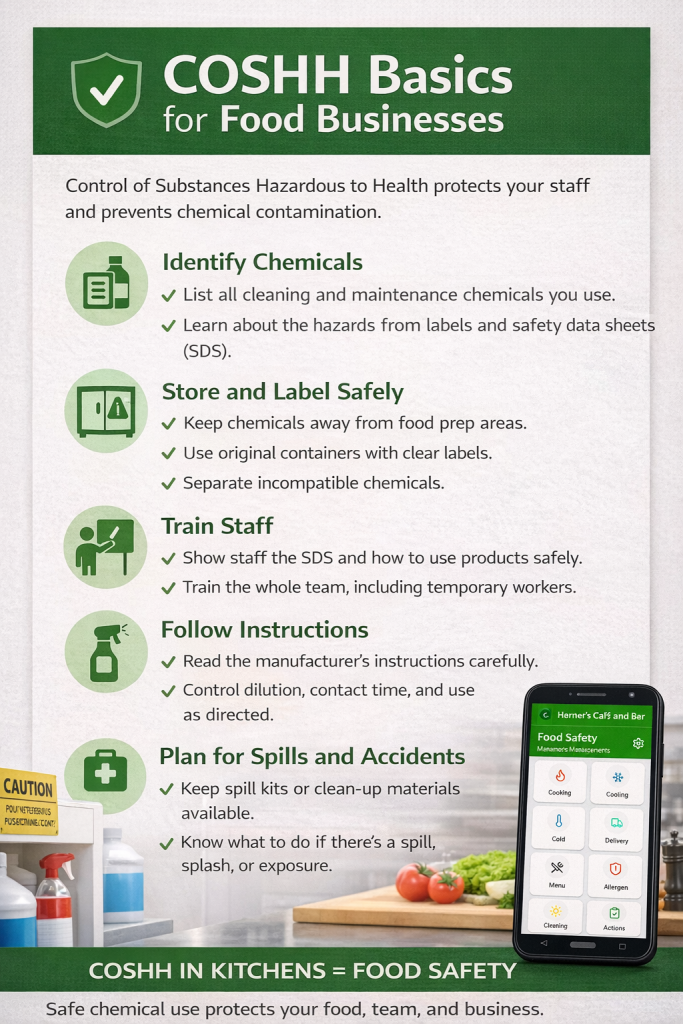
COSHH (Control of Substances Hazardous to Health) applies to many products used in catering, including detergents, sanitisers, oven cleaners and descalers.
For food businesses, COSHH is about more than staff safety. It directly supports food hygiene.
What you’re required to do
You must:
- Identify hazardous substances in your kitchen
- Understand risks using labels and safety data sheets
- Put control measures in place, including storage, PPE and handling
- Train staff on safe use
- Plan for spills or accidents
The HSE catering guidance highlights that cleaning products should be stored safely and used in a way that prevents exposure and contamination.
How this links to HACCP
Chemical contamination is a recognised hazard in HACCP. That means your controls, like storage and handling, should be documented in your HACCP records.
How to store kitchen chemicals safely
Safe storage doesn’t need to be complicated, but it does need to be consistent.
Keep chemicals away from food areas
Store cleaning products in a designated area, not on prep surfaces, shelves above ingredients, or near open food.
A separate cupboard or clearly defined storage space is ideal.
Use original containers and clear labels
Always keep chemicals in their original packaging where possible. If you decant into smaller bottles:
- Label them clearly
- Never use food containers
- Make sure staff know what’s inside
This avoids confusion and accidental misuse.
Separate incompatible chemicals
Some products react dangerously when mixed. For example:
- Bleach and acids can release toxic gases
- Degreasers and sanitisers may not be compatible
Store different types apart and train staff never to mix products.
Follow correct dilution and use
Using too much chemical increases contamination risk. Too little may not clean effectively.
Always follow manufacturer instructions for:
- Dilution rates
- Contact time
- Rinsing requirements
This is especially important for food-contact surfaces.
Train your team properly
Staff should understand:
- What each product is for
- How to dilute and use it safely
- What to do if there’s a spill
This is particularly important for new starters and temporary staff.
Common mistakes to avoid
Even well-run kitchens can slip into bad habits. Here are some of the most common issues:
Leaving spray bottles in prep areas
It’s convenient, but risky. Chemicals left near food can easily contaminate surfaces or ingredients.
Using unlabelled containers
Unmarked bottles are a major hazard. Staff may not know what they’re using, increasing the risk of misuse.
Relying only on safety data sheets
A safety data sheet isn’t enough on its own. You still need a clear, practical COSHH assessment tailored to your kitchen.
Using the wrong products on food-contact surfaces
Not all chemicals are suitable for surfaces that touch food. Always check they’re food-safe and used correctly.
Inconsistent procedures
If staff handle chemicals differently from shift to shift, risks increase. Consistency is key.
This is where structured systems and digital food safety records can help standardise processes.
Managing records and compliance
Safe chemical storage isn’t just about doing the right thing. It’s about proving it.
Environmental Health Officers will often look at:
- COSHH assessments
- Cleaning procedures
- Staff training records
- Storage arrangements
Keeping this information organised can help you improve food hygiene rating outcomes during inspections.
Make compliance easier with digital tools
Paper records can be hard to keep up to date, especially in fast-paced kitchens.
Using a system like Food-Safety.app is a food safety management system for UK catering businesses. It helps you:
- Keep COSHH and cleaning procedures in one place
- Maintain accurate HACCP records
- Support consistent allergen management and daily safety checks
- Track checks and staff responsibilities
This makes it easier to stay organised and inspection-ready without adding extra workload.
Conclusion
Safe storage of kitchen chemicals is a simple but essential part of running a compliant food business. It protects your food, your staff, and your reputation.
By keeping chemicals separate from food, labelling them clearly, and training your team properly, you reduce the risk of contamination and strengthen your overall food safety management.
If you’re looking to make this easier and more consistent, using a digital system like Food-Safety.app, a food safety management system for UK catering businesses, can help bring everything together in one place, supporting safer kitchens and smoother compliance every day.