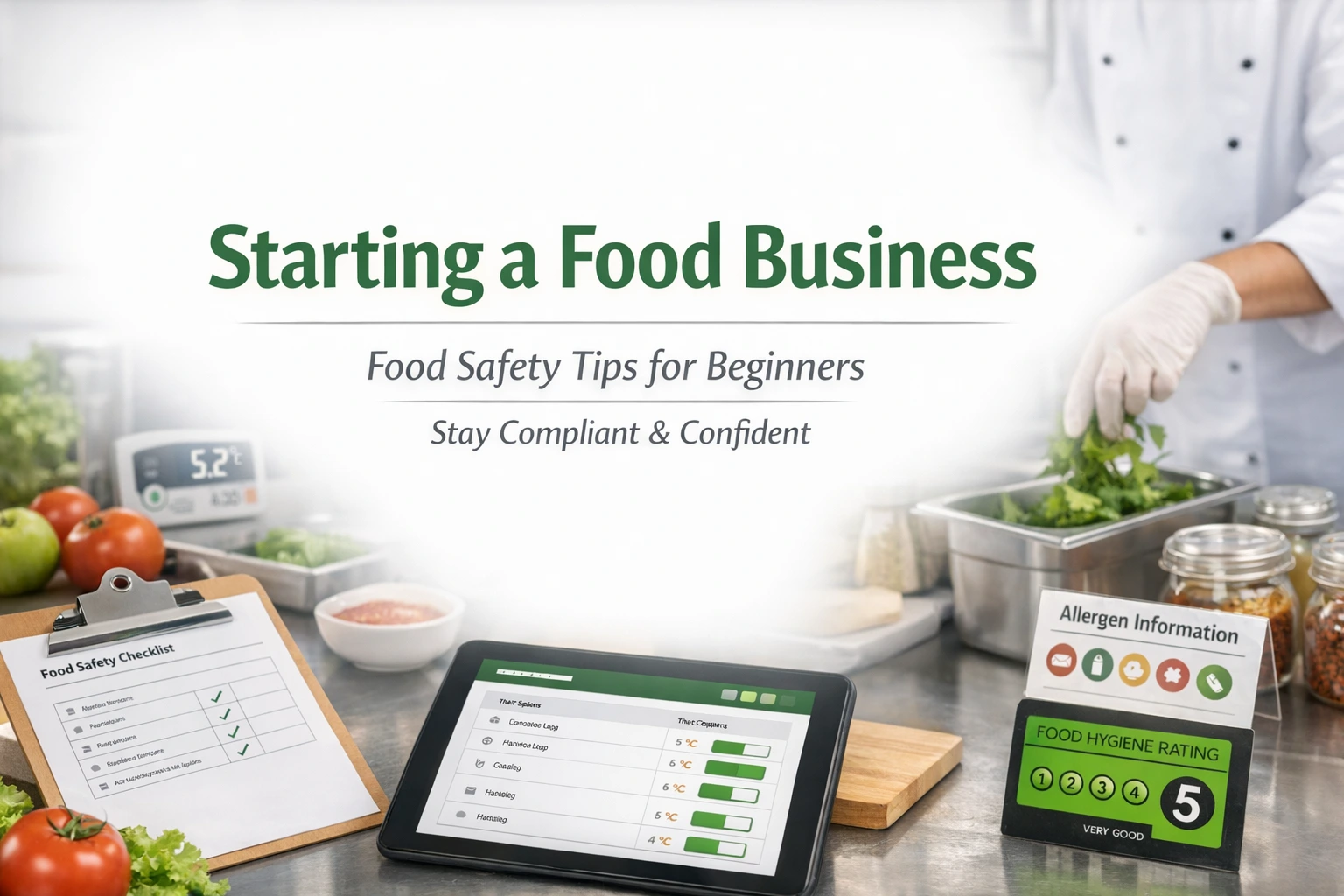
If you’re starting a food business in the UK, you’re not alone in feeling unsure about food safety rules. This practical guide explains what’s required, how to stay compliant, and how a food safety app can help busy caterers manage food safety management with confidence.
- What counts as a food business?
- Registering your food business
- Food safety management explained
- Getting allergen management right
- Records, inspections, and ratings
- Making food safety easier from day one
What counts as a food business?
If you prepare, cook, store, handle, or sell food regularly, the law sees you as a food business. That applies whether you run a café, takeaway, pub, mobile van, home bakery, or sell food online.
Even small or part-time setups must follow the same food safety rules as larger catering businesses. The key difference is how you manage them in practice.
From day one, you’ll be expected to show control over hygiene, food safety management, and allergens. That’s where having clear systems in place matters.
Registering your food business
Before you open, you must register your food business with your local authority. This has to be done at least 28 days before you start trading and it’s free.
You’ll need to register every place you operate from. That could be a shop, commercial kitchen, home kitchen, or mobile unit.
Registration triggers future inspections, so it’s worth preparing early. Official guidance from the Food Standards Agency explains what inspectors look for.
Food safety management: what it really means
Food safety management isn’t about paperwork for the sake of it. It’s about showing you understand the risks in your business and how you control them.
For example:
- Keeping raw and ready-to-eat foods separate
- Cooking food thoroughly and safely
- Chilling and reheating food correctly
- Cleaning equipment and surfaces properly
UK law requires food businesses to follow HACCP principles. In simple terms, that means identifying hazards and putting controls in place. Traditionally this is done with paper packs, but many caterers now use food safety management apps to make this easier.
Using digital systems can help keep checks consistent, especially during busy services when paperwork is often forgotten.
Why digital systems are becoming common
Paper records are easy to lose or forget. Digital food safety records can prompt staff to complete checks and store everything securely in one place.
Many inspectors are now comfortable reviewing digital food safety records, as long as they’re accurate and up to date.
Allergen management for real kitchens
Allergen management is one of the most common causes of enforcement action. If you serve food to customers, you must be able to provide accurate allergen information.
This applies to:
- Menus and menu boards
- Verbal information given by staff
- Food sold online or for delivery
In a real catering environment, allergens change when recipes change, suppliers switch, or specials are added. That’s why allergen management needs to be part of daily routines, not just a one-off exercise.
Using structured allergen management tools can help keep information consistent and reduce the risk of mistakes during service.
HACCP records, inspections, and your rating
Environmental Health Officers don’t expect perfection, but they do expect control. During an inspection, they’ll usually review:
- Your food safety procedures
- Cleaning routines
- Temperature controls
- Training and supervision
- Your HACCP records
Clear, well-maintained HACCP records make inspections smoother and show that food safety is taken seriously.
Strong systems can also help you improve food hygiene rating scores over time. Businesses that keep consistent records and train staff properly are better placed to improve food hygiene rating results.
Making food safety easier from day one
Starting a food business involves enough pressure without food safety becoming overwhelming. The goal is to build simple routines that fit real working conditions.
Food-Safety.app is a food safety management system for UK catering businesses designed to replace bulky paperwork with clear, digital processes. It helps businesses manage checks, records, and compliance in one place.
Whether you’re opening your first café or expanding an existing operation, having the right tools early can make inspections less stressful and daily compliance more consistent.
If you want a practical way to manage food safety without drowning in paperwork, it’s worth taking a look at a food safety app that supports you as your business grows.