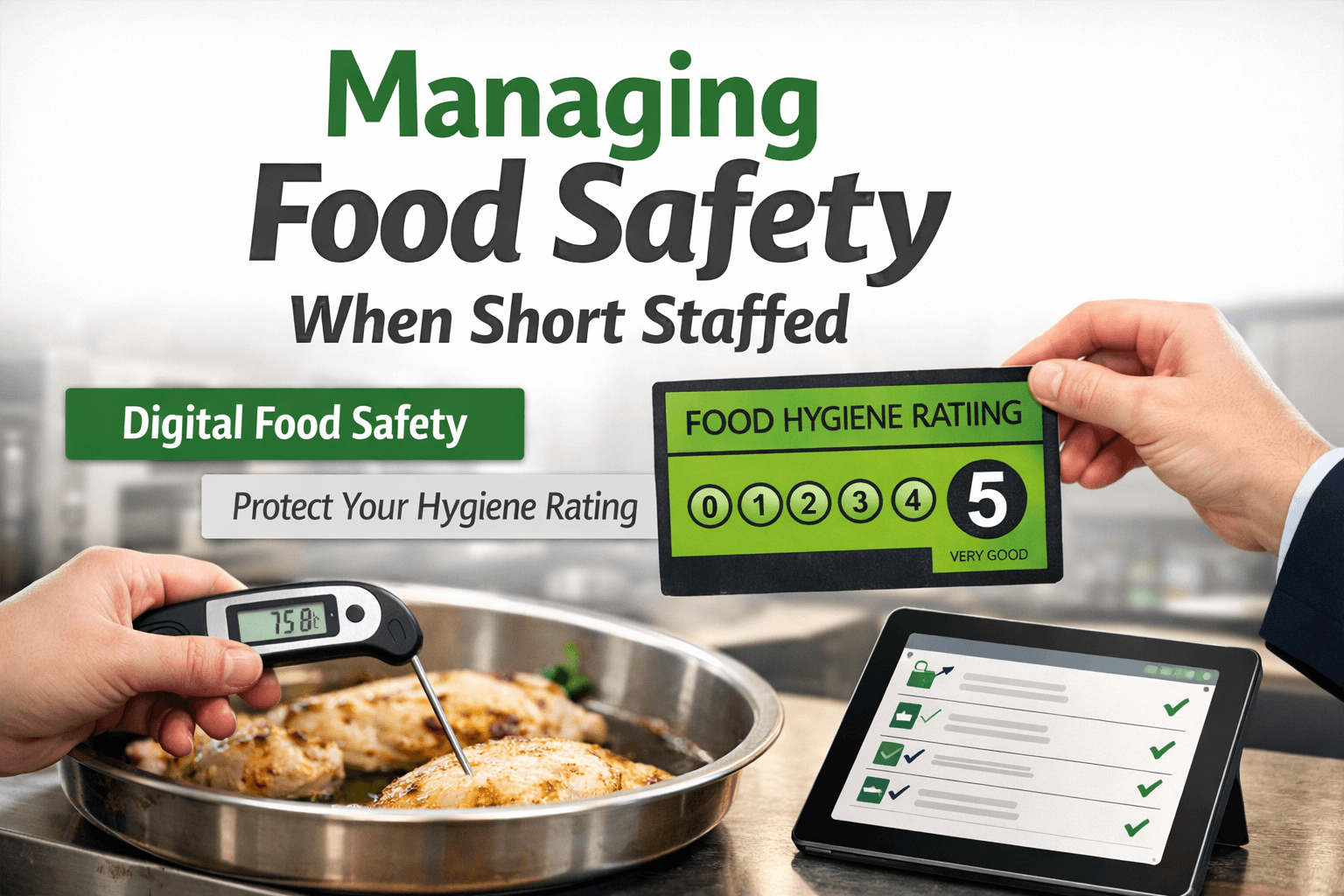
You’re short staffed and food safety feels harder than ever. The Food Safety App helps you keep checks done, digital food safety logs up to date, and food hygiene paperwork under control even when the team is thin on the ground.
Why Short Staffing Pushes Food Safety Risks
When you’re short staffed it’s tempting to rush or skip tasks. But food safety controls still matter. You still need to follow your food safety management system and stay in control of risks, not let them pile up.
Short staffing increases:
- Rushed preparation and checks
- Cross contamination risk
- Missed temperatures
- Messy or forgotten records
That risks your food hygiene rating, and nobody wants that.
Prioritise Controls That Protect Customers
There are things you can’t let slip even when you’re busy and short staffed.
Non Negotiables for Safety
These are tasks you must keep doing:
- Proper hand washing and hygiene
- Temperature control for chilled and hot food
- Preventing cross contamination
- Correct allergen handling
If these aren’t being done you need to rethink service or simplify what you’re offering.
Simplify Your Operations When You’re Stretched
Trying to operate as normal with fewer staff heightens the chance of mistakes.
Trim Your Menu
Focus on simple dishes that reduce risk of:
- Reheating errors
- Complex allergen handling
- Multiple temperature checks
That gives you time to get checks right and keep food safe.
Allocate People by Risk Not By Speed
Who does what shift matters more when you’re under pressure.
Experienced staff should cover:
- Temperature checks
- Allergen orders
- Hand hygiene supervision
Less experienced staff can assist with lower risk tasks but always under supervision.
Keep Temperature Control Tight
Temperature checks are one of the first things to slip when you’re short staffed, and one of the easiest to get wrong.
Still do:
- Chilled food at eight degrees Celsius or below
- Hot food at sixty three degrees Celsius or above
- Correct cooking and reheating
If a check is missed you must re-check before serving food. No guesses.
Allergen Safety Needs Extra Focus
When things get busy allergen mistakes are more common. Customers can have serious reactions from tiny amounts of allergens.
You can reduce risk by:
- Reducing customisation
- Confirming orders verbally and in writing
- Keeping allergen info clear and in one place
If you can’t guarantee allergen controls stop those orders until it’s safe.
Maintain Essential Cleaning Even When Busy
Cleaning might feel like something you can do later, but food contact surfaces must be cleaned as a priority. When cleaning is rushed you risk cross contamination and failed inspections.
Make sure:
- Food contact areas are cleaned between tasks
- Hand wash sinks are stocked and used
- Urgent cleaning isn’t postponed until the end of shift
Use Digital Food Safety to Stay On Track
Paperwork slows you down, especially when you have fewer hands. Switching to paperless food safety with the Food Safety App helps by removing time spent on paper tasks.
With digital food safety you get:
- Clear food hygiene paperwork without the fuss
- Digital food safety logs for temperatures, cleaning and allergens
- Easy access to food safety training resources
- Records that are ready for inspection in seconds
These features help you keep standards high even when you have less staff.
Keep Your Food Hygiene Rating Strong
Your food hygiene rating reflects how well you control food safety every day. Inspectors will look at how consistent your systems are, not just how busy you were on one shift.
A well-used food safety management system with clear records like digital logs shows you take safety seriously. If you can show good systems even when short staffed that can help protect your rating.
Practical Habits That Make a Big Difference
Here are simple things you can keep doing that help every day:
- Do checks in quiet times
- Use digital logs not pads and folders
- Stop service briefly if a safety check is due
- Talk to the team about prioritising risk
With these habits you build a culture that stays safe even under pressure.
Useful Internal Resources to Read Next
- Learn how to protect your food hygiene score in FHRS Scores Broken Down: What Affects Your Food Hygiene Rating
- Understand risks from high-risk foods in High‑Risk vs Low‑Risk Foods: What You Really Need to Control
- See how cross contamination happens and how to stop it in How Cross‑Contamination Happens and How to Stop It
Stay Safe Even When Busy
When you’re short staffed food safety can feel like one more pressure. But by focusing on the right things, simplifying operations, and using tools like the Food Safety App for paperless food safety and clear records, you can keep standards high, protect your customers and protect your business.