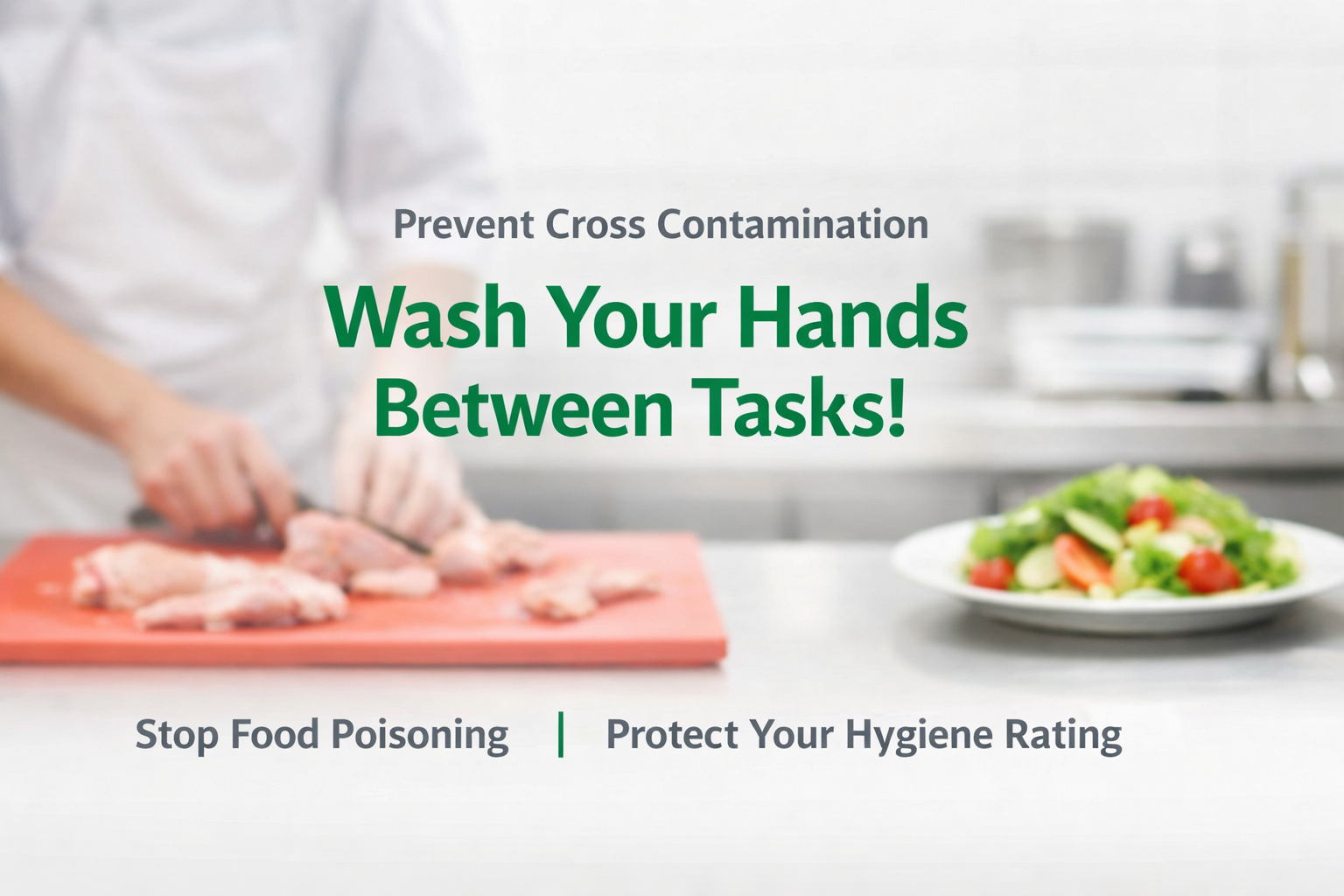
Not washing hands between tasks increases the risk of cross contamination, food poisoning and low food hygiene ratings, and it undermines your food safety management system and digital food safety records in your food-safety app.
Why hand washing matters more than you think
Your hands touch food, equipment, packaging and surfaces all day. Each task leaves behind bacteria or allergens, even if you can’t see them. When you move from one job to another without washing hands, you carry risk with you. Gloves won’t help if hands aren’t clean first.
Inspectors look at hand washing closely because it affects how you control food safety day to day. Getting this right helps protect your food hygiene rating and keeps paperwork in line with practice.(food-safety.app)
Common tasks that need hand washing in between
A lot of food businesses think hand washing only matters after using the toilet. That isn’t enough. You should wash hands between tasks like:
- Handling raw meat then touching ready to eat food
- Switching from food prep to cleaning
- Taking bins out or handling waste
- Using your phone or taking payments
- Touching your face, hair or clothing
- Changing gloves
- Moving between allergen and non-allergen tasks
Missing even one hand wash can undo hours of good work.
The hidden risks you can’t see
The biggest danger is cross contamination. Raw food bacteria like salmonella don’t smell or look bad, and they travel quietly on hands. Allergens like nuts or dairy can transfer just as easily and put customers at risk of a severe reaction.
There’s also the risk to your team. Poor hygiene spreads illness. One sick staff member can lead to others being off work. That means rota gaps, stress and lost income.
How this affects your food hygiene rating
When inspectors assess your business, they look at practices and outcomes. If staff move between tasks without washing hands, it raises concerns about how well you control food safety. This can affect your food hygiene rating. For example, in the “FHRS Scores Broken Down: What Affects Your Food Hygiene Rating” article, poor practices like raw meat stored above cooked food or bad personal hygiene are shown to pull your score down quickly.(food-safety.app)
Paperwork doesn’t protect you if habits don’t match
Many businesses have food hygiene paperwork that says the right thing. Hand washing rules. Cleaning schedules. Training records. But if daily habits don’t match what’s written down, paperwork won’t protect you.
Inspectors compare what they see with what you record. If your food safety management system says hands are washed between tasks, they’ll expect to see it happening. That’s when good daily practice really matters.
Why busy kitchens struggle with hand washing
Time pressure is the biggest issue. When orders stack up, hand washing can feel like a delay. Some staff aren’t clear on when a task change counts. Poorly placed sinks or blocked hand wash basins make it harder, too. If hand washing isn’t easy, it won’t happen often enough.
This isn’t about people not caring. It’s about habits under pressure. The right systems and routines make safe behaviour easier.
Simple ways to reduce the risk every day
You don’t need fancy systems. Start with basics that fit how your team works:
- Make sure hand wash sinks are clear and stocked always
- Use signs that remind staff when to wash hands
- Talk through task changes during shifts
- Managers should lead by example even when it’s busy
- Keep gloves as a backup, not a replacement
Short reminders work better than long talks. Repetition builds habits.
Training that actually sticks
Food safety training often gets rushed. Staff click through it once and forget it. Focus on why hand washing matters, not just when. Use real examples from your own kitchen. Show how one missed wash can affect many dishes.
Good food safety training resources should fit around the business, not interrupt it.
Going paperless helps consistency
Paper checklists don’t remind anyone in the moment. They get filled in later, sometimes from memory. That’s where paperless food safety and digital food safety tools make a big difference.
Digital systems can prompt actions at the right time and make hand washing part of the flow, not an afterthought. They help you keep clear, consistent records without adding extra stress. They tie your daily checks back to your food-safety app and help support a stronger food safety management system.
Linking hand washing to a calmer business
When hand washing is routine, everything else feels easier. Fewer mistakes. Fewer worries before inspections. Better confidence in the team. Your food hygiene paperwork then matches what happens day to day, and your business runs smoother.
Small changes make a big difference. Clear systems, simple reminders and the right tools help protect your food, your customers and your reputation.
Final thoughts
Not washing hands between tasks isn’t about bad staff or bad intentions. It’s about habits under pressure. With the right focus on hand hygiene, training, and systems, you can reduce risk, protect your food hygiene rating and make food safety part of how you run your business every day.