Understand sulphur dioxide and allergen management with practical food safety management advice for busy UK catering businesses.
Table of Contents
- What is sulphur dioxide in food?
- Why it matters for allergen management
- Common foods that contain sulphites
- UK legal requirements for sulphites
- Practical allergen management in kitchens
- Common mistakes to avoid
- Using digital systems to stay compliant
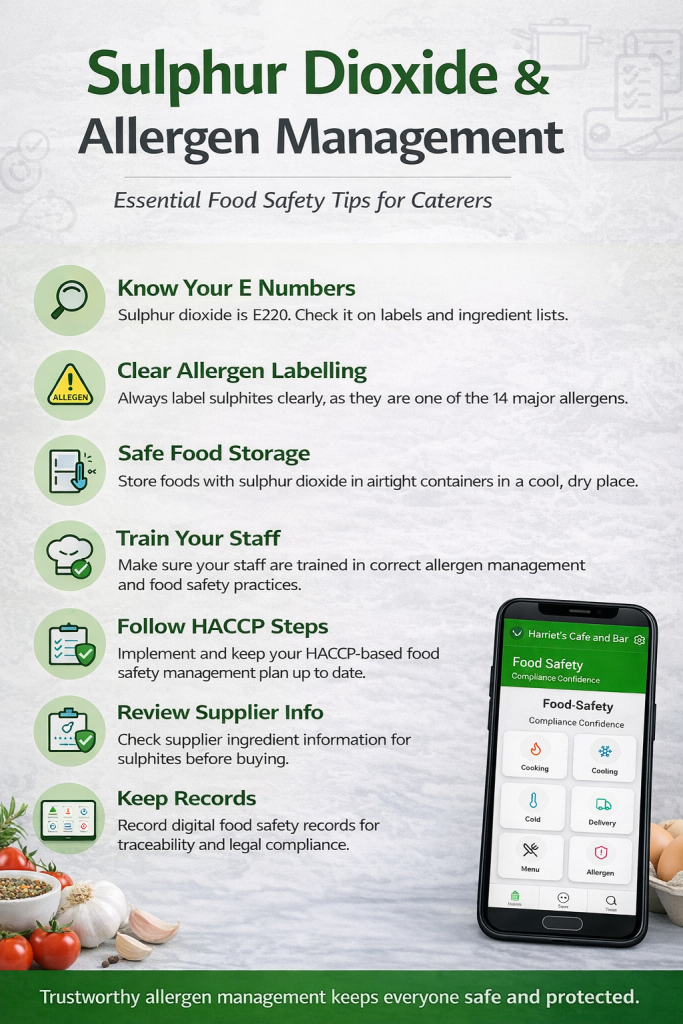
What is sulphur dioxide in food?
Sulphur dioxide (SO₂) and sulphites are preservatives used to extend shelf life and maintain colour in foods. You’ll often find them in dried fruit, wine, cider, and some processed ingredients.
Unlike most allergens, sulphites aren’t proteins. However, they can still trigger serious reactions in sensitive individuals, particularly people with asthma. That’s why they’re included in the UK’s list of 14 regulated allergens.
For food businesses, the key point is simple: if sulphites are present above 10 mg/kg or 10 mg/litre, they must be declared.
Why it matters for allergen management
Effective allergen management isn’t just about obvious ingredients like nuts or milk. Sulphites are often overlooked because they’re hidden inside other ingredients.
For example:
- A red wine sauce may contain sulphites from the wine
- A fruit cake may include sulphites from dried fruit
- A chutney or pickle may contain added preservatives
If you don’t track these properly, you risk giving incorrect allergen information to customers.
The Food Standards Agency (FSA) makes it clear that businesses must provide accurate allergen information and manage risks effectively.
Common foods that contain sulphites
Sulphites can appear in everyday kitchen ingredients, including:
Drinks and alcohol
- Wine (red, white, sparkling)
- Beer and cider
- Some soft drinks and cordials
Prepared and processed foods
- Sausages and burgers
- Pickled vegetables
- Chutneys and sauces
Store cupboard ingredients
- Dried fruit (apricots, raisins)
- Bottled lemon or lime juice
- Pre-prepared potato products
Because these are common in catering, sulphite control should be part of your wider food safety management approach.
UK legal requirements for sulphites
UK food law requires clear allergen communication, and sulphites are treated the same as other allergens when above the threshold.
Prepacked food
- Must include sulphites in the ingredients list
- Must be clearly emphasised, for example in bold text
PPDS food (Natasha’s Law)
- Requires full ingredients labelling
- Allergens must be highlighted
Non-prepacked food
- Allergen information must be available to customers
- Can be written or verbal, but must be accurate and consistent
Distance selling
- Information must be available before purchase and at delivery
The key takeaway is that you’re legally responsible for correct allergen information, even if the allergen comes from a supplier ingredient.
Practical allergen management in kitchens
Managing sulphites doesn’t need to be complicated, but it does need to be consistent.
Know your ingredients
Keep supplier specs up to date and check labels carefully. Ingredients can change without notice.
Control your recipes
Make sure your recipe sheets reflect all allergens present in the final dish, not just what’s added directly.
Train your team
Staff should know:
- What sulphites are
- Which ingredients contain them
- Where to find allergen information
Communicate clearly
Customers rely on your information. Written allergen charts reduce the risk of mistakes compared to memory-based answers.
Keeping accurate HACCP records helps ensure allergen controls are documented and consistently followed.
Common mistakes to avoid
Even well-run kitchens can slip up when it comes to sulphites.
Assuming “no added sulphites” means none are present
Sulphites can come from ingredients like wine or dried fruit, not just direct additives.
Outdated supplier information
If you don’t regularly review specs, your allergen info may be wrong.
Relying on verbal communication
Staff memory isn’t reliable under pressure. Written systems are safer.
Overusing “may contain”
This shouldn’t replace proper controls. It must reflect a real, assessed risk.
Using digital systems to stay compliant
Managing allergens like sulphites across multiple dishes, ingredients, and staff can quickly become difficult without a system in place.
That’s where digital food safety records make a real difference.
A structured system helps you:
- Keep ingredient and allergen data up to date
- Standardise recipes and allergen information
- Maintain consistent HACCP records
- Support staff training and communication
Food-Safety.app is a food safety management system for UK catering businesses. It’s designed to simplify compliance, helping you manage allergens clearly and keep everything organised in one place.
Conclusion
Sulphur dioxide might not be the most obvious allergen, but it’s one that regularly causes issues in real kitchens. Because it often comes from everyday ingredients, it’s easy to miss without proper systems in place.
By improving your food safety management, keeping accurate records, and making allergen information clear, you reduce risk for both your customers and your business.
If you’re looking for a more consistent way to manage allergens and stay inspection-ready, it’s worth exploring how a digital food safety system can support your day-to-day operations.