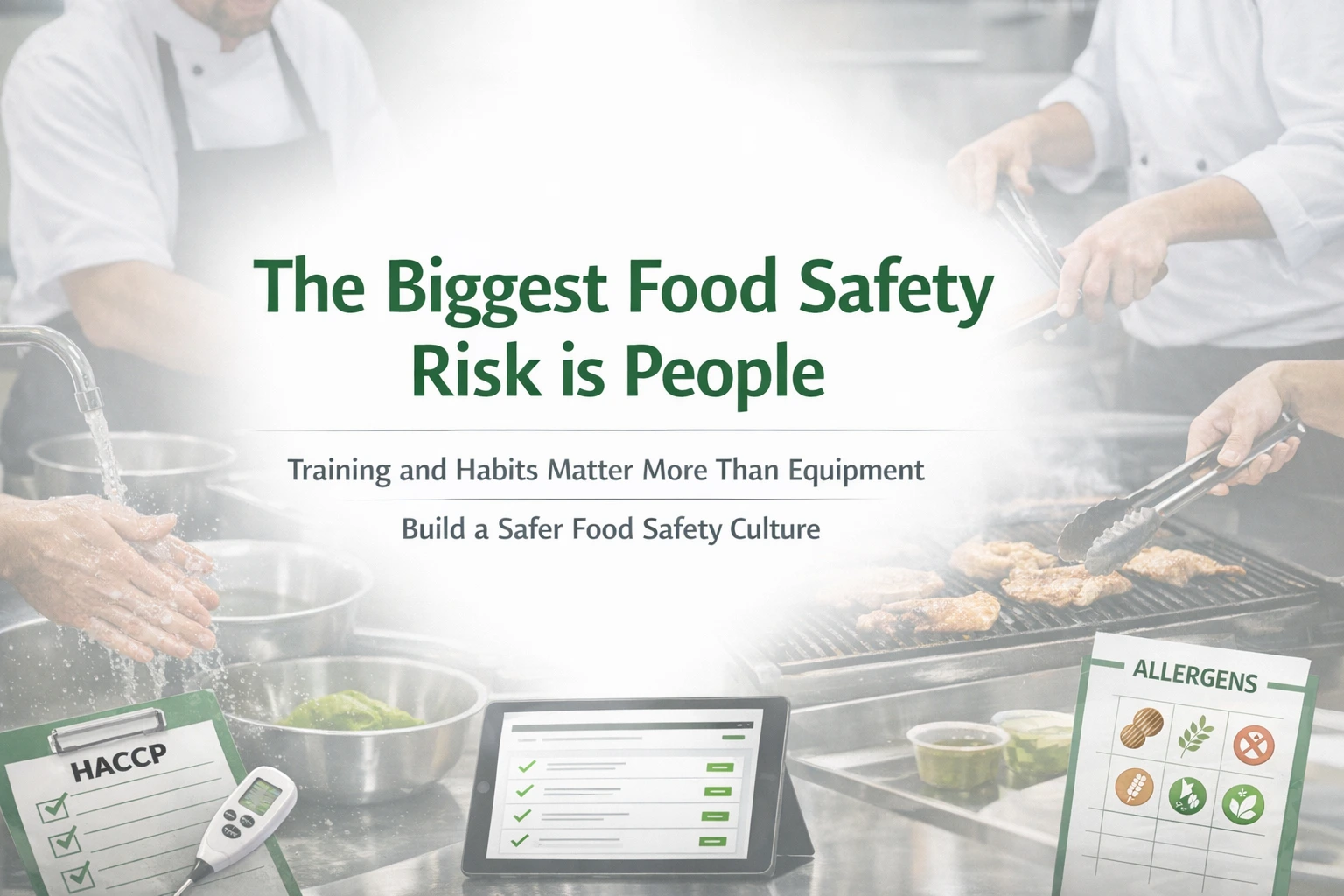
If you run a catering business, you already know food safety isn’t just about shiny equipment or neatly filed forms. This article explains why people are the biggest risk — and how Food-Safety.app, a food safety management system for UK catering businesses, helps turn everyday actions into safer habits.
- Why people are the biggest food safety risk
- Why paperwork alone doesn’t keep food safe
- Real-world risks in busy kitchens
- Food safety management that works in practice
- Building habits, not just ticking boxes
Why people are the biggest food safety risk
In most UK food businesses, serious food safety issues don’t start with broken fridges or missing forms. They start with people. A rushed chef skipping handwashing. A new starter guessing a temperature. A team member handling allergens without realising the risk.
This is why effective food safety management focuses on everyday behaviour, not just equipment checks. Even the best kit can’t protect customers if staff don’t use it properly.
Environmental Health Officers often see the same patterns: procedures exist, but they’re not followed when service gets busy. Food safety lives or dies in the moment decisions people make on shift.
Why paperwork alone doesn’t keep food safe
Paper records and folders don’t cause food poisoning — but they don’t stop it either. Traditional systems often become “tick-box” exercises, completed after the event or rushed at the end of the day.
This is where HACCP records can lose their value. If checks are written down hours later, they don’t reflect what actually happened during service.
Digital systems make it harder to forget, fake, or backfill records. Using digital food safety records helps teams record checks in real time, when food safety decisions really matter.
Real-world risks in busy kitchens
Most food safety failures happen during pressure points. Think Friday night service, short staffing, or unexpected deliveries. These are the moments when people take shortcuts.
Common examples include:
- Using the same chopping board for raw chicken and salad
- Not checking core temperatures because “it looks done”
- Forgetting to wash hands after handling waste
- Cross-contact between allergenic and non-allergenic foods
None of these are caused by missing equipment. They’re caused by human judgement, habits, and awareness — which is why training and reminders matter as much as policies.
Food safety management that works in practice
Good food safety management isn’t about adding more rules. It’s about making the right actions easier than the wrong ones.
Food-Safety.app is a food safety management system for UK catering businesses designed around how kitchens actually operate. Instead of relying on memory or paperwork, it supports staff with prompts, clear tasks, and simple checks.
This approach helps businesses:
- Record checks consistently, even on busy shifts
- Spot gaps before they become problems
- Demonstrate due diligence during inspections
Clear systems also support better allergen management, reducing the risk of dangerous mistakes that often come from miscommunication or assumption.
Access to clear, practical training resources to reduce risk, such as short video guidance for staff, can also reinforce correct behaviour and help teams understand why controls matter — not just what they are.
Building habits, not just ticking boxes
Strong food safety culture starts with leadership. If managers cut corners, staff will follow. If managers take food safety seriously, teams are far more likely to do the same.
Practical steps include:
- Leading by example on hand hygiene and checks
- Encouraging staff to report issues without blame
- Keeping procedures short, clear, and relevant
Consistent habits help businesses improve food hygiene rating outcomes, because inspectors see what really matters: safe behaviour in day-to-day operations.
Guidance from the Food Standards Agency reinforces this focus on competence, training, and supervision as legal responsibilities — not optional extras.
Conclusion: focus on people, support them properly
Food safety isn’t failing because kitchens lack equipment or paperwork. It fails when people are rushed, unclear, unsupported, or expected to remember too much under pressure.
By recognising that people are the biggest food safety risk — and the biggest opportunity — businesses can put systems in place that genuinely help staff do the right thing.
Using a practical food safety app doesn’t replace responsibility, but it does make compliance easier, clearer, and more consistent. For many UK catering businesses, it’s a sensible next step towards safer food and calmer inspections.