
Food safety often feels simple on the surface. Food looks fine. It smells fine. It tastes fine. So it must be safe. Sadly, that’s where many food businesses get caught out.
The biggest risks in food safety are invisible. Bacteria and viruses can be present in food without any warning signs at all. If you run a café, restaurant, takeaway, food truck or production kitchen, understanding this invisible enemy is key to protecting your customers and your business.
Let’s break it down in plain English.
The danger you can’t see
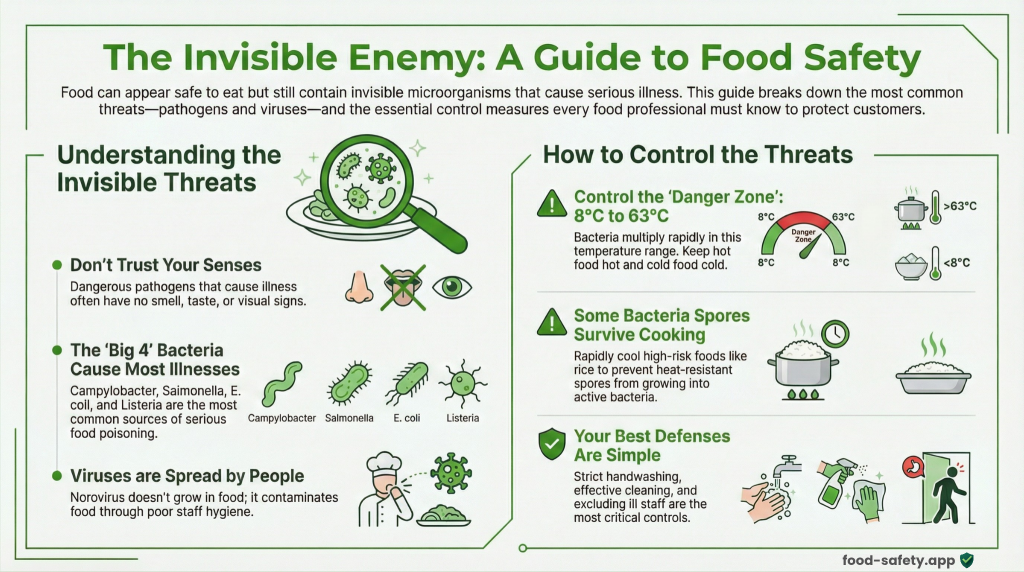
Most foodborne illness is caused by tiny organisms you can’t see, smell or taste. These include bacteria and viruses. They don’t announce themselves. They don’t always change how food looks. That’s why visual checks alone are never enough.
Food can appear fresh, smell normal and still make someone seriously ill. This is one of the hardest things for new food handlers to understand, especially if they’re used to relying on common sense at home.
In a food business, common sense isn’t enough. You need controls.
Pathogens vs spoilage bacteria
Not all bacteria are bad. Some bacteria spoil food. Others cause illness. Knowing the difference matters.
Pathogens
Pathogens are the dangerous ones. They cause food poisoning.
They often:
- Have no smell
- Have no taste
- Cause no visible signs
- Can make people ill in very small numbers
This is why food that looks fine can still be unsafe.
Spoilage bacteria
Spoilage bacteria damage food quality. They cause:
- Sour smells
- Slimy textures
- Mould
- Discolouration
Spoiled food usually looks or smells unpleasant. While you shouldn’t serve it, it’s not always what causes serious illness.
The key point is simple. Food can contain harmful pathogens before it ever shows signs of spoilage.
Why smell tests don’t work
Many people still rely on sniffing food to decide if it’s safe. This is a big risk in food businesses.
Smell tests only tell you if food is spoiled. They tell you nothing about pathogens.
For example, a chicken curry cooled slowly overnight may smell fine the next day. It may look fine. But harmful bacteria could have multiplied to dangerous levels.
Reheating won’t always fix this either. Some bacteria leave toxins behind that heat won’t destroy.
The big food poisoning risks in the UK
A small number of bacteria cause most serious food poisoning cases in the UK. These are often called the Big 4.
Campylobacter
This is the most common cause of food poisoning in the UK. It’s mainly linked to raw poultry.
It spreads easily through:
- Raw chicken juices
- Poor handwashing
- Cross-contamination
One dirty chopping board can be enough to contaminate ready-to-eat food.
Salmonella
This is often linked to eggs and poultry. Good cooking reduces the risk, but it doesn’t remove it entirely.
Even with safer egg schemes, you still need strong controls. Clean hands, clean surfaces and proper cooking all matter.
E. coli
Some strains are extremely dangerous, especially for children.
It’s found in:
- Raw meat
- Soil
- Animal faeces
Very small amounts can cause serious illness. This makes cross-contamination a major risk.
Listeria
Listeria is different. It can grow in the fridge.
It’s linked to ready-to-eat foods like:
- Cooked meats
- Soft cheeses
- Chilled foods with long shelf lives
It’s especially dangerous for pregnant women, older people and those with weak immune systems.
How bacteria grow in food
Bacteria don’t just appear. They grow when conditions are right. This is where many food safety failures happen.
Bacteria need six things to multiply.
Food. Acidity. Time. Temperature. Oxygen. Moisture.
If you remove just one of these, you can slow or stop growth.
Time and temperature are the two you control most in a food business.
Leaving food out too long. Cooling too slowly. Holding food in the danger zone. These are everyday mistakes that lead to illness.
Cooked rice left at room temperature for hours has everything bacteria need. Warmth. Moisture. Time. This is why rice is a known high-risk food.
Why reheating isn’t a magic fix
Many people believe reheating food makes it safe again. This isn’t always true.
Some bacteria form spores. These are like survival shells. Cooking kills active bacteria, but spores can survive.
When food cools slowly, spores can wake up and grow. Some produce toxins that reheating won’t destroy.
Rice and pasta are common examples. Large batches cooled slowly are a major risk in busy kitchens.
This is why rapid cooling and correct storage matter just as much as cooking.
Viruses are different
Viruses don’t behave like bacteria. They don’t grow in food. They spread through people.
The most common food-related virus is norovirus, often called the winter vomiting bug.
It spreads through:
- Hands
- Surfaces
- Vomit
- Faeces
It takes only a tiny amount to infect someone. One ill food handler can contaminate dozens of meals.
This is why handwashing is critical. Gloves don’t replace it. Cleaning doesn’t replace it.
Staff must stay away from food until they’ve been symptom-free for at least 48 hours. Cutting corners here puts customers and your business at serious risk.
What the law expects from you
UK food law is clear. Food businesses must:
- Prevent contamination
- Train staff properly
- Control time and temperature
- Exclude ill food handlers
- Keep records that show controls are working
Environmental Health Officers don’t just look at your food. They look at your systems. They want to see that you understand the risks and manage them every day.
Keeping it simple in real kitchens
Food safety doesn’t need to be complicated. It needs to be consistent.
Clean hands. Clean equipment. Separate raw and ready-to-eat food. Control time and temperature. Cool food quickly. Keep sick staff away.
These basics stop invisible dangers from turning into real harm.
If you want to save time and keep things simple, using a digital food safety system can help you stay on top of checks, records and staff training without paperwork piling up.
If you’re curious, have a look at how the Food Safety App can make everyday food safety easier and give you confidence that nothing important gets missed.