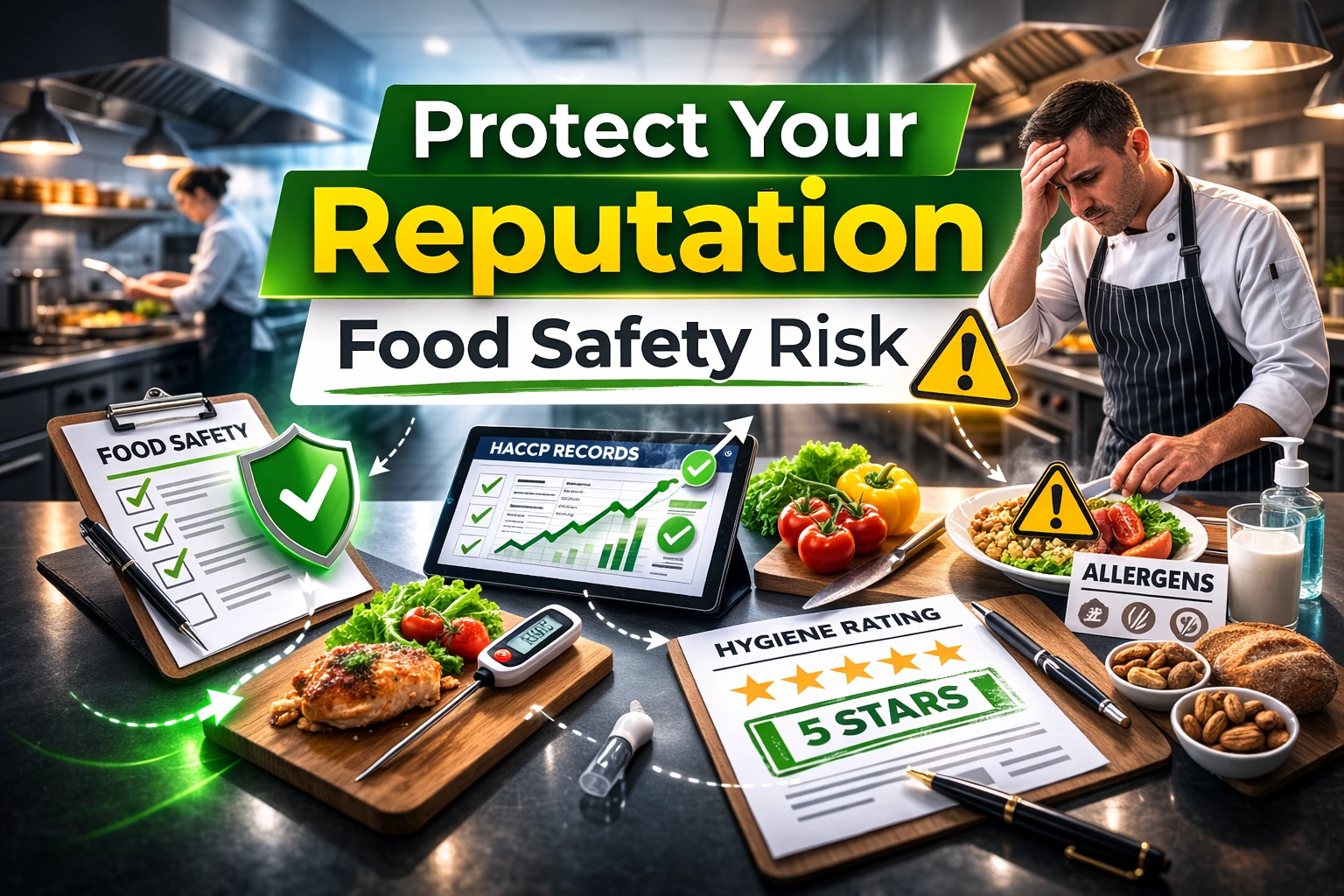
If you run a catering or hospitality business, your food safety management isn’t just about passing inspections. It protects your reputation, customers, and income. Here’s what every UK food business needs to know about managing risk and staying compliant with the help of a food safety management system.
Table of Contents
- What is reputation risk in food safety?
- Your legal responsibilities in the UK
- How food safety failures damage your business
- Common compliance mistakes that harm reputation
- How to protect your business with better systems
- Conclusion: Protecting your reputation long term
What is reputation risk in food safety?
Reputation risk is the damage to your business’s public image after a food safety problem. In the UK, this often happens following:
- A low hygiene rating
- An allergen incident
- A customer illness complaint
- Enforcement action by the local authority
- A product recall
Even a single incident can quickly spread online. Local news outlets regularly publish inspection results and prosecution cases. A poor score under the Food Hygiene Rating Scheme can influence customer decisions overnight.
For many businesses, reputation is everything. Losing customer trust can take far longer to fix than a paperwork issue.
Your legal responsibilities in the UK
All food businesses must comply with UK food law. The key requirement is having an effective food safety management system based on HACCP principles.
This means you must:
- Identify food safety hazards
- Put controls in place
- Monitor critical points (like cooking and chilling)
- Keep accurate records
- Review your system regularly
Environmental Health Officers (EHOs) will assess these systems during inspections. If records are missing, incomplete, or inconsistent, this can affect your rating.
Clear HACCP records demonstrate due diligence. Without them, it’s difficult to prove you’ve managed risks properly.
How food safety failures damage your business
Low hygiene ratings
In England, ratings are publicly available online. In Wales and Northern Ireland, display is mandatory. A low rating can lead to:
- Reduced bookings
- Contract loss (for example, with schools or care homes)
- Negative online reviews
- Increased scrutiny from customers
Many businesses actively work to improve food hygiene rating after a disappointing inspection, but the reputational impact can linger.
Allergen incidents
Poor allergen management is one of the most serious risks in catering.
Common examples include:
- Using the wrong ingredient in a recipe
- Failing to update allergen information after menu changes
- Cross-contact in shared preparation areas
Allergen incidents attract significant media attention because of the potential for severe harm. Even a near-miss can damage trust with customers.
Enforcement action
Improvement notices, hygiene emergency prohibition notices, or prosecution under the Food Safety Act 1990 are public matters. Local authorities often issue press releases following convictions. Once reported, these stories remain searchable online for years.
Common compliance mistakes that harm reputation
Poor record keeping
Paper diaries that aren’t filled in daily. Temperature checks written up at the end of the week. Missing signatures. If you can’t show evidence during an inspection, officers may assume controls aren’t working properly.
Inconsistent allergen controls
Menus evolve. Specials are added. Suppliers change. If allergen information isn’t updated immediately, mistakes can happen. Staff must understand how to communicate allergen information clearly and confidently.
Lack of review
A food safety management system isn’t a one-off document. It must reflect your current operation. New equipment, layout changes, or new dishes all require review. Failing to update procedures creates gaps that inspectors often identify.
How to protect your business with better systems
Make food safety visible and routine
Food safety should be part of daily routines, not something only considered before inspections.
- Record temperatures at the correct time
- Calibrate probe thermometers
- Review cleaning schedules
- Keep allergen information accurate
Consistency builds confidence.
Use digital food safety records
Many businesses are moving away from paper systems to digital food safety records. Digital systems can prompt staff to complete checks, reduce missed records, store data securely, make inspection preparation easier, and provide clear audit trails.
If an issue arises, being able to quickly demonstrate consistent monitoring can make a significant difference.
Support staff with clear processes
Staff training should match their role. Kitchen porters, chefs, and front-of-house teams all have different responsibilities. Clear procedures reduce confusion, particularly around allergen management and cross-contamination controls. A structured food safety management system helps create clarity across the team.
Conclusion: Protecting your reputation long term
Reputation risk in catering isn’t just about bad publicity. It’s about customer trust, repeat business, and long-term stability. Most reputational damage stems from preventable compliance gaps: incomplete HACCP records, inconsistent allergen management, or systems that haven’t been reviewed.
A practical, reliable food safety management system makes those gaps less likely. Food-Safety.app is a food safety management system for UK catering businesses designed to help you stay organised, maintain digital food safety records, and feel confident during inspections.
If you’re looking for a clearer, more consistent way to manage compliance, exploring a digital food safety system could be a sensible next step for protecting both your standards and your reputation.