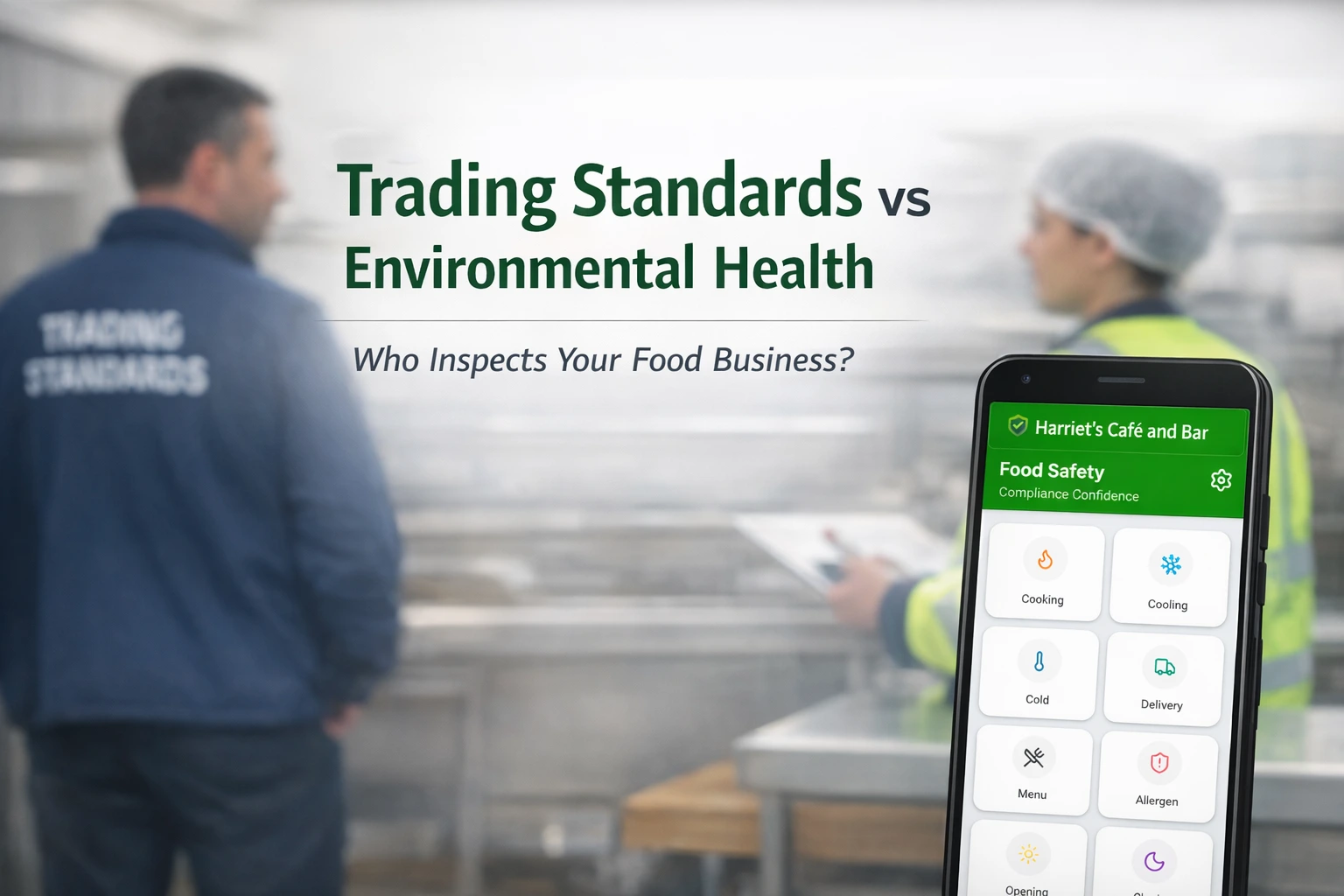
Confused about Environmental Health vs Trading Standards? Learn who inspects your food business, when to contact each, and how to stay compliant.
Table of Contents
- What’s the difference between Environmental Health and Trading Standards?
- Who should you contact first?
- What happens during joint visits?
- How this affects your food safety management
What’s the difference between Environmental Health and Trading Standards?
If you’ve ever wondered who’s responsible for checking your business, you’re not alone. The answer depends on the type of issue.
Environmental Health (EH): Food hygiene and safety
Environmental Health Officers focus on protecting public health. In practical terms, they look at how safely food is handled in your business.
They deal with things like:
- Cleaning and hygiene standards
- Food storage temperatures
- Pest control
- Risk of contamination
- Food poisoning investigations
They’re also responsible for your food hygiene rating, which reflects how well you manage these risks.
For example, if a fridge isn’t holding temperature or there’s evidence of poor cleaning in a kitchen, that’s firmly an EH issue.
Trading Standards (TS): Food information and honesty
Trading Standards focuses on whether food is described and sold honestly.
They deal with:
- Food labelling and ingredients
- Allergen information accuracy
- Product descriptions such as “homemade” or “fresh”
- Weights and measures
- Food fraud and authenticity
So, if a menu lists allergens incorrectly or a product is misleadingly labelled, that’s a Trading Standards matter.
In short:
EH = Is the food safe to eat?
TS = Is the food what it says it is?
Who should you contact first?
For most businesses, knowing who to contact can save time and stress.
Contact Environmental Health first if:
- There’s a food safety risk, such as contamination or poor hygiene
- You suspect food poisoning
- Food is being stored or handled incorrectly
- You need advice on inspections or hygiene compliance
EH teams are usually your first point of contact for day-to-day food safety.
Contact Trading Standards first if:
- You’re unsure about labelling requirements
- You have questions about allergen management
- Product descriptions or claims need checking
- You’re dealing with supplier authenticity issues
Not sure? Start with your local council
If you’re unsure, contact your local authority. They’ll direct your query to the right team.
You can also refer to official guidance from the Food Standards Agency, which outlines how complaints are handled.
What happens during joint visits?
Sometimes, issues overlap. That’s when Environmental Health and Trading Standards may work together.
When do joint visits happen?
Joint visits are more likely when:
- Food safety and labelling issues are linked
- Allergen information is unclear or incorrect
- Food past its use-by date is being sold
- There are concerns about both hygiene and product authenticity
For example, a takeaway could have good hygiene practices but incorrect allergen labelling. That would involve both teams.
What should you expect?
A joint visit isn’t something to worry about, but it does mean a broader inspection.
You may be asked about:
- Your HACCP records and safety procedures
- Cleaning and temperature controls
- Ingredient sourcing and labelling
- Allergen handling processes
This is where having everything organised makes a real difference.
How this affects your food safety management
Understanding these roles helps you manage compliance more effectively.
One system, multiple responsibilities
Even though EH and TS have different roles, your business needs to cover both.
That includes:
- Keeping clear digital food safety records
- Managing hazards through a structured system like SFBB
- Ensuring allergen information is accurate and consistent
- Maintaining traceability and supplier records
You can’t treat hygiene and standards separately in practice—they overlap in daily operations.
Common mistakes to avoid
Many businesses run into trouble by:
- Assuming EH covers everything
- Overlooking labelling and allergen accuracy
- Keeping incomplete or inconsistent records
- Not preparing properly for inspections
Using guidance like UK food safety law explained for everyday practice can help clarify your responsibilities.
It’s also worth reviewing how inspections work in advance. Resources such as preparing for official inspections and your food hygiene rating can help you feel more prepared.
Why digital systems help
Paper-based systems can make it harder to stay consistent, especially when dealing with both hygiene and standards requirements.
A digital approach allows you to:
- Keep records up to date and accessible
- Track checks across your team
- Maintain consistency in food safety management
- Be ready for both EH and TS inspections
Food-Safety.app is a food safety management system for UK catering businesses. It supports day-to-day compliance by helping you manage records, checks and procedures in one place.
Conclusion
Environmental Health and Trading Standards have different roles, but both are essential to running a compliant food business. One focuses on safety, the other on accuracy, but your systems need to cover both.
By understanding who does what, knowing who to contact, and keeping your processes organised, you can avoid common issues and feel more confident during inspections.
If managing everything feels like a lot, using a structured digital system can make things simpler and more consistent. It’s worth exploring a food safety app as a practical way to stay on top of your responsibilities.