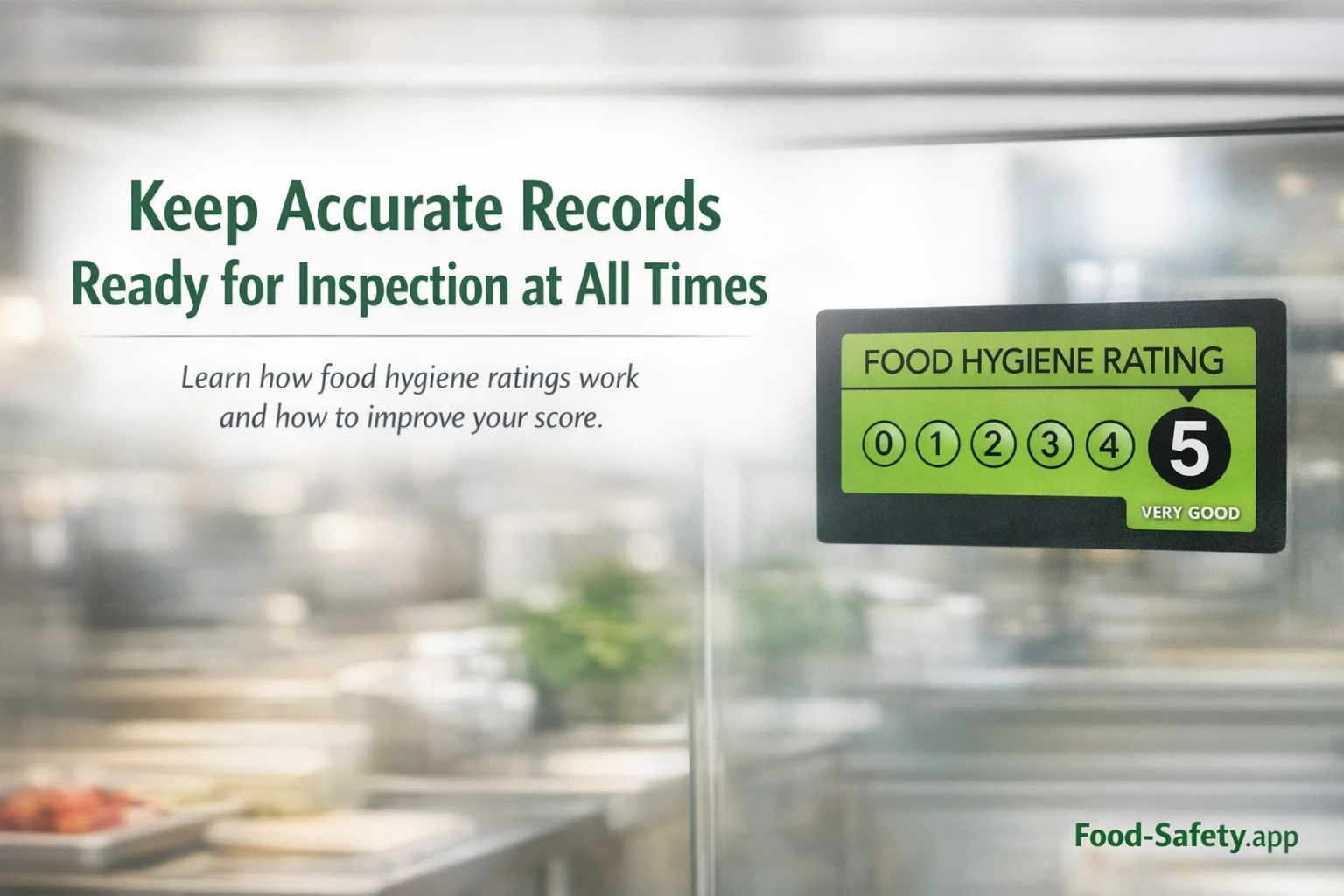
Learn how food hygiene ratings work and how to improve your score with FHRS, so you can stay compliant, protect customers, and run your business with confidence.
Table of Contents
- What is FHRS?
- How is an FHRS score calculated?
- What happens during inspections?
- Common issues that lower scores
- How to improve your rating
- Why records matter for FHRS
What is FHRS?
The FHRS (Food Hygiene Rating Scheme) is a system used to assess how well a food business manages food safety. It provides a simple rating, typically from 0 to 5, which reflects compliance with hygiene laws and best practices. Although it originated in the UK, similar rating systems exist globally, making FHRS a useful benchmark for food businesses everywhere.
For customers, the rating offers reassurance about cleanliness and safety standards. For business owners, it’s a visible indicator of compliance and operational quality. A strong FHRS score can improve customer trust, while a low rating may impact reputation and footfall.
How is an FHRS score calculated?
An FHRS score is based on three key areas assessed during inspection. These are designed to give a balanced view of how safely food is handled and how well systems are managed.
- Food hygiene practices – how food is stored, prepared, cooked, and handled
- Structural standards – cleanliness, layout, lighting, ventilation, and equipment condition
- Management systems – food safety procedures, staff training, and record keeping
Each area contributes to the final rating. Even if your kitchen is spotless, weak documentation or poor procedures can still lower your score. This is why consistent processes and staff awareness are just as important as cleanliness.
Understanding FHRS scoring levels
Ratings usually range from 0 (urgent improvement required) to 5 (very good). A score of 3 is generally considered satisfactory, meaning legal requirements are met. However, many businesses aim for 4 or 5 to demonstrate higher standards and build customer confidence.
What happens during inspections?
FHRS inspections are typically unannounced. Inspectors observe real working conditions, which means your day-to-day practices must always be up to standard. They’ll review food handling, temperature control, cleaning routines, and how hazards are managed.
Inspectors also check documentation, including HACCP-based procedures, training records, and monitoring logs. This is where many businesses fall short, not because they’re unsafe, but because they can’t demonstrate consistency. You can learn more about structured safety systems through HACCP food safety systems.
In some cases, inspectors may ask questions to confirm staff understanding. This helps ensure procedures are not only documented but actually followed in practice.
Common issues that lower scores
Several recurring problems can reduce an FHRS rating. These often relate to gaps between intention and execution rather than deliberate negligence.
Typical issues include poor temperature control, incomplete cleaning schedules, cross-contamination risks, and outdated or missing records. For example, failing to regularly check fridge temperatures or not documenting corrective actions can signal weak management control.
Another frequent issue is lack of staff training. Even basic misunderstandings about allergens or food storage can lead to compliance concerns. Practical guidance on maintaining safe environments can be found in cleaning and hygiene practices.
How to improve your rating
Improving your FHRS score starts with consistency. Focus on building reliable daily routines rather than reacting just before inspections. This includes maintaining clean premises, monitoring food temperatures, and ensuring staff follow safe handling procedures at all times.
Regular internal checks can help identify gaps early. For example, reviewing cleaning logs weekly or verifying probe calibration can prevent small issues from becoming major problems. Staff training should also be ongoing, not a one-off exercise.
If your rating is low, you can request a re-inspection once improvements are made. However, inspectors will expect to see sustained changes, not temporary fixes.
Why records matter for FHRS
Accurate, up-to-date records are essential for demonstrating compliance. Inspectors rely on documentation to verify that food safety procedures are consistently followed. Without records, even good practices can be difficult to prove.
Key records include temperature logs, cleaning schedules, delivery checks, and corrective actions. These provide evidence of control and help identify trends or recurring issues. According to the Food Standards Agency, effective record keeping is a core part of managing food safety risks.
Digital tools can make this process easier and more reliable. For example, Food-Safety.app, a food safety management system for catering businesses, allows you to keep timestamped records, track issues, and stay inspection-ready without relying on paper logs.
Ultimately, strong records support better decisions, reduce risk, and help maintain a high FHRS rating over time.