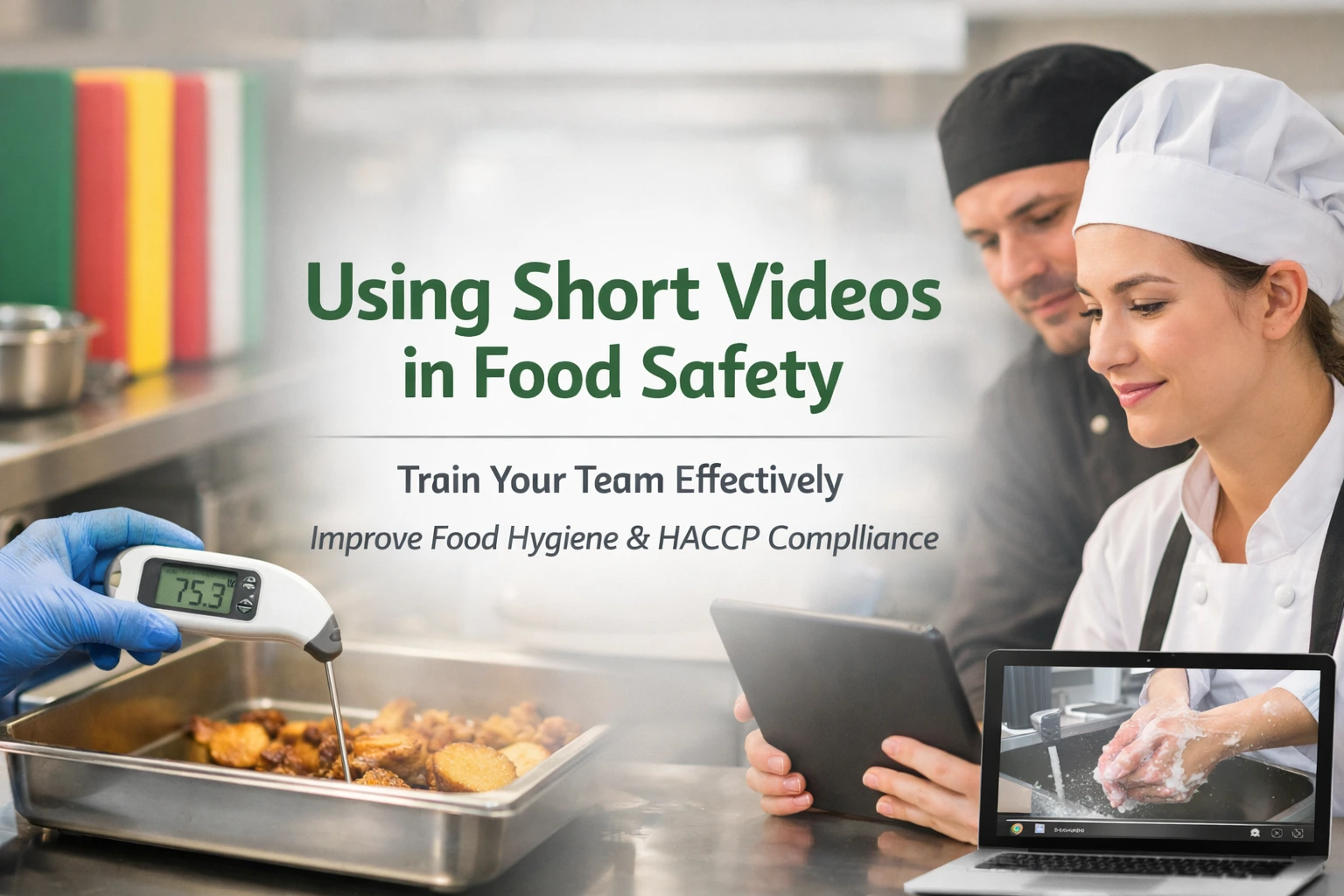
Short training videos can strengthen your food safety management without adding paperwork. Here’s how UK catering businesses can use them to build safer habits, support digital compliance, and make training easier with practical resources from Food-Safety.app.
- Why short videos matter
- Your legal duties on staff training
- How to use videos properly
- Using the Food-Safety.app YouTube training resources
- Linking training to HACCP records
- Common mistakes to avoid
- Building long-term food safety culture
Why short videos matter
In a busy kitchen, nobody has time to read long manuals during a shift. Yet safe habits are built on repetition and clarity. That’s where short, focused training videos can make a real difference.
A two-minute clip showing proper handwashing is often more effective than a page of written instructions. Staff can see exactly what “correct” looks like. The same applies to using colour-coded chopping boards, calibrating a probe, or preventing allergen cross-contact.
When used consistently, short videos reinforce expectations. They help move food safety from a document in a folder to a behaviour carried out every day.
This approach supports structured food safety management by turning procedures into visible, repeatable actions.
Your legal duties on staff training
UK law is clear. Under the Food Safety and Hygiene (England) Regulations 2013 and equivalent rules across the UK, food handlers must be supervised and trained according to their role.
There’s no requirement for a specific qualification, but there is a requirement for competence. Staff must understand the risks linked to their job and be able to work safely.
The Food Standards Agency guidance for businesses makes it clear that training must be appropriate and relevant.
Videos can form part of that training. However, simply pressing play isn’t enough. You must ensure staff understand what they’ve watched and can apply it correctly in practice.
How to use videos properly
Keep them short and specific
Focus each video on one topic only. For example:
- How to wash hands effectively
- How to avoid cross-contamination between raw and ready-to-eat food
- How to complete temperature checks correctly
- How to prevent allergen mix-ups
Short clips are easier to repeat during team briefings or inductions.
Link videos to real kitchen tasks
Show staff the video, then demonstrate the task in your own kitchen. Ask them to repeat it. This reinforces both knowledge and skill.
For example, after watching a clip on allergen controls, walk through your actual storage layout and labelling system. This strengthens allergen management in a practical way.
Use them for refreshers
If you’ve had a reminder from your Environmental Health Officer about cleaning standards, a short refresher video before the next service can help reset expectations quickly.
They’re also useful before inspections, new menu launches, or seasonal staff changes.
Using the Food-Safety.app YouTube training resources
Food-Safety.app provides a growing library of short, practical training videos and five-minute style toolbox talks designed specifically for UK catering and hospitality businesses.
You can access these resources directly on the official YouTube channel here: Food-Safety.app YouTube training channel.
The videos are designed to be clear, realistic and easy to use in busy environments. They work well for:
- Staff induction sessions
- Pre-shift briefings
- Toolbox talks during quieter periods
- Targeted retraining after non-conformances
- Quick refreshers ahead of inspections
Because they’re short and focused, they can be repeated regularly. This helps reinforce consistent behaviour, which is essential for strong food safety management.
Linking training to HACCP records
Training should always connect back to your documented procedures.
If you’re using a digital system, you can record:
- Who completed the training
- The date it was delivered
- The topic covered
- Any follow-up checks
This creates a clear link between training and your HACCP records.
When an EHO asks how you ensure staff understand temperature control or cleaning standards, you can show both your procedures and your digital training record.
Using digital food safety records makes this far easier than relying on memory or loose paper notes.
Common mistakes to avoid
Treating videos as a tick-box
If staff watch a video but behaviour doesn’t change, it hasn’t worked. Follow up with observation and feedback.
Using generic content only
Your training must reflect your actual risks. A café handling pre-packed cakes has different hazards from a care home preparing high-risk meals.
Make sure your video topics match your menu, equipment and customer needs.
Not documenting informal training
Many businesses carry out useful toolbox talks but don’t record them. Without evidence, it’s hard to demonstrate due diligence.
Keeping structured records supports consistent food safety management and can contribute to efforts to improve food hygiene rating outcomes.
Building long-term food safety culture
Food safety culture isn’t built in a single training session. It develops through repetition, leadership and consistency.
Short training videos, including those available through the Food-Safety.app YouTube channel, help reinforce the “why” behind your procedures. They remind staff that food safety isn’t just paperwork. It protects customers, your reputation and your business.
Food-Safety.app is a food safety management system for UK catering businesses. It brings together procedures, monitoring, digital food safety records and practical training resources in one place. Used consistently, it helps make compliance simpler and more manageable.
If you’re looking to strengthen day-to-day habits without adding more paperwork, it may be worth exploring how a structured food safety app, supported by practical video toolbox talks, can help your team stay confident and inspection-ready.