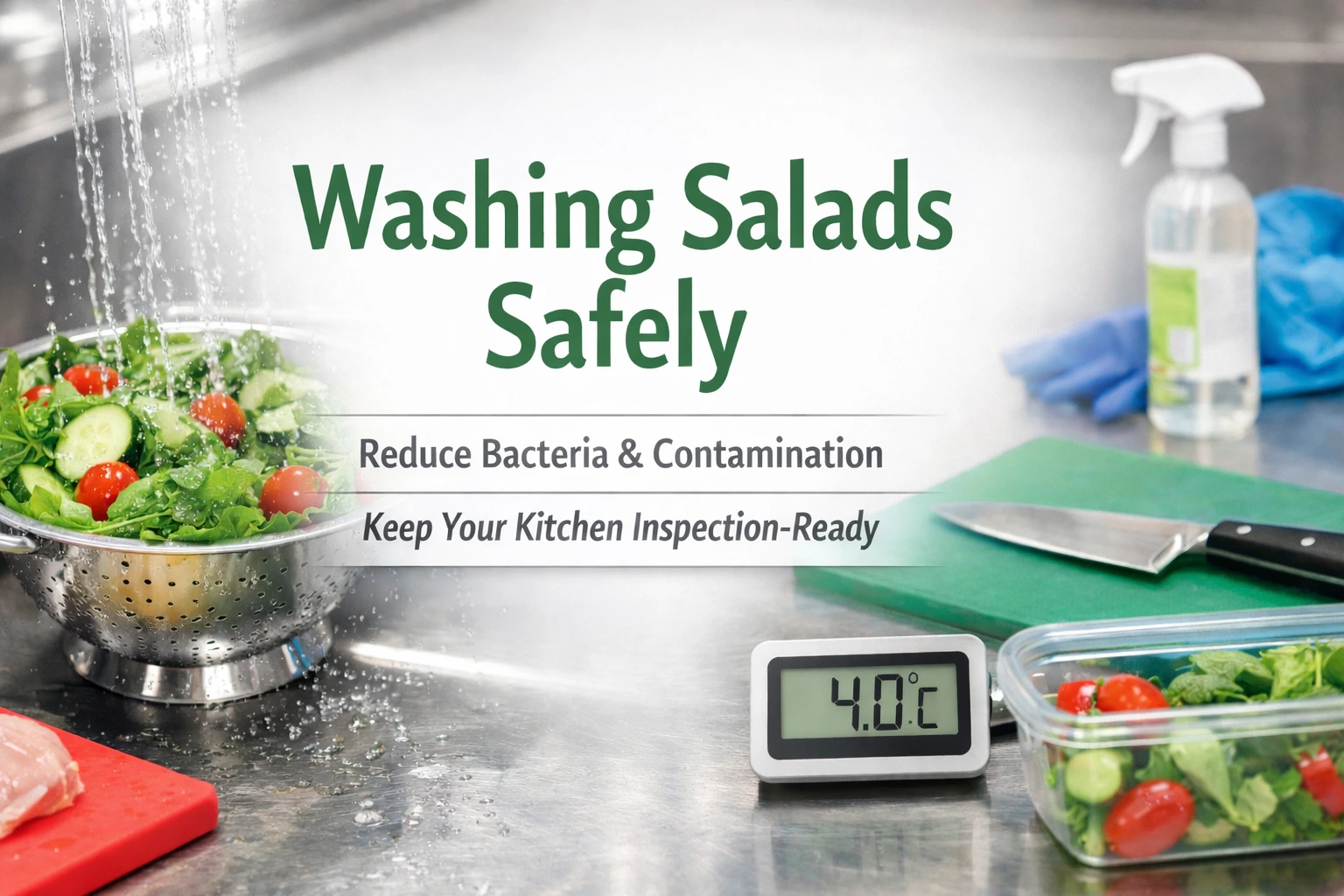
Washing raw salads properly is a key part of food safety management in UK catering businesses, helping reduce the risk of E. coli, Salmonella and Listeria while supporting strong digital food safety records.
- Why washing salads matters
- Your legal responsibilities
- How to wash salads safely
- Avoiding cross-contamination
- Storage and HACCP records
- Common mistakes to avoid
Why washing salads matters
Leafy greens, tomatoes, cucumbers and herbs are usually served raw. That means there’s no cooking step to kill harmful bacteria.
Salads can become contaminated in the field through soil, irrigation water or animal contact. Bacteria such as E. coli, Salmonella and Listeria have all been linked to fresh produce outbreaks in the UK.
For a busy café, pub kitchen or catering unit, washing salads properly is a simple but vital control. It reduces dirt, insects and some bacteria before the food reaches the plate.
However, washing isn’t a guarantee. It lowers risk, but it doesn’t remove all pathogens. That’s why it must sit within your wider food safety management system.
Your legal responsibilities
Under UK food hygiene law (retained Regulation (EC) 852/2004), food businesses must protect food from contamination and use potable water where necessary.
In practice, this means:
- Washing salads in drinking-quality water
- Using clean, disinfected sinks and equipment
- Preventing cross-contamination from raw meat
- Following documented food safety procedures
The Food Standards Agency guidance makes clear that ready-to-eat foods must be handled carefully because there’s no further kill step.
If you use Safer Food, Better Business or your own system, your salad washing procedure should be reflected in your HACCP records.
What counts as ready-to-eat?
Once washed and prepared, salads are classed as ready-to-eat (RTE). That puts them in the same risk category as sandwiches, cooked meats and desserts.
Environmental Health Officers will expect to see strict separation from raw meat and clear documentation within your digital food safety records or paper-based system.
How to wash salads safely
A safe washing process doesn’t need to be complicated, but it does need to be consistent.
Step-by-step practical approach
- Remove damaged outer leaves.
- Rinse thoroughly under running potable water.
- Agitate leafy items to loosen soil.
- Avoid soaking in standing water unless it’s clean and changed regularly.
- Drain in a clean, sanitised colander.
Use a designated food preparation sink. Never use the handwash basin, and never wash salads in a sink that’s just been used for raw chicken unless it has been properly cleaned and disinfected.
If produce is labelled “washed and ready to eat”, you don’t need to wash it again. In fact, re-washing in a contaminated sink could increase the risk.
Avoiding cross-contamination
Cross-contamination is one of the biggest risks in catering kitchens.
Imagine preparing raw chicken for a lunchtime special, then moving straight on to salad garnish without changing boards or sanitising surfaces. That’s a high-risk situation.
Controls should include:
- Separate chopping boards and knives for RTE foods
- Physical separation between raw and ready-to-eat prep areas where possible
- Thorough cleaning and disinfection between tasks
- Strict handwashing rules
Clear procedures in your HACCP records show that you’ve identified and controlled this hazard.
Strong separation and documented controls also help you improve food hygiene rating outcomes during inspections.
Storage and HACCP records
Once washed, salads must be stored correctly.
Keep them:
- Refrigerated at 8°C or below (best practice is 5°C or below)
- Covered and clearly labelled
- Above raw meat in the fridge
- Used within an appropriate shelf life
Your monitoring checks, fridge temperatures and cleaning schedules should all form part of your digital food safety records.
If you’re still relying on paper diaries, it’s easy for checks to be missed during busy services. A structured digital system can prompt staff, keep records organised and provide evidence during inspections.
Food-Safety.app is a food safety management system for UK catering businesses. It helps you manage daily checks, cleaning schedules and compliance records in one place, making it easier to demonstrate due diligence.
Common mistakes to avoid
Environmental Health Officers frequently identify similar issues:
- Washing salads in sinks also used for raw meat
- Using non-potable water from untreated private supplies
- Assuming washing removes all bacteria
- Poor staff understanding of ready-to-eat risks
- Not documenting controls in your HACCP records
Another common gap is failing to train new starters properly. Staff need to understand why salads are high risk and how their actions affect compliance.
Clear systems and accessible records support better supervision and consistency. They also make it easier to show that you’re actively managing food safety, not just reacting to problems.
Bringing it all together
Washing raw salads is a simple step, but it sits at the heart of effective food safety management. Because these foods aren’t cooked, your controls around washing, separation, storage and documentation matter.
For busy UK catering businesses, the challenge isn’t knowing that salads should be washed. It’s ensuring the process is done correctly every time and properly recorded.
A structured system, supported by clear procedures and reliable digital records, helps reduce risk and demonstrate compliance. If you’re looking to make daily checks and documentation more consistent, it may be worth exploring how a dedicated food safety app can support your existing processes and help you stay inspection-ready with confidence.