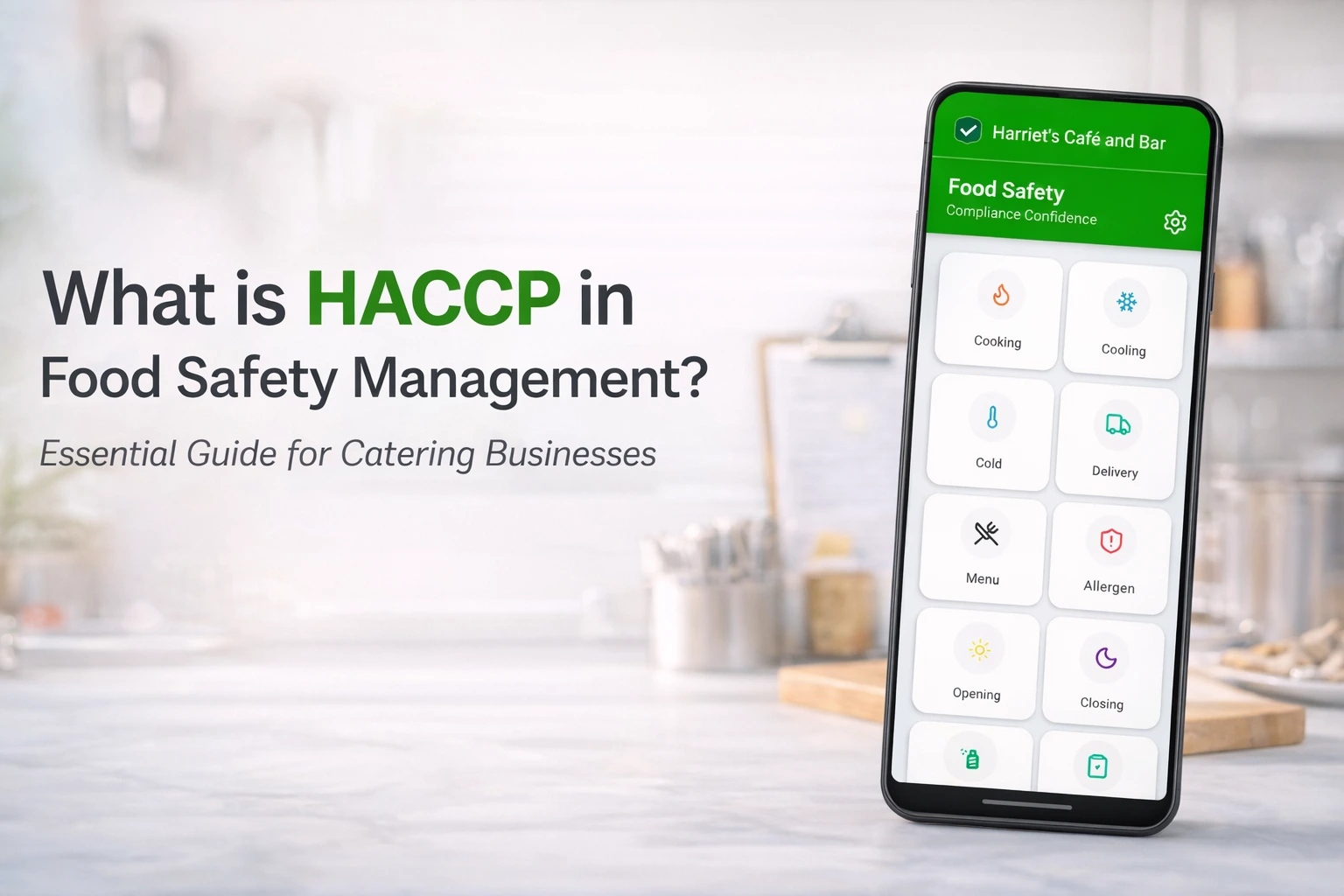
Confused about HACCP and how it fits into food safety management? This guide explains what it means, why it matters, and how a food safety app can help.
Table of Contents
- What is HACCP?
- Why is HACCP important for food safety management?
- How does HACCP work in practice?
- What are the UK legal requirements?
- Common HACCP mistakes to avoid
- How to simplify HACCP with digital food safety records
What is HACCP?
HACCP stands for Hazard Analysis and Critical Control Point. It’s a structured way of managing food safety risks in your business.
Instead of reacting when something goes wrong, HACCP helps you prevent problems before they happen. It looks at every step in your process — from delivery to serving — and identifies where things could go wrong.
For example, in a busy kitchen:
- Raw chicken could contaminate ready-to-eat food
- Food might not be cooked thoroughly
- Fridges could run above safe temperatures
HACCP helps you spot these risks early and put controls in place.
It forms the backbone of any food safety management system used in UK catering businesses.
Why is HACCP important for food safety management?
HACCP isn’t just best practice — it’s a legal requirement in the UK.
Under retained EU law, all food businesses must have procedures based on HACCP principles. The Food Standards Agency guidance on HACCP explains what’s expected.
For food businesses, this matters in several ways:
It protects your customers
Food safety hazards like bacteria, allergens, or contamination can cause serious harm. HACCP helps reduce these risks.
It supports your food hygiene rating
Your HACCP system is a key part of inspections. A clear, well-managed system can positively influence your food hygiene rating.
It keeps you legally compliant
If you don’t have a working HACCP-based system, you could face enforcement action, fines, or even closure.
It improves day-to-day operations
With clear processes in place, staff know exactly what to do, even during busy shifts.
How does HACCP work in practice?
HACCP is based on seven key principles, but in practice, it’s about managing real kitchen tasks.
Here’s what it looks like in a typical catering setting:
1. Identify hazards
Look at each stage of your process:
- Deliveries
- Storage
- Preparation
- Cooking
- Serving
For example, improper allergen management is a major hazard that must be controlled.
2. Set critical control points (CCPs)
These are steps where you must control risk, such as:
- Cooking chicken to at least 75°C
- Keeping chilled food at 5°C or below
- Hot holding above 63°C
3. Monitor and record
You need to check that controls are working:
- Temperature logs
- Cleaning schedules
- Delivery checks
This is where digital food safety records can make a big difference, reducing paperwork and improving accuracy.
4. Take action when things go wrong
If a fridge is too warm, you need to act immediately — for example, moving food and fixing the issue.
5. Keep records and review
Your HACCP records show that your system is working and being followed.
What are the UK legal requirements?
All UK food businesses must:
- Put in place a HACCP-based system
- Keep it up to date
- Ensure staff understand and follow it
Small businesses often use SFBB (Safer Food, Better Business), which is a simplified HACCP approach provided by the Food Standards Agency.
Environmental Health Officers will check:
- Whether hazards are properly identified
- If controls are suitable and followed
- Whether records are accurate and complete
Your system must reflect your actual business — not just a generic template.
Common HACCP mistakes to avoid
Many businesses struggle with HACCP, especially when things get busy.
Common issues include:
- Using a generic system that doesn’t match your kitchen
- Missing key hazards like allergens
- Incomplete or inconsistent records
- Staff not understanding procedures
- Not reviewing the system regularly
These problems can lead to lower inspection scores and increased risk.
How to simplify HACCP with digital food safety records
Managing HACCP manually can be time-consuming and easy to overlook during busy service periods.
Digital systems help by:
- Prompting staff to complete checks
- Storing records securely in one place
- Reducing paperwork
- Making inspections smoother
Food-Safety.app is a food safety management system for UK catering businesses designed to support HACCP compliance in a practical way.
It helps teams stay on top of daily checks, maintain accurate records, and keep processes consistent without adding extra pressure.
Conclusion
HACCP is at the heart of effective food safety management. It helps you prevent problems, protect customers, and meet your legal responsibilities.
While the principles are straightforward, applying them consistently can be challenging in a busy kitchen.
Using the right tools — especially digital systems — can make HACCP easier to manage and more reliable day to day. If you’re looking to simplify compliance and keep your records organised, it’s worth exploring how a food safety app could support your business.