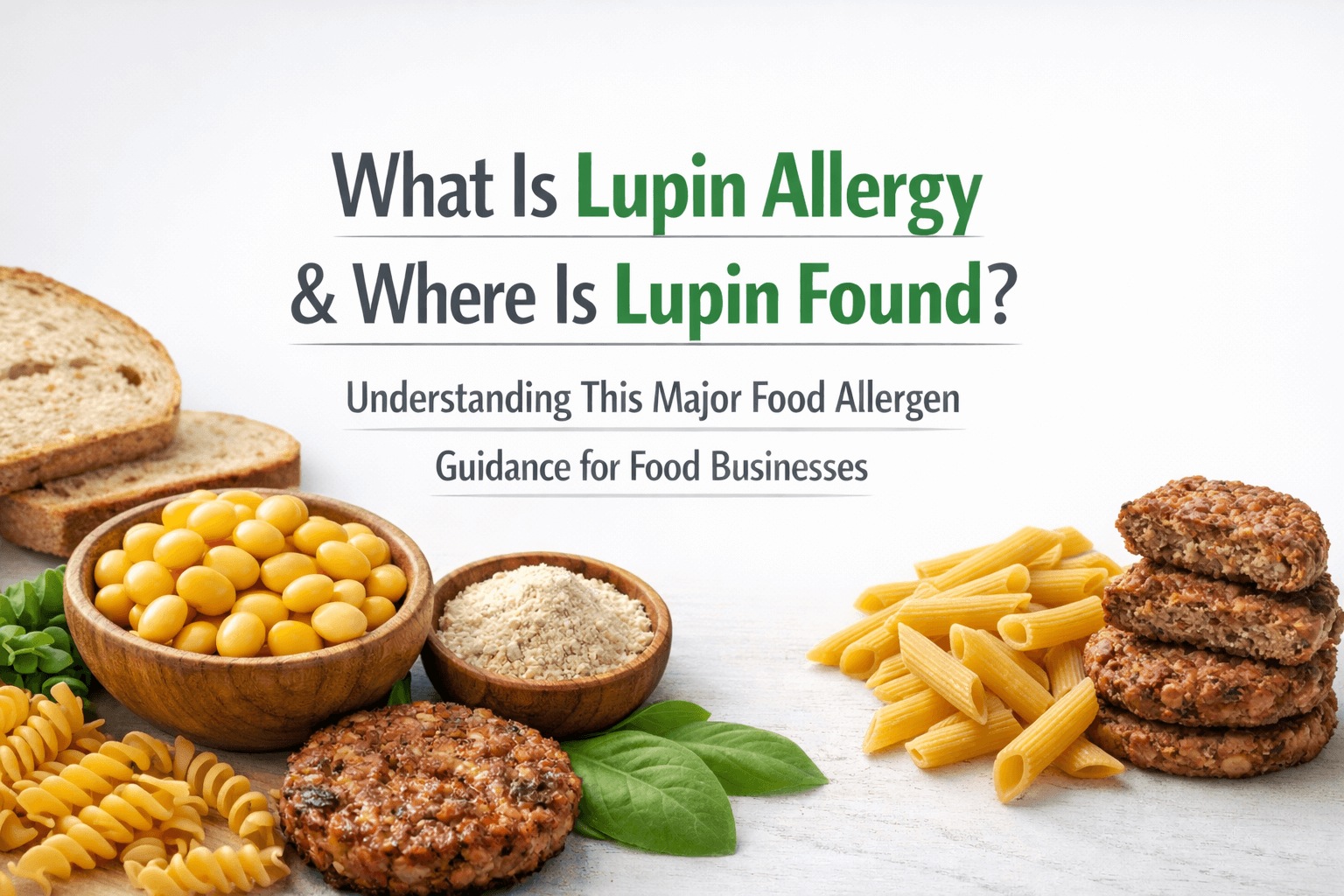
Lupin is one of the UK’s 14 recognised allergens and food businesses must understand what it is, where it’s used and how to manage lupin safely with guidance from the Food Safety App.
What Is Lupin As An Allergen
Lupin is a legume related to peanuts and soybeans, listed as one of the UK’s 14 regulated food allergens that food businesses must provide information about under food law. Lupin proteins can trigger immune responses in allergic individuals, sometimes leading to serious reactions such as anaphylaxis. People with peanut allergies are more likely to be allergic to lupin because of the close botanical relationship between these legumes. (Food Standards Agency)
How Lupin Can Trigger Reactions
Allergic reactions to lupin occur when the immune system mistakenly identifies lupin proteins as harmful. Symptoms can range from mild (skin rash, itching) to severe (difficulty breathing, swelling, anaphylaxis). These reactions can be rapid and life-threatening if lupin is ingested by someone who is allergic. (LiberEat)
Where Lupin Can Be Found
Bakery and Flour Products
Lupin is commonly used in bakery goods and flour blends. Lupin flour may be added to bread, cakes, muffins, biscuits, and gluten-free products to improve protein and fibre content and enhance texture. (LiberEat)
Pasta and Noodles
Some pasta and noodle products, especially those marketed as high protein or gluten-free, can include lupin flour. (LiberEat)
Meat Alternatives and Vegetarian Foods
Lupin is often used in plant-based sausages, burgers, and meat substitutes as a protein source or binder. (LiberEat)
Other Processed Foods
Lupin may also appear in sauces, coated products (e.g. onion rings), and snack foods. Gluten-free and speciality foods that avoid traditional wheat flours sometimes use lupin as a substitute. (LiberEat)
Legal And Practical Implications For Food Businesses
Under UK food allergen law, lupin must be declared on ingredient lists and communicated clearly to customers for both prepacked and non-prepacked food. Businesses should have clear systems in place to record allergens in ingredients, communicate them on menus or labels, and avoid allergen mistakes. (Food Standards Agency)
Managing allergens effectively in the kitchen also means controlling cross contamination risks during preparation, which ties into broader kitchen safety practices such as those outlined in How Cross-Contamination Happens and How to Stop It.
Clear documentation and staff training on allergens contribute to compliance and safer food provision, as emphasised in Food Safety Without the Fuss — The Smarter Way to Stay Compliant.
Lupin awareness should be included in overall food safety management and legal understanding, linked to guidance found in UK Food Safety Law Explained for Everyday Practice.
Practical Notes For Staff
- Always check ingredient specifications for lupin or lupin derivatives (e.g. lupin flour, lupin protein).
- Train staff to recognise lupin as an allergen and to provide accurate allergen information to customers.
- Prevent cross contamination by segregating lupin-containing ingredients and utensils.
- Ensure allergen information on menus, labels, and verbal communication is up to date.
Common Sources And Labels
Lupin might be listed on packaging under terms such as:
- Lupin flour
- Lupin bean
- Lupin protein
- Lupine seed
Identify these on ingredient lists to ensure correct declaration and communication to consumers. (LiberEat)