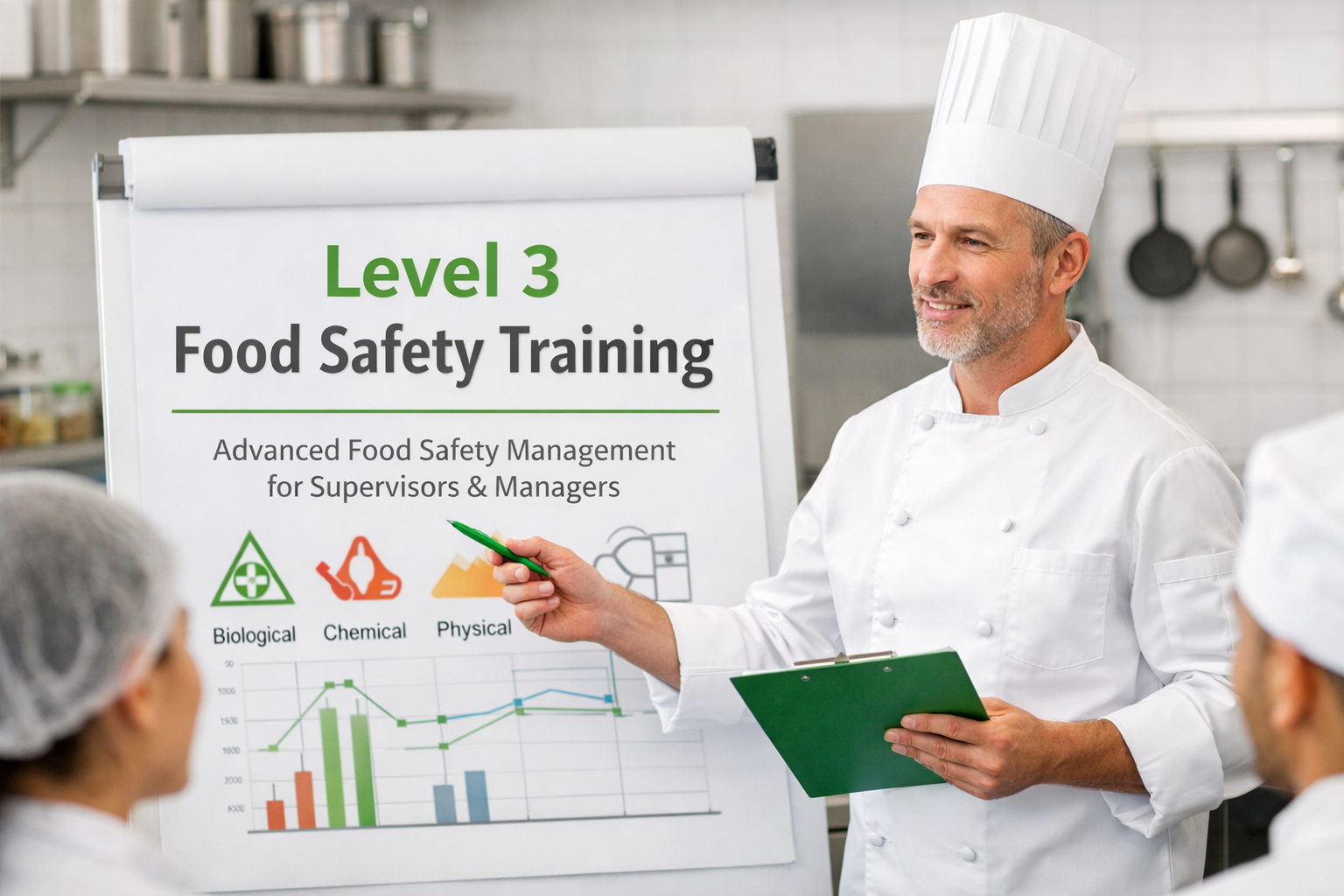
If you run a food business, you’ve likely heard about Level 3 food safety. You might even be wondering if you need it or what it actually covers. The syllabus can sound quite detailed at first. It doesn’t have to be.
This guide explains the Level 3 food safety syllabus in plain language. You’ll learn what’s included, who it’s for and how it fits into everyday work. If you run a café, restaurant, takeaway, food truck or small production business, this level of knowledge can really help.
What is Level 3 food safety?
Level 3 food safety is aimed at people who manage food operations. It goes beyond basic hygiene rules and daily checks. The focus is on control, planning and making sure food stays safe across the whole business.
This level is usually taken by owners, managers and supervisors. It’s also useful for anyone responsible for food safety systems, staff training or records. It supports your food hygiene rating and helps you meet legal duties with more confidence.
Level 3 also links closely with a food safety management system. It shows how to turn rules into routines that work in real life.
Who should follow the Level 3 syllabus?
The Level 3 syllabus is suitable if you:
- Own or run a food business
- Manage staff who handle food
- Check food safety records
- Deal with inspections
- Set up or review food hygiene paperwork
If you already have Level 2 food safety, Level 3 is the natural next step. If you don’t have Level 2 but you manage food safety, Level 3 can still be the right choice.
What does the Level 3 food safety syllabus cover?
The syllabus is broad but practical. It’s designed around everyday risks and common problems. Below are the main areas you’ll cover.
Food safety law and responsibilities
This section explains what the law expects from you as a food business operator. It covers:
- Legal responsibilities
- Enforcement and inspections
- What happens when standards slip
- Due diligence and record keeping
You’ll understand why records matter and how they protect your business. This links directly to your food hygiene rating and how inspectors assess your controls.
Food safety hazards
Level 3 looks closely at different types of hazards and how to manage them, including:
- Bacteria and viruses
- Allergens
- Chemical contamination
- Physical hazards like glass or metal
You’ll learn how hazards get into food and how they spread. More importantly, you’ll learn how to stop them before they cause harm.
This knowledge supports strong digital food safety systems that reflect what really happens day to day.
Temperature control and monitoring
Temperature issues are one of the most common causes of food safety problems. The syllabus covers:
- Cooking temperatures
- Chilling and freezing rules
- Cooling and hot holding
- Safe use of probes
You’ll learn how to set clear limits and what action to take when checks fail. This helps reduce waste, save time and protect customers.
Digital food safety tools can make these checks quicker and easier, especially during busy shifts.
Cross contamination control
Cross contamination is a major risk in food businesses. This part of the syllabus focuses on:
- Separating raw and ready to eat food
- Equipment and utensil control
- Cleaning routines
- Personal hygiene standards
The focus is on simple systems that staff can follow without confusion. Clear routines help keep food safe and reduce mistakes.
Cleaning and disinfection
Cleaning is about more than appearance. Level 3 explains:
- The difference between cleaning and disinfecting
- Choosing the right products
- Safe storage and use of chemicals
- Creating and following cleaning schedules
This section supports paperless food safety by showing how records can prove control without endless forms.
Pest control
Pests can damage your reputation fast. The syllabus covers:
- Common pests in food premises
- Signs of activity
- Prevention methods
- What to do if pests are found
You’ll learn how good structure, cleaning and checks lower risk. You’ll also see how to record actions clearly and consistently.
Food safety management systems
This is a key part of Level 3. It brings everything together and explains how to:
- Build a food safety management system
- Identify critical control points
- Set safe limits
- Record checks and actions
This section shows how digital food safety systems can replace bulky food hygiene paperwork and still meet legal requirements.
Allergen management
Allergen control is a major focus at Level 3. This part includes:
- The 14 allergens
- Cross contact risks
- Providing clear food information
- Training staff properly
You’ll learn how to protect customers and reduce risk to your business. Clear systems help avoid costly mistakes and stressful situations.
Staff training and supervision
Food safety depends on people. This section covers:
- Staff induction
- Ongoing supervision
- Correcting poor practice
- Building a positive food safety culture
Food safety training resources play an important role here. They help keep knowledge fresh without taking staff off the floor for long periods.
Incident management and corrective action
Problems can happen, even in well run businesses. Level 3 teaches you how to:
- Deal with equipment failures
- Handle missed checks
- Record issues clearly
- Prevent repeat problems
This helps you stay in control during busy periods and inspections.
How Level 3 supports your food hygiene rating
Inspectors look for confidence and consistency. Level 3 training helps you understand your systems and explain them clearly.
When you know why checks matter, records become meaningful. Your food hygiene paperwork is easier to manage and always ready to show.
Using digital food safety systems makes this even simpler. Records are organised, actions are logged and nothing gets misplaced.
Is Level 3 worth it for small businesses?
For many small food businesses, yes. Level 3 can save time in the long run by reducing errors and uncertainty.
It also helps you:
- Improve consistency
- Train staff more effectively
- Reduce stress during inspections
- Protect your reputation
Paperless food safety works best when managers understand the reasons behind the checks. Level 3 gives you that understanding.
Making Level 3 work day to day
The key is keeping things practical. You don’t need thick folders or complicated forms.
Use clear routines. Use digital food safety tools where possible. Review records little and often. Talk to your team and lead by example.
Food safety should support your business, not slow it down.
Final thoughts
The Level 3 food safety syllabus gives you the knowledge to manage food safety with confidence. It focuses on planning, control and simple systems that work in busy environments.
If you want food safety to feel easier and less time consuming, the right support makes a big difference. A Food Safety App can help you put Level 3 principles into practice with paperless food safety tools that save time and keep everything in one place.
Take a look and see how digital food safety can help you stay compliant and focus on running your business.