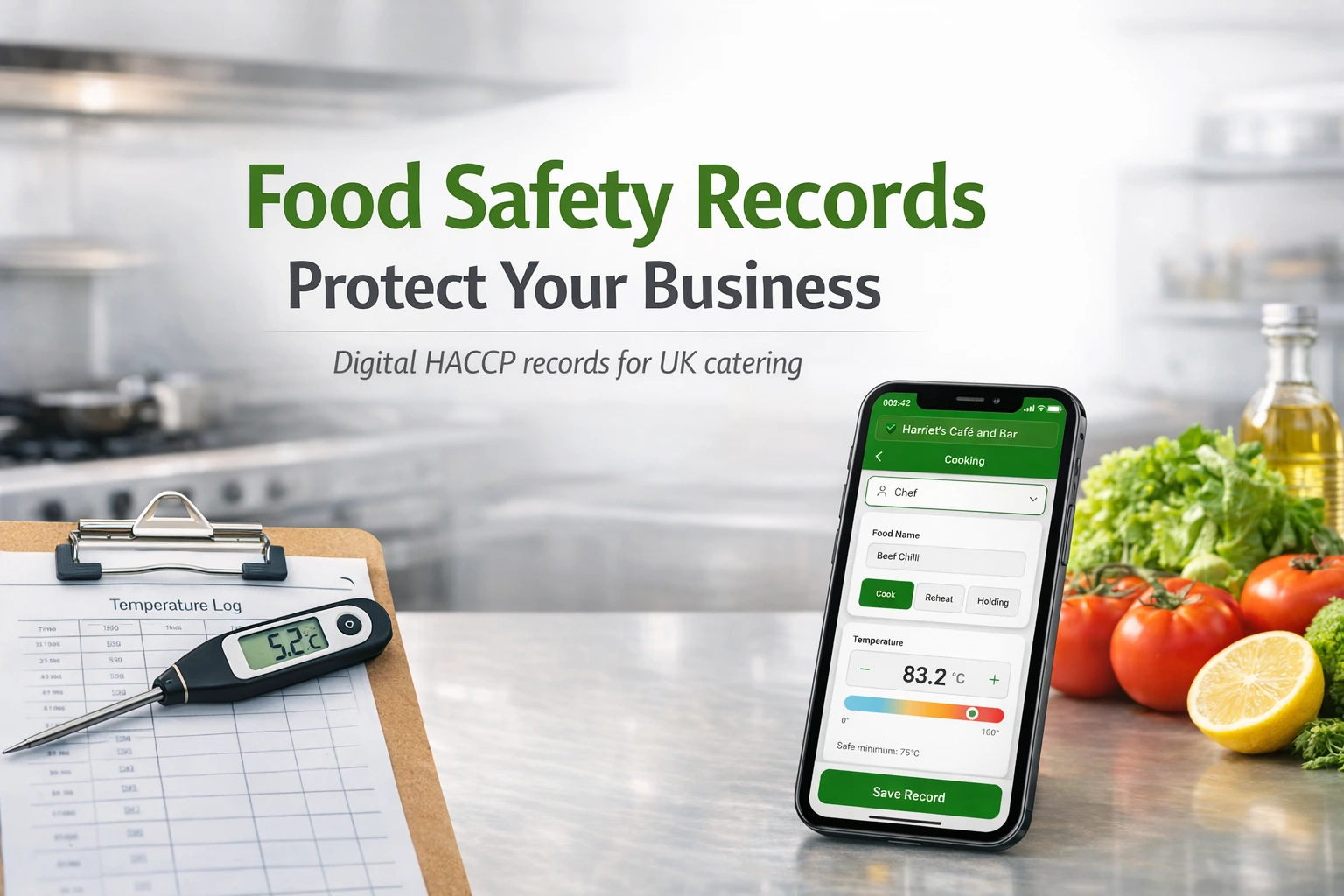
Clear food safety management records help UK catering businesses prove compliance, prevent risks, and stay organised. A food safety app can make record keeping faster and more reliable.
Table of Contents
- Why food safety records matter
- Are food safety records a legal requirement?
- Types of HACCP records food businesses should keep
- How records protect your business
- Why digital food safety records are becoming common
- Keeping records simple and consistent
Why food safety records matter
In a busy kitchen, it can be easy to see record keeping as just another piece of paperwork. But good records are one of the strongest protections a food business has.
Food safety checks happen every day in catering businesses. Staff check fridge temperatures, cook food to safe levels, clean surfaces, and confirm allergen information. Recording those checks shows that food safety procedures are actually being followed.
Without records, it’s difficult to demonstrate that safety controls are working. Even if the right checks are carried out, there’s no clear evidence they happened.
This is why reliable documentation is a key part of any food safety management system.
Are food safety records a legal requirement?
Yes. UK food hygiene regulations require food businesses to operate procedures based on HACCP principles.
HACCP stands for Hazard Analysis and Critical Control Point. It’s a structured way of identifying food safety risks and controlling them during food preparation.
One of the core parts of HACCP is keeping records that show the controls are working.
For example, a catering business might record:
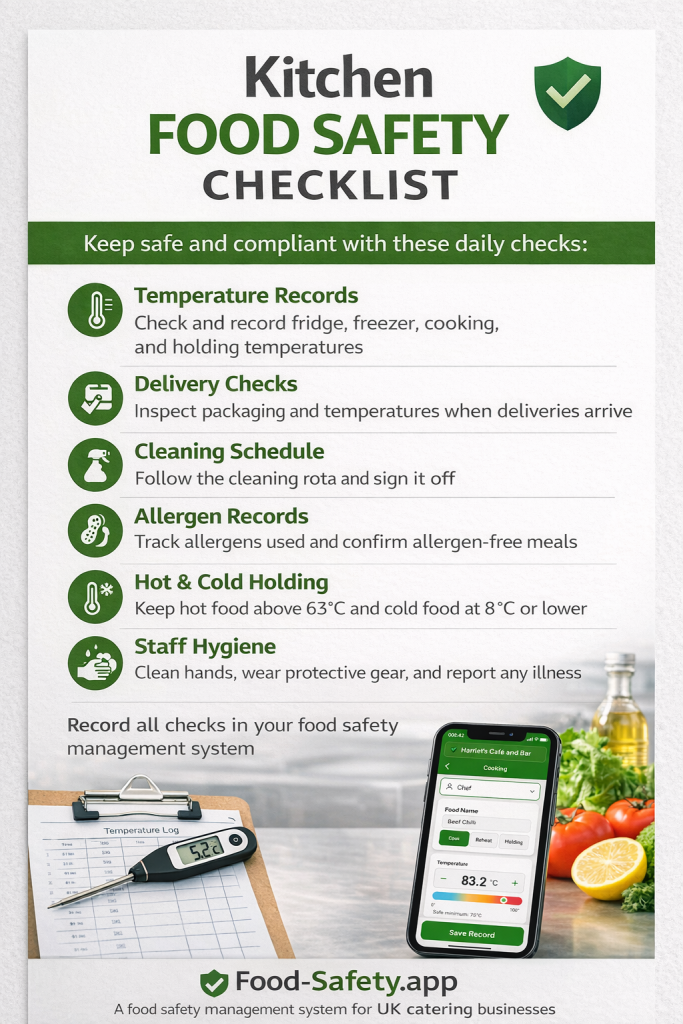
- Refrigerator and freezer temperatures
- Cooking temperatures for high-risk foods
- Cleaning schedules
- Delivery checks
- Staff training
- Allergen procedures
Official guidance from the Food Standards Agency explains that food businesses must keep documentation showing their food safety procedures are followed.
These HACCP records help demonstrate that hazards are identified, monitored, and controlled.
Types of HACCP records food businesses should keep
Different kitchens will keep slightly different records depending on the food they prepare. However, most UK catering businesses maintain several core types of documentation.
Temperature monitoring
Fridge, freezer, cooking, and reheating temperatures are some of the most common checks recorded in kitchens.
These logs show that food is stored and cooked safely.
Cleaning records
Cleaning schedules confirm that surfaces, equipment, and food preparation areas are cleaned regularly.
Signed cleaning logs also show who carried out the task.
Delivery checks
When food deliveries arrive, businesses should check packaging condition, temperature, and supplier information.
Recording these checks ensures unsafe food doesn’t enter the kitchen.
Allergen management documentation
Accurate ingredient information is essential for customers with allergies.
Clear allergen management records help ensure staff know which dishes contain the 14 regulated allergens.
Staff training records
Training documentation shows that staff understand safe food handling procedures.
This helps demonstrate competence during inspections.
How records protect your business
Food safety records don’t just support compliance. They also protect the business if something goes wrong.
Evidence during inspections
Environmental Health Officers usually review records during inspections.
Clear documentation shows that management takes food safety seriously and that procedures are followed consistently.
Strong records can help build inspector confidence and may support efforts to improve food hygiene rating results.
Protection during complaints
If a customer reports food poisoning or raises a complaint, records become very important.
Temperature logs, delivery checks, and cleaning records can show that correct procedures were followed.
This documentation can support a due diligence defence if the issue is investigated.
Consistency across the team
Records also help kitchens maintain consistent standards.
When staff log checks every day, food safety becomes part of the normal routine rather than something done occasionally.
Why digital food safety records are becoming common
Traditionally, many kitchens kept paper folders filled with logs and checklists.
While paper records can work, they often create practical problems. Sheets get lost, staff forget to complete them, or information becomes difficult to review.
This is why many businesses are moving towards digital food safety records.
Digital systems can help by:
- Sending reminders for checks
- Storing records securely
- Making documents easier to review during inspections
- Reducing paperwork and duplication
For busy catering teams, digital systems can simplify daily compliance tasks.
Keeping records simple and consistent
The most effective food safety records are simple and easy for staff to complete.
Overly complex systems often lead to incomplete records or rushed entries.
A good approach is to focus on a few key principles:
- Keep forms clear and easy to understand
- Record checks at the time they happen
- Train staff on why records matter
- Review logs regularly for issues
Consistency is far more important than complexity.
When checks are completed daily and recorded properly, food safety management becomes much easier to maintain.
Conclusion
Food safety records are more than paperwork. They show that your kitchen is managing risks properly, protecting customers, and following UK food safety regulations.
Clear records help during inspections, support your team’s daily routines, and provide important protection if complaints or investigations arise.
Many catering businesses now use digital tools to simplify this process. Food-Safety.app is a food safety management system for UK catering businesses designed to help teams manage checks, maintain HACCP records, and keep food safety documentation organised in one place.
For busy kitchens, using a dedicated food safety app can make compliance more consistent and much easier to manage.