If you’re responsible for food safety management, this guide explains HACCP training clearly for busy UK catering teams using digital food safety records.
Table of Contents
- What is HACCP training?
- Why is HACCP training important?
- What should a HACCP training syllabus include?
- How does HACCP link to SFBB?
- How to deliver effective HACCP training
- Common HACCP training mistakes
- Keeping HACCP records and compliance on track
What is HACCP training?
HACCP training teaches your team how to manage food safety risks in a structured, practical way. It’s a core part of food safety management and is required for most UK food businesses.
HACCP stands for Hazard Analysis and Critical Control Point. In simple terms, it means identifying what could go wrong with food safety, putting controls in place to prevent it, and monitoring and recording what happens.
Training helps staff understand these steps and apply them properly in day-to-day work.
Why is HACCP training important?
UK law requires food handlers to be supervised and trained appropriately. HACCP is not optional because it underpins your entire food safety system.
According to the Food Standards Agency guidance on HACCP, businesses must have procedures based on HACCP principles.
Without proper training, staff may not follow safe processes consistently, critical limits such as cooking temperatures may be missed, your food hygiene rating could be affected, and you may face problems during inspections.
Good training helps your team work with confidence and supports consistent compliance.
What should a HACCP training syllabus include?
A clear HACCP training syllabus should cover both theory and practical application. It doesn’t need to be overly complex, but it must be relevant to your business.
1. Food safety hazards explained
Staff should understand the main types of hazards: biological hazards such as bacteria and viruses, chemical hazards such as cleaning products and allergens, and physical hazards such as foreign objects.
This links closely to foodborne illness bacteria and how contamination happens in practice.
2. The 7 HACCP principles
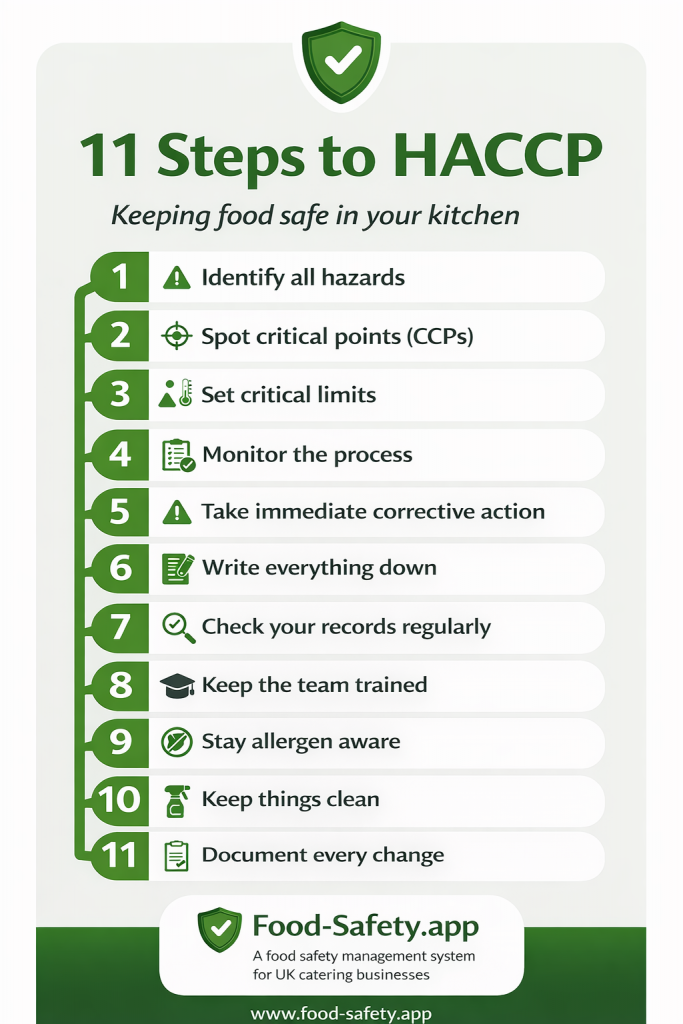
Every syllabus should include hazard analysis, critical control points, critical limits, monitoring procedures, corrective actions, verification, and record keeping.
These seven principles form the backbone of effective HACCP records and day-to-day food safety management.
3. Critical control points in practice
Staff need real examples, such as cooking food to safe temperatures, keeping food out of the temperature danger zone, and managing safe cooling and reheating.
Training should show how these controls apply in your own kitchen rather than staying at a general level.
4. Allergen management
Allergen control is a legal requirement and must be part of HACCP training. This includes preventing cross-contact, keeping ingredient information accurate, and understanding Natasha’s Law.
You can explore this further in allergen management guidance.
5. Cleaning and hygiene controls
Cleaning is a key prerequisite programme. Staff should understand cleaning schedules, safe chemical use, and the risks of cross-contamination.
This supports the wider controls covered in cleaning, hygiene, and cross-contamination.
6. Monitoring and HACCP records
Recording is essential for compliance. Staff should know what to record, how often to check, and what to do if something goes wrong.
This is where digital food safety records can make daily checks easier to manage.
How does HACCP link to SFBB?
If you run a small or medium-sized food business, you may already be using SFBB, which stands for Safer Food, Better Business.
SFBB is a practical way to apply HACCP without building a system from scratch. It includes safe method sheets, daily diary records, and monitoring checks.
The SFBB guidance from the Food Standards Agency explains how it supports compliance in smaller food businesses.
Training should show staff how their daily tasks link directly to SFBB and to your wider food safety management system.
How to deliver effective HACCP training
Training works best when it’s practical and relevant to the way your kitchen actually operates.
Focus on real kitchen scenarios rather than generic examples. Use demonstrations such as temperature probing, delivery checks, and cleaning routines. Short, clear sessions are usually more useful than long blocks of theory.
The aim is for staff to understand what to do, why it matters, and what to record.
It’s also important to keep training records up to date, provide refreshers when processes change, and give supervisors a deeper understanding of monitoring and corrective actions.
For further official advice on staff training and hygiene expectations, the Health and Safety Executive can also be a useful reference point alongside food safety guidance.
Common HACCP training mistakes
Many businesses run into the same problems. Training is often too generic, staff may complete it without really understanding it, and HACCP records can become inconsistent or incomplete.
Other common issues include poor awareness of corrective actions and weak allergen controls. These gaps often become obvious during inspections and can affect your food hygiene rating.
Keeping HACCP records and compliance on track
Even with good training, paperwork can become a burden. Missed checks, incomplete logs, and unclear records are common in busy catering environments.
Using digital food safety records can help by prompting daily checks, standardising records, reducing paperwork errors, and making inspection preparation more manageable.
Food-Safety.app is a food safety management system for UK catering businesses. It brings HACCP, SFBB, and daily monitoring into one place, helping teams follow clear workflows and keep records up to date without adding unnecessary complexity.
Conclusion
A well-structured HACCP training syllabus doesn’t need to be complicated. What matters is that your team understands the risks, follows safe processes, and keeps accurate records.
By focusing on practical training, clear HACCP records, and consistent monitoring, you can build a safer kitchen and a more confident team. A digital system can support that day to day, helping busy catering businesses stay organised and inspection-ready.