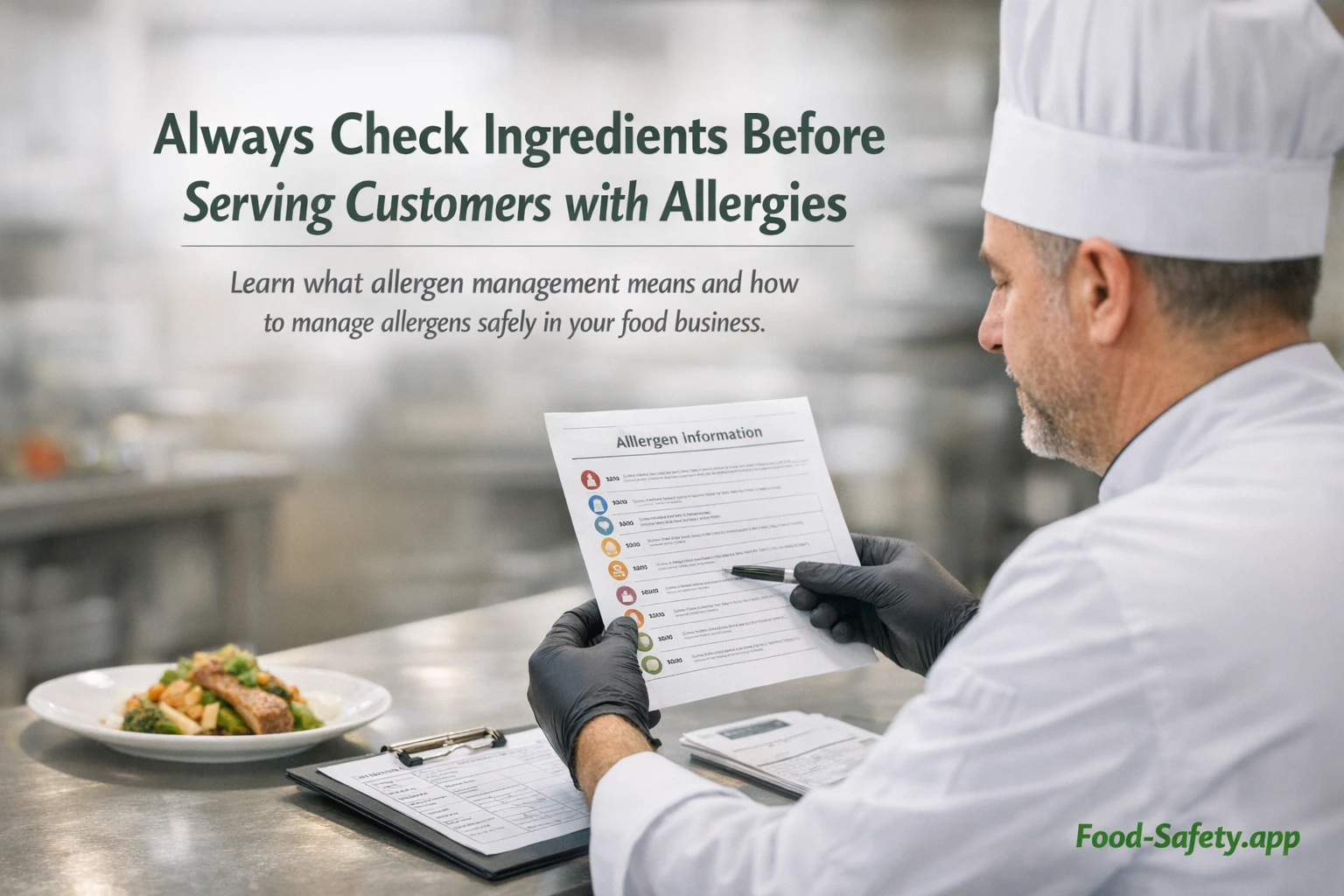
Learn what allergen management means and how to manage allergens safely in your food business, with simple steps to protect customers and stay compliant.
Table of contents
- What are allergens?
- What are your legal duties?
- What are the risks of poor allergen management?
- How to control allergens in your kitchen
- Recording and documenting allergen management
- Using digital tools for allergen management
What are allergens?
Allergen management starts with understanding what allergens are and why they matter. Allergens are substances that can trigger allergic reactions, sometimes severe or life-threatening. In food businesses, this typically refers to the 14 recognised allergens such as nuts, milk, eggs, gluten, and shellfish. Even tiny traces can cause harm, so it’s not just about ingredients but also how food is handled. Cross-contact, where allergens unintentionally transfer between foods, is one of the biggest challenges in busy kitchens.
For example, using the same utensils for a nut-containing dessert and a nut-free dish without proper cleaning can introduce risk. Clear knowledge of ingredients, supplier information, and preparation processes is essential. Staff need to understand that allergen management isn’t optional—it’s a core part of food safety that directly protects customers’ health.
What are your legal duties?
Food businesses have legal responsibilities to provide accurate allergen information and prevent contamination. In the UK and many other regions, regulations require businesses to clearly communicate which of the major allergens are present in food. This applies to menus, packaging, and verbal communication. Natasha’s Law, for example, strengthened requirements for prepacked foods for direct sale, ensuring full ingredient labelling.
Beyond labelling, businesses must also manage allergens safely during food preparation. This includes staff training, clear procedures, and documented controls. You can explore broader compliance expectations through compliance and inspection guidance. For detailed regulatory information, refer to the UK Food Standards Agency guidance at FSA allergen guidance, which outlines expectations for food operators.
What are the risks of poor allergen management?
Poor allergen management can have serious consequences. The most obvious risk is harm to customers, including severe allergic reactions such as anaphylaxis. These incidents can happen quickly and may be fatal. Even less severe reactions can damage trust and lead to complaints or legal action.
From a business perspective, failures can result in enforcement action, fines, or closure. Reputational damage is often long-lasting, especially in an age of online reviews. Allergen incidents are preventable in most cases, which is why authorities treat them seriously. Understanding these risks helps reinforce why consistent procedures and staff awareness are critical in day-to-day operations.
How to control allergens in your kitchen
Effective allergen management relies on practical controls that reduce the risk of cross-contact and misinformation. These controls should be part of your wider food safety system, not treated separately. Simple, consistent practices make a big difference in busy environments.
- Keep allergen information up to date for every menu item
- Store allergenic ingredients separately and clearly labelled
- Use dedicated utensils or clean thoroughly between tasks
- Train staff to handle allergen requests confidently
- Communicate clearly between front and back of house
For example, if a customer asks for a gluten-free dish, staff must check ingredients, preparation methods, and cooking surfaces. This level of control works alongside broader hygiene practices, such as those explained in cross-contamination prevention, which are closely linked to allergen safety.
Recording and documenting allergen management
Documentation is a key part of allergen management. It shows that your business is taking reasonable steps to control risks and comply with regulations. Records may include allergen matrices, supplier specifications, staff training logs, and cleaning schedules. Keeping these documents organised and accessible is important, especially during inspections.
Accurate records also support consistency. If recipes change or new suppliers are introduced, allergen information must be updated immediately. Without proper documentation, it’s easy for mistakes to happen. Written procedures and records provide a clear reference point for staff, helping ensure that allergen controls are applied correctly every time.
Using digital tools for allergen management
Digital systems are increasingly used to simplify allergen management and reduce human error. Instead of relying on paper records, businesses can use tools that centralise allergen data, track menu items, and provide instant access to information. This is particularly useful in fast-paced catering environments where quick, accurate answers are essential.
Food-Safety.app is a food safety management system for catering businesses that includes allergen tracking for the 14 major allergens, helping teams maintain accurate records and respond confidently to customer queries. Digital tools can also create automatic logs and highlight risks, making it easier to stay inspection-ready while improving overall efficiency.
By combining clear procedures, staff training, and reliable systems, allergen management becomes a practical and manageable part of everyday operations. This not only supports compliance but also builds trust with customers who rely on your business to keep them safe.