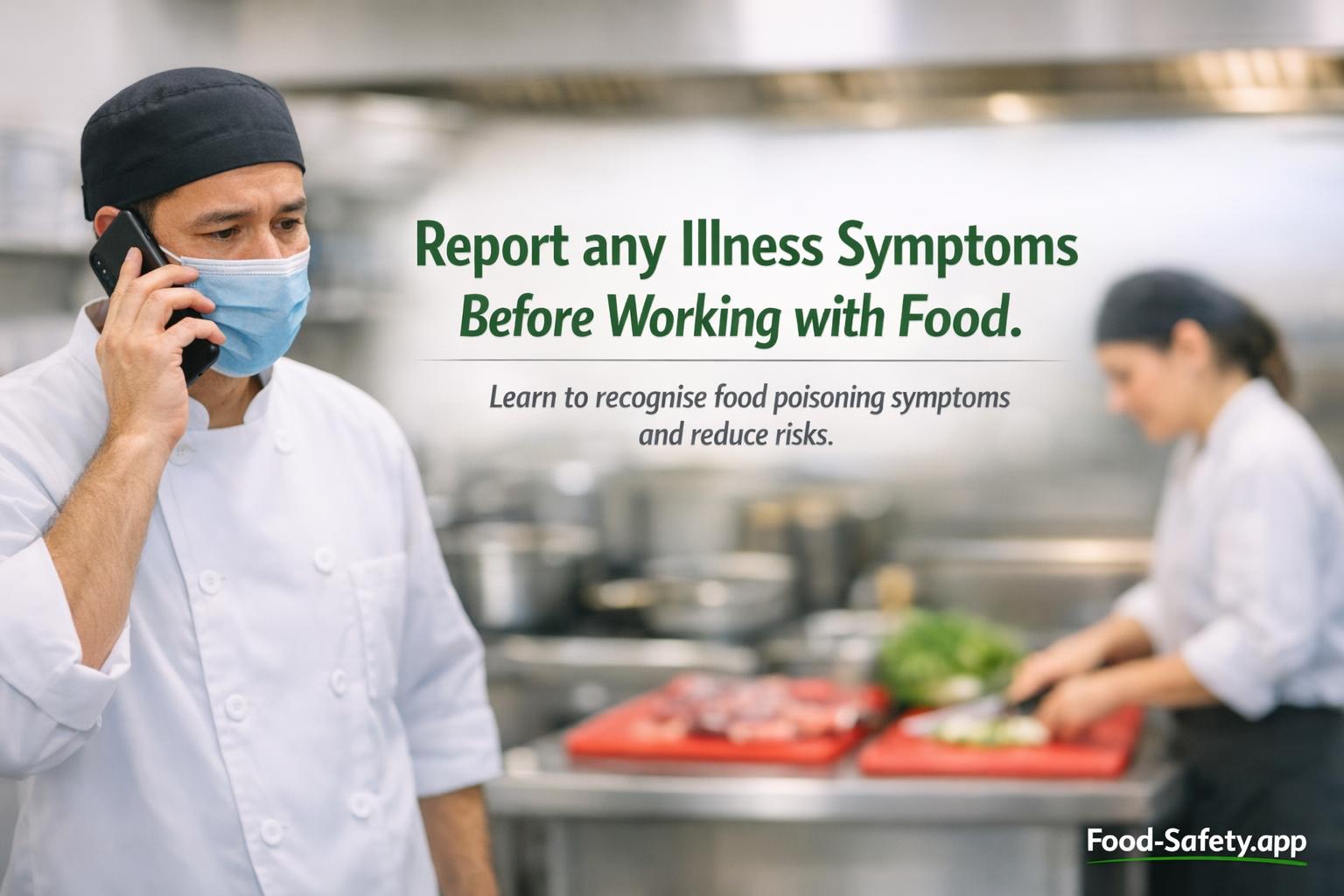
What food poisoning symptoms can look like in a busy kitchen
If you are asking what are the symptoms of food poisoning?, the short answer is that they often start with stomach and bowel problems, but they can also affect the whole body. In catering and hospitality, the real challenge is not just recognising the symptoms of food poisoning in a guest or member of staff, but knowing what to do next without making the situation worse. In a professional kitchen, a delayed response can turn one suspect plate, one unwell employee, or one weak cleaning routine into a much bigger operational problem. This guide explains the main symptoms, how they show up in service, and the practical steps that help reduce risk.
Table of contents
- Common symptoms of food poisoning
- How symptoms of food poisoning typically start
- When food poisoning symptoms need urgent action
- What staff should do if food poisoning is suspected
- What commonly causes outbreaks in catering businesses
- How to reduce the risk in a professional kitchen
- Why records and reporting matter
- Final thoughts
Common symptoms of food poisoning
Food poisoning symptoms vary depending on the cause, but the most common signs are usually easy to recognise if you know what to look for. In a catering setting, the issue is often that symptoms are mistaken for a mild stomach upset, a bug, or tiredness after a busy shift. That delay matters because a person with food poisoning may contaminate food, equipment, toilets, or shared staff areas before anyone realises.
The most common symptoms of food poisoning include:
- nausea
- vomiting
- diarrhoea
- stomach cramps
- fever or chills
- headache
- weakness or fatigue
- loss of appetite
Some people also feel bloated, shaky, or generally unwell before the bowel symptoms begin. In some cases, symptoms are mild and pass within a day or two. In others, they can be severe and need medical advice.
What good looks like in a professional kitchen is simple: managers and supervisors know these symptoms, take them seriously, and act early. A team member who has diarrhoea or vomiting should not be left “to see how they go” on service. The risk is not just personal illness; it is cross-contamination and a possible outbreak.
What often goes wrong
- Staff keep working because the shift is short-handed.
- Managers focus on service pressures instead of contamination risk.
- Unwell employees only report symptoms after they have already handled food or touched shared surfaces.
- Teams confuse food poisoning symptoms with stress or exhaustion.
How symptoms of food poisoning typically start
One of the most useful things to understand about food poisoning symptoms is that they do not always start at the same time. Onset can be quick or delayed, depending on the cause and how much contaminated food was eaten. This makes line management and handover conversations important in commercial kitchens, because a staff member may feel fine at the start of a shift and become ill later.
In practice, some people develop sickness and diarrhoea within hours, while others may not feel unwell until the next day or even later. That timing is one reason food businesses should take any report of vomiting, diarrhoea, or sudden stomach cramps seriously, even if the person says they are “probably fine”.
For hospitality operators, the operational issue is that symptoms appearing after a shift can still be linked to workplace hygiene failures, cross-contamination, or poor temperature control. If several guests or staff report similar illness after the same menu item or service period, the pattern needs attention quickly.
Good practice is to ask basic, non-judgemental questions when someone reports feeling unwell: when did symptoms start, what are they, have they vomited, and have they handled ready-to-eat food. This is not about diagnosis; it is about deciding whether they need to leave the kitchen and whether any food safety action is needed.
When food poisoning symptoms need urgent action
Most mild cases settle with rest and fluids, but some food poisoning symptoms need prompt medical advice. In a commercial kitchen, the key risk is underestimating symptoms because staff are used to pushing through busy shifts. That can be dangerous, especially if the person becomes dehydrated or continues working while infectious.
Urgent action is needed if someone has:
- blood in vomit or stool
- severe dehydration signs such as dizziness, confusion, very dark urine, or very little urine
- severe or persistent vomiting
- severe abdominal pain
- a high temperature that does not settle
- symptoms lasting more than a couple of days or worsening
Staff should seek medical advice if symptoms are severe, if the person is vulnerable, or if there is concern about dehydration. If you want a reliable public guidance point to share with managers or staff, the NHS food poisoning advice is a useful reference.
What good looks like operationally is a clear “report, remove, record” response: the person reports symptoms, is removed from food handling duties, and the incident is recorded so the business can spot patterns. That approach protects both customers and staff.
For HACCP planning, see How to write a HACCP plan.
What staff should do if food poisoning is suspected
If food poisoning symptoms are suspected in a staff member, the priority is to stop possible contamination immediately. The most common mistake is allowing the person to finish a prep task, clear a table, or cover one last delivery drop. Even a short delay can spread contamination through hands, aprons, cloths, bins, taps, or fridge handles.
Staff should:
- stop handling food straight away
- tell a manager or supervisor immediately
- avoid contact with ready-to-eat food, clean equipment, and service items
- wash hands thoroughly if they have been in the kitchen
- leave food preparation areas where possible
- follow the business sickness reporting procedure
If a guest reports symptoms after eating on site, the team should respond calmly, gather basic details, and pass the information to the manager on duty. Do not make assumptions, and do not dismiss the report. A good response can help identify whether there was a single affected dish, a temperature abuse issue, or a wider hygiene failure.
One operational insight many businesses miss is the importance of cloth and glove handling after a suspected illness report. Staff often focus on handwashing, but reusable cloths, tea towels, menus, pens, and card terminals can also become contamination routes if they have been handled by an unwell person. Replace or sanitise these items as part of the response.
Corrective actions in service
- Discard any food the person may have contaminated.
- Clean and sanitise nearby surfaces and touch points.
- Check whether any ready-to-eat food was exposed.
- Review who else may have been in contact with the person.
- Escalate to the manager responsible for food safety records.
Learn more about allergen management in a busy kitchen: Managing allergens safely in a busy kitchen.
What commonly causes outbreaks in catering businesses
Food poisoning symptoms are only part of the picture. For catering businesses, the bigger question is what caused them. Outbreaks usually happen because several small weaknesses stack up: poor hand hygiene, temperature control problems, cross-contamination, inadequate cleaning, or staff working while unwell.
What commonly goes wrong in busy kitchens is that systems are built for ideal conditions, not service pressure. A grill station gets backed up, a delivery arrives late, or a banqueting setup runs behind. In that moment, staff may switch from safe routines to “just get it out” behaviour. That is often where contamination slips in.
Another overlooked issue is the handover between shifts. If a morning prep team leaves out date labels, a supervisor on the next shift may not realise which foods were moved, cooled, or reheated. That kind of gap can make illness more likely and make tracing the cause harder if customers later report food poisoning symptoms.
Typical outbreak drivers include:
- poor handwashing after toilet use or cleaning tasks
- cross-contamination between raw and ready-to-eat foods
- hot food not kept hot enough or cold food not kept cold enough
- poorly cleaned utensils, boards, or food contact surfaces
- staff working while ill
- failure to cool, reheat, or store food safely
For foundation guidance on the basics, a useful internal read is food hygiene basics for catering teams. For a wider operational view of contamination risks, cross-contamination control in commercial kitchens is also relevant.
Cross-contamination prevention is critical—learn more at how cross-contamination happens and how to stop it.
How to reduce the risk in a professional kitchen
Prevention is not about one heroic training session. It is about repeatable habits that still hold up when the kitchen is busy. The businesses that manage food poisoning risk best tend to build simple routines into every shift, so staff do not have to improvise under pressure.
Practical steps include:
- keeping a clear sickness reporting procedure
- reinforcing handwashing at the right moments, not just at the start of the shift
- separating raw and ready-to-eat work areas as much as possible
- using probe checks and temperature records consistently
- cleaning high-touch points during service, not only at close
- briefing staff on what to do if they feel ill mid-shift
One original insight many competitors miss is the value of planning for the “second person affected”. In a busy operation, if one team member reports vomiting or diarrhoea, a second person may already have been exposed through the same task, cloth, or shared toilet area. Good managers respond by checking who shared duties, who handled the same equipment, and whether nearby prep should be paused until it is safe to continue.
Another practical point is that customer complaints and staff sickness reports should be looked at together. A single complaint about a suspicious meal may seem minor on its own. But if it lands on the same day as a staff sickness report, the combined picture can reveal a more serious food safety issue. That is why systems for incidents, temp checks, and cleaning are so useful when reviewing risk patterns.
If your team needs a stronger structure for traceability and routine control, using food safety records and monitoring logs can help keep the business organised during a busy service period.
One more quick note on best practices: Good hygiene practices in kitchen.
Food-Safety.app, a food safety management system for catering businesses, can support that kind of routine without turning it into extra admin.
Why records and reporting matter
When food poisoning symptoms are reported, memory alone is rarely enough. In a commercial setting, records help you link a symptom report to a menu item, a shift pattern, a delivery, or a cleaning issue. This matters for both customer protection and business continuity.
Good records should capture:
- who reported symptoms and when
- what the symptoms were
- which food was eaten or handled
- who else may have been exposed
- what immediate action was taken
- any cleaning, disposal, or exclusion steps completed
That documentation helps managers make better decisions and reduces confusion if a later complaint arrives. It also supports a calmer response in a high-pressure environment, because everyone knows the steps to follow instead of debating them in the middle of service.
If you want an operational framework rather than a one-off fix, incident logging and corrective action tracking can help turn illness reports into usable control measures.
Food-Safety.app, a food safety management system for catering businesses, can support that kind of routine without turning it into extra admin.
Final thoughts
So, what are the symptoms of food poisoning? In most cases, they include nausea, vomiting, diarrhoea, stomach cramps, and sometimes fever, headache, or dehydration. For catering and hospitality teams, the important part is acting quickly when those signs appear, especially if a staff member is involved.
The best protection is not guesswork. It is a simple, reliable response: stop food handling, report symptoms early, clean and isolate any possible contamination, and record what happened. In a professional kitchen, those habits protect customers, staff, and the business itself. If you train teams to recognise symptoms of food poisoning and respond in a consistent way, you reduce the chance that a minor illness becomes a major incident.
For temperature control in the kitchen, see Fridge temperature monitoring.