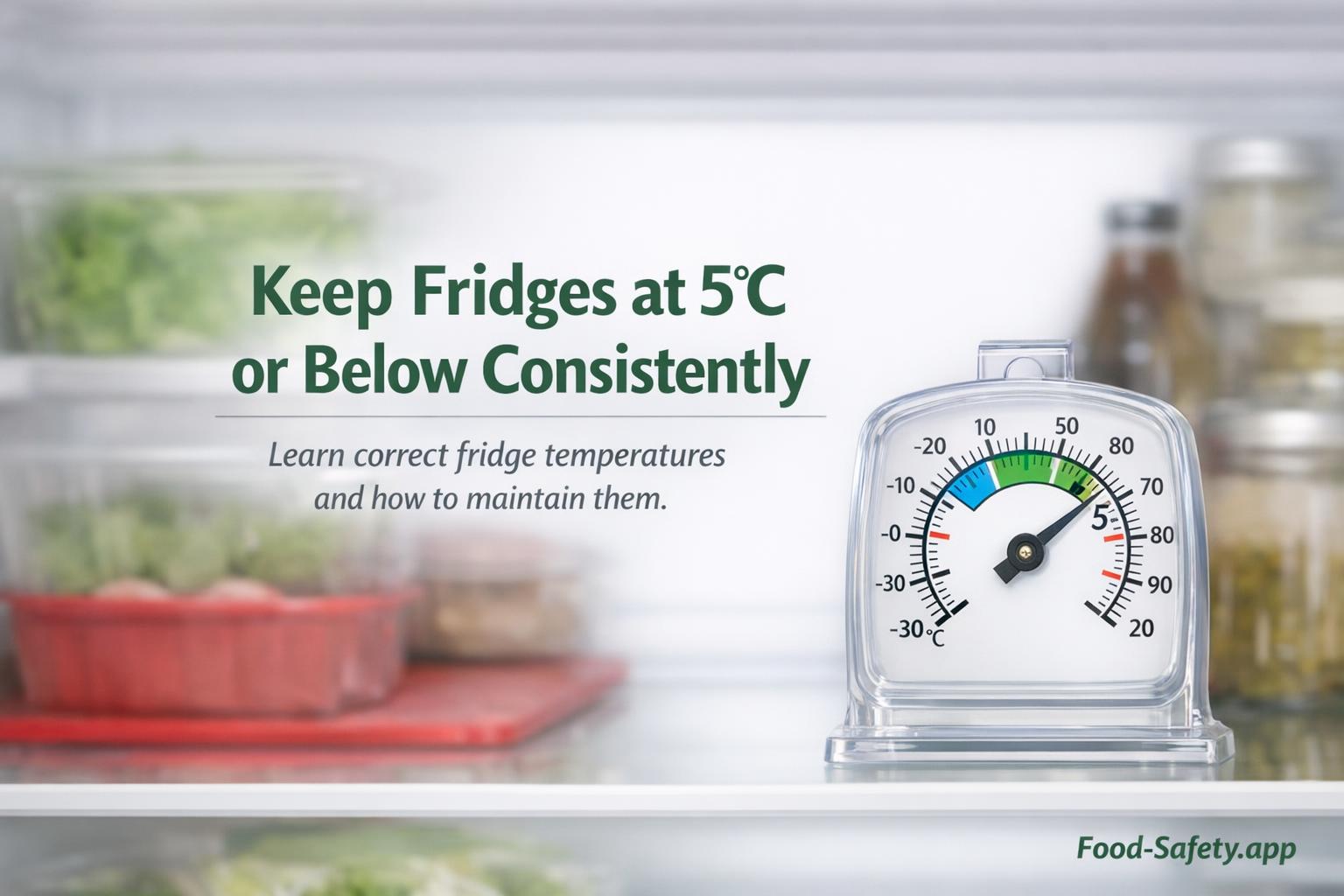
Fridge temperature monitoring is not just about hitting a number on a dial. It is about keeping high-risk food out of the danger zone, spotting equipment problems early and proving that your team is in control every day. For most food businesses, a practical working target is 0°C to 5°C, with extra attention on units that are opened often, overfilled or used for ready-to-eat food.
This guide explains what safe fridge temperatures look like in commercial kitchens, how staff should check them, what records should include and what to do when something goes wrong. If you need broader context, start with the temperature danger zone explained simply for UK food businesses.
What is the correct fridge temperature range?
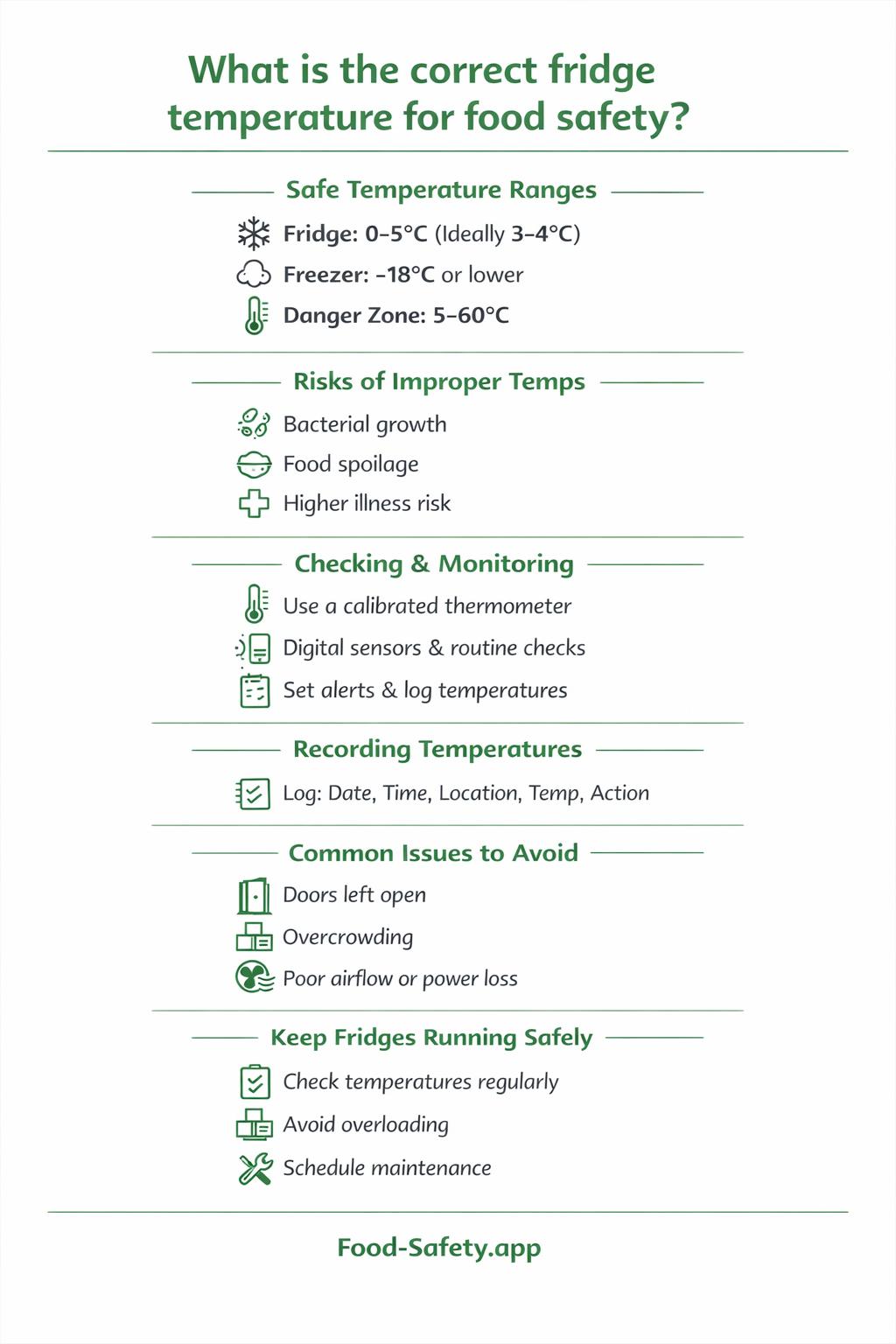
For most ready-to-eat and perishable food, the safest day-to-day target is 0°C to 5°C. That range slows bacterial growth and gives you a practical buffer before food becomes too warm. In kitchens, many managers aim for around 3°C to 4°C in storage fridges because they know temperatures can creep up during deliveries, cleaning or busy service.
The exact reading can vary by unit. A back-of-house upright fridge holding sealed dairy and cooked meats may stay steady all day, while a front-of-house display fridge in a café can fluctuate because the door is opened constantly. The key is not guessing. Set a target, check it consistently and act quickly when the unit drifts upward. For a wider food safety framework, link this to your procedures on UK food safety law explained for everyday practice and preparing for official inspections and your food hygiene rating.
Which foods are most at risk in a warm fridge?
Some foods become unsafe faster than others when fridge temperatures rise. High-risk items include cooked meats, sliced ham, grated cheese, milk-based desserts, prepared salads, opened sauces, cooked rice, sandwich fillings and ready-to-eat foods that will not get a further cooking step.
Real example: a small café keeps chicken mayo sandwich filling in a prep fridge that has been sitting at 9°C through the lunch rush. The filling looks and smells normal, but because it is ready to eat and handled frequently, it carries more risk than an unopened bottle of ketchup stored in the same unit. That is why fridge checks should always focus first on the foods with the highest consequence if temperature control fails.
This also connects with stock management. A crowded fridge with old and new containers mixed together is harder to keep cold and harder to monitor safely. Related guidance on high-risk vs low-risk foods and stock rotation made simple can support this section.
How to check fridge temperature properly
Staff should check fridge temperatures in a way that reflects the actual storage conditions inside the unit, not just the number flashing on the front. A built-in display can be useful, but it should not be trusted blindly if you have never verified it. In many businesses, the most reliable method is to compare the display with a clean, accurate thermometer or probe used in the coldest and warmest routine positions inside the fridge.
A practical schedule is:
- at opening, before service begins
- during the busiest part of the day
- at closing
- after a large delivery or restock
- after any suspected fault, power cut or deep clean
Where you measure matters. Do not take a reading from the warm air near the door and assume the whole fridge is safe. Place the thermometer in the storage area where high-risk food actually sits. Some teams use a bottle of water as a stable reference point because it reduces false alarms caused by a door being opened for a few seconds.
Real example: in a takeaway prep kitchen, the morning reading is 3.8°C. At 1 pm, after repeated access for salad tubs and sauces, the same fridge reaches 6.4°C. Staff move the most sensitive ready-to-eat foods into a spare unit, reduce overstocking on the top shelf and find that a crate has been blocking the internal fan. Without that mid-shift check, the problem would have been missed.
Checks also need to be simple enough for busy staff to carry out properly. Staff should know the limit, know how to clean and sanitise the probe, and know what action is expected if the result is too high. This is where training matters. Support this with internal links to food safety made simple and efficiency tips that help food businesses stay compliant and calm.
What fridge temperature records should show
Good records should make it easy for a manager, inspector or supervisor to answer five questions quickly: which fridge was checked, when was it checked, what was the reading, who checked it and what action was taken? If the only note says “fridge OK”, the record is weak. It does not prove control.
A useful fridge temperature record should include:
- date and time
- fridge name or unit ID
- actual temperature reading
- staff member name or initials
- corrective action taken if outside the target
- manager review where needed for repeat issues
Real example of a poor record: “Tuesday lunch – warm.” That tells you almost nothing.
Better example: “12 March, 13:10, Prep Fridge 2, 6.7°C, checked by Amir. Moved cooked chicken, coleslaw and milk desserts to Walk-In Fridge 1. Found door not closing fully because of overfilled gastronorm tray. Rechecked at 13:35: 4.2°C. Manager informed.”
That kind of entry shows control, corrective action and follow-up. It is far more defensible during an inspection or complaint investigation. This also links naturally to why food safety paperwork fails in busy kitchens and what to do instead and what affects your food hygiene rating.
What should a manager look for?
Managers should look for patterns, not isolated numbers. A fridge that regularly sits at 4.9°C in the morning and 6°C by mid-service is not under good control, even if staff keep bringing it back down later. Repeated borderline temperatures often point to overloading, blocked airflow, poor stock layout, worn door seals or a habit of putting warm food away too soon.
Real example: a nursery kitchen finds that one undercounter fridge is always warm on Mondays after delivery. The issue is not the thermostat. Staff are loading crates directly in front of the air vents and leaving the door open while checking invoices. The fix is operational, not mechanical.
What to do if a fridge goes above the safe range
If a fridge reading is high, staff should not just write it down and move on. They should check what food is inside, how long the unit may have been warm and whether the issue is something simple or a genuine equipment fault.
A sensible response looks like this:
- check whether the door was left open or not sealing properly
- look for overloading, blocked vents or hot food recently placed inside
- move high-risk ready-to-eat food to another safe unit if needed
- recheck after a short interval once the immediate cause is removed
- record both the problem and the action taken
- escalate recurring issues for repair or manager review
Real example: in a pub kitchen, the dessert fridge reaches 8.1°C after evening service. Staff discover the evaporator area is iced up and airflow is poor. Cheesecakes and cream-based desserts are moved to a functioning upright fridge, the faulty unit is labelled out of use and the issue is recorded for maintenance. That is a controlled response. Leaving the desserts in place and hoping the temperature drops later is not.
Delivery handling matters too. Fridge temperatures often rise after large stock deliveries or when warm food is put away too early. Strengthen this topic with links to deliveries and receipt of food and cooling food safely for busy kitchens.
Common fridge monitoring mistakes
Many fridge checks fail because the process is weak, not because the fridge is completely broken. Common mistakes include taking a reading only once a day, measuring near the door, trusting an unverified display, overpacking shelves, failing to review patterns and recording no corrective action.
Another common mistake: staff see 5.8°C, adjust the thermostat and walk away without checking whether food is actually cooling back down. A reading without follow-up is not monitoring. It is just a note.
Cold storage also ties into wider hygiene risks. A warm fridge full of uncovered ready-to-eat food creates a bigger problem if layout and separation are poor. Where relevant, connect this section to how cross-contamination happens and how to stop it and date marking use-by vs best before.
Paper logs or digital monitoring?
Paper checks can work well in a small, disciplined business. The problem is that they are easy to forget, hard to review and often too vague to be useful. Digital monitoring makes more sense when you have multiple fridges, several staff members or frequent handovers between shifts.
A digital system becomes genuinely useful when it helps staff complete checks on time, stores actual readings, captures corrective actions and makes trends easy to review. That is where a tool should be introduced naturally, after the page has already explained the food safety task itself.
If you want a simpler way to keep fridge checks, daily records and corrective actions together, Food-Safety.app can support that workflow for busy catering teams. It fits best once you already know what good monitoring should look like. For more context, also see how poor fridge checks lead to food safety failures.
Getting fridge temperature monitoring right is not complicated, but it does need routine, clear standards and follow-up. Set a working target, check it at the right times, keep records that show real action and treat repeat problems as warning signs rather than paperwork. That is what protects customers, reduces waste and makes inspections easier