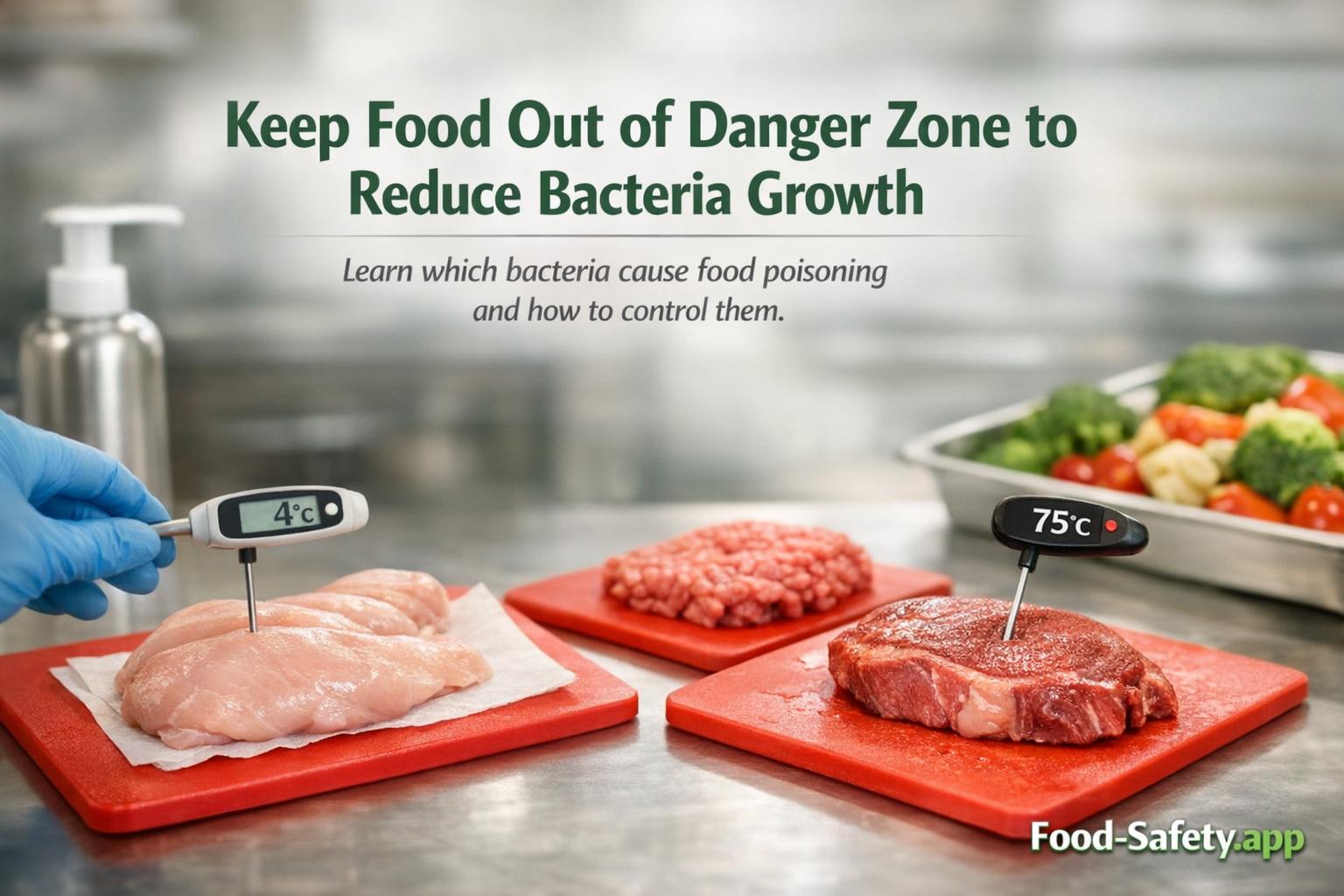
Controlling food poisoning bacteria is a core requirement for any professional kitchen. While bacteria are a natural presence in many raw ingredients, their growth and spread are entirely manageable through disciplined operational routines. This guide identifies the primary pathogens found in commercial catering, their specific risks, and the practical steps required to keep customers safe during a busy service.
Understanding bacterial growth in professional kitchens
Bacteria require four specific conditions to multiply: time, warmth, moisture, and a food source (nutrients). In a commercial kitchen, the most critical factor under your control is temperature. Pathogenic bacteria thrive in the “danger zone” between 8°C and 60°C, with the most rapid growth occurring around 37°C (human body temperature).
To ensure safety, professional kitchens must implement HACCP principles for catering. This involves identifying the specific points where bacteria can enter the flow of food and applying controls to eliminate or reduce them to safe levels. Effective control is not just about cooking; it includes the “chilled chain” for deliveries, rapid cooling of leftovers, and the prevention of cross-contamination from raw to ready-to-eat (RTE) areas.
Common food poisoning bacteria and their sources
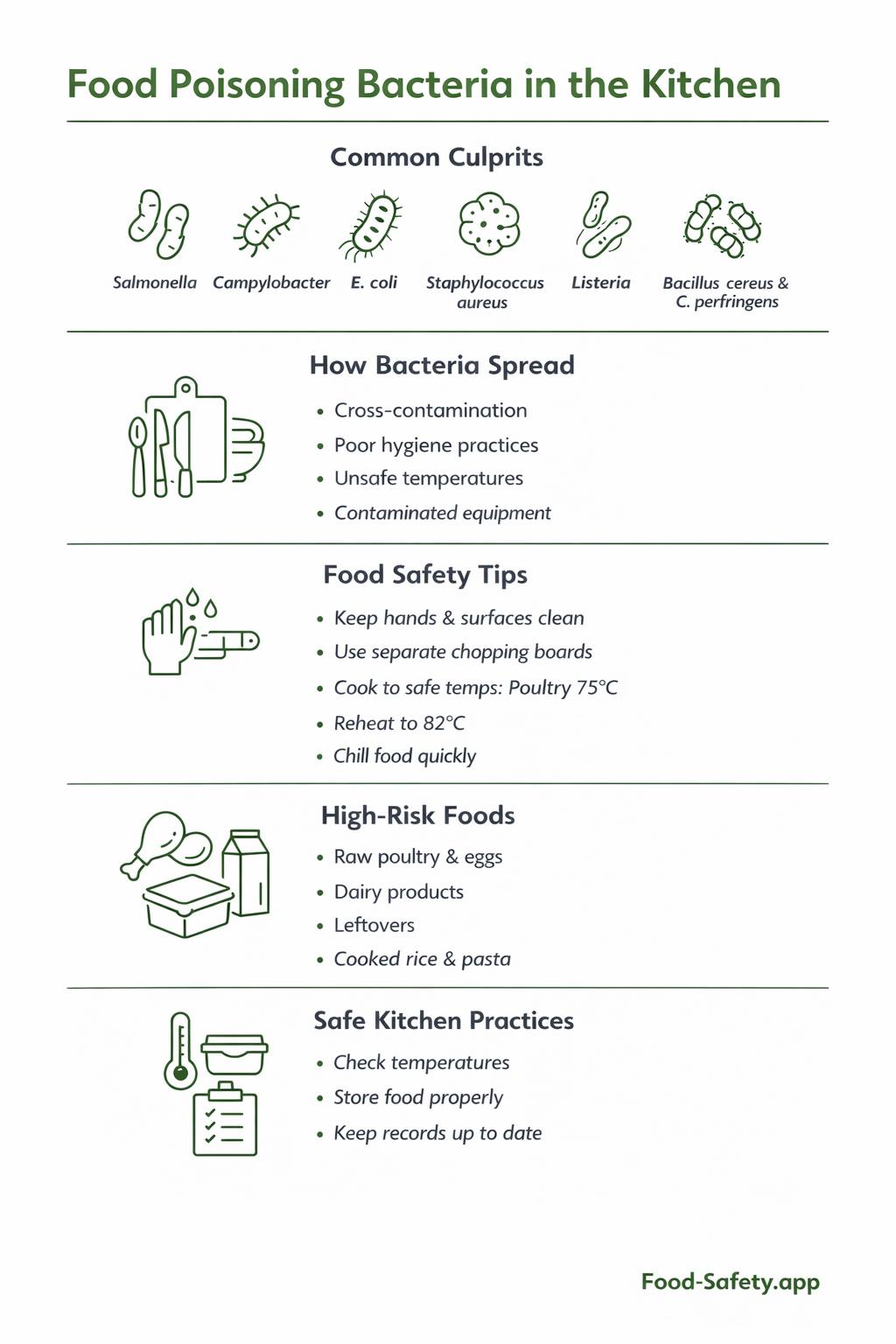
Campylobacter
Campylobacter is the most common cause of food poisoning in the UK. It is frequently associated with raw poultry and can cause illness even in very low doses.
- Common sources: Raw chicken, turkey, and unpasteurised milk. Also found in undercooked poultry livers used for pâté.
- Professional controls: Never wash raw poultry, as this splashes bacteria onto surfaces and equipment. Use dedicated yellow boards and knives. Ensure poultry reaches a core temperature of 75°C for 30 seconds or an equivalent time-temperature combination.
Salmonella
Salmonella is a resilient bacterium that survives in various environments and is often linked to outbreaks involving eggs or meat.
- Common sources: Raw meat, poultry, eggs, and occasionally unwashed fruit and vegetables.
- Professional controls: Use Lion-marked eggs or pasteurised egg products for dishes containing lightly cooked or raw eggs (like hollandaise or mousse). Maintain strict separation between raw meat prep and RTE areas.
Shiga toxin-producing E. coli (e.g., O157)
E. coli O157 is particularly dangerous because it produces toxins that can cause severe kidney failure. The infectious dose is extremely low.
- Common sources: Raw beef (especially minced meat), contaminated water, and soil on root vegetables.
- Professional controls: Treat raw beef and unwashed vegetables as high-risk. Use cross-contamination prevention strategies, such as dedicated vacuum packers for raw meat and separate sinks for vegetable washing. Cook burgers to a minimum core temperature of 75°C unless using a validated safe-cook process for “pink” burgers.
Clostridium perfringens
This bacterium is often called the “catering germ” because it is frequently linked to stews, gravies, and large joints of meat prepared in advance.
- Common sources: Animal intestines and soil; it produces spores that can survive normal cooking temperatures.
- Professional controls: Avoid slow cooling of large batches. Divide large joints or bulk liquids into smaller portions and use a blast chiller or an ice bath to cool food to below 8°C within 90 minutes.
Listeria monocytogenes
Listeria is unique because it can grow at refrigeration temperatures (below 5°C). It is a major concern for chilled RTE foods with long shelf lives.
- Common sources: Pre-packed sandwiches, cooked meats, soft cheeses, and smoked fish.
- Professional controls: Keep fridges at 5°C or below. Implement a strict “first-in, first-out” (FIFO) stock rotation system. Ensure all RTE foods are date-labelled and discarded once they exceed their shelf life.
Bacillus cereus
Commonly associated with starchy foods, this bacterium produces heat-stable toxins that are not destroyed by reheating.
- Common sources: Rice, pasta, and couscous.
- Professional controls: Cook rice in small batches. If not serving immediately, cool it within one hour and keep it refrigerated. Never reheat rice more than once.
Operational control measures and routines
To manage these pathogens during a busy service, every professional kitchen should follow these four pillars of food safety:
1. Temperature control and monitoring
Bacteria cannot be managed by guesswork. You must use calibrated probe thermometers to verify safety at every stage.
- Deliveries: Reject chilled goods arriving above 8°C.
- Cooking: Aim for 75°C (core temperature) for at least 30 seconds.
- Hot holding: Maintain food at 63°C or above. Monitor every two hours.
- Cooling: Move food from 60°C to below 8°C as quickly as possible (ideally within 90 minutes).
2. Two-stage cleaning and disinfection
Cleaning removes visible grease, but disinfection kills bacteria. You must use a disinfectant or sanitiser that meets BS EN 1276 or BS EN 13697 standards.
- Stage 1: Use a detergent to remove surface dirt and grease. Rinse.
- Stage 2: Apply the sanitiser, leave it for the required contact time (check the label), and wipe with a clean disposable cloth or leave to air dry.
- Critical touchpoints: Sanitise fridge handles, taps, and light switches every shift.
3. Personal hygiene standards
Staff are common carriers of Staphylococcus aureus. Maintaining high kitchen hygiene standards is essential.
- Handwashing: Use the “wash-dry-sanitise” method after handling raw meat, using the toilet, or touching bins.
- Illness: Any staff member with diarrhoea or vomiting must be excluded from the kitchen immediately and cannot return until 48 hours after their symptoms have cleared.
- Cuts: Cover all wounds with a bright blue waterproof dressing.
4. Prevention of cross-contamination
Keep raw and RTE foods physically separate at all times. Use colour-coded equipment (e.g., Red for raw meat, Green for salad/fruit) and dedicated preparation areas. If space is limited, prepare raw and RTE foods at different times, with a full deep clean and disinfection between tasks.
Managing high-risk scenarios in catering
Certain service styles increase the risk of bacterial growth. Use these specific controls for high-risk operations:
| Scenario | The Risk | Professional Control |
|---|---|---|
| Buffets / Carveries | Extended time in the danger zone. | Use the 2-hour rule: discard hot food that has been out for 2 hours. Never top up old containers with fresh food. |
| Sous-vide cooking | Low temperatures may not kill all bacteria. | Use only validated time and temperature charts. Ensure the vacuum seal is perfect and water baths are calibrated. |
| Outdoor catering | Lack of permanent handwashing and refrigeration. | Use insulated boxes with ice packs. Provide portable hot-water handwash stations. Keep food covered to prevent pest contamination. |
| Prep for large events | Large volumes of food cooling slowly. | Use a blast chiller. Portionalise stews and sauces into shallow GN trays (less than 5cm deep) to speed up heat loss. |
Corrective actions and troubleshooting checklist
When monitoring fails, you must take immediate corrective action. Use this framework to manage common kitchen failures:
- Fridge temperature is 10°C: Check how long the fridge has been high. If the time is unknown or over 4 hours, discard high-risk food. If under 2 hours, move food to a working fridge and call an engineer.
- Chicken core temperature is 68°C: Continue cooking until the target of 75°C is reached. Check the oven temperature and calibration of the probe.
- Raw meat juices dripped onto cooked ham: Discard the ham immediately. Do not attempt to wash or “trim” the contaminated area. Clean and disinfect the fridge shelf.
- Staff member arrives with a cough and cold: Assess the risk. Ensure they follow strict respiratory hygiene (sneezing into elbows) and increase handwashing frequency. If they have gastrointestinal symptoms, send them home.
For detailed documentation, refer to a HACCP plan for UK catering to ensure all actions are recorded for environmental health inspections.
Frequently asked questions
Can you smell or see food poisoning bacteria?
No. Pathogenic bacteria do not usually change the smell, taste, or appearance of food. This is different from spoilage organisms (like mould or yeast), which do cause visible changes. You must rely on temperature and date controls rather than your senses.
Is “pink” meat always dangerous?
Not necessarily for whole cuts like steak, where bacteria stay on the surface. However, for minced meats (burgers) and poultry, bacteria are mixed throughout the product. These must be cooked thoroughly unless a specific validated food safety management system is in place.
Do I need to wash salad if it says “ready to eat”?
If it is labelled “ready to eat” and has been pre-washed by the supplier, further washing in a professional kitchen may actually increase the risk of cross-contamination from sinks or hands. If it is not labelled RTE, it must be washed thoroughly in a dedicated vegetable sink.
Managing food safety requires constant vigilance. Ensuring your team understands professional allergen management alongside bacterial control creates a comprehensive safety culture. By implementing these routines, you protect your customers and the reputation of your business through every service.