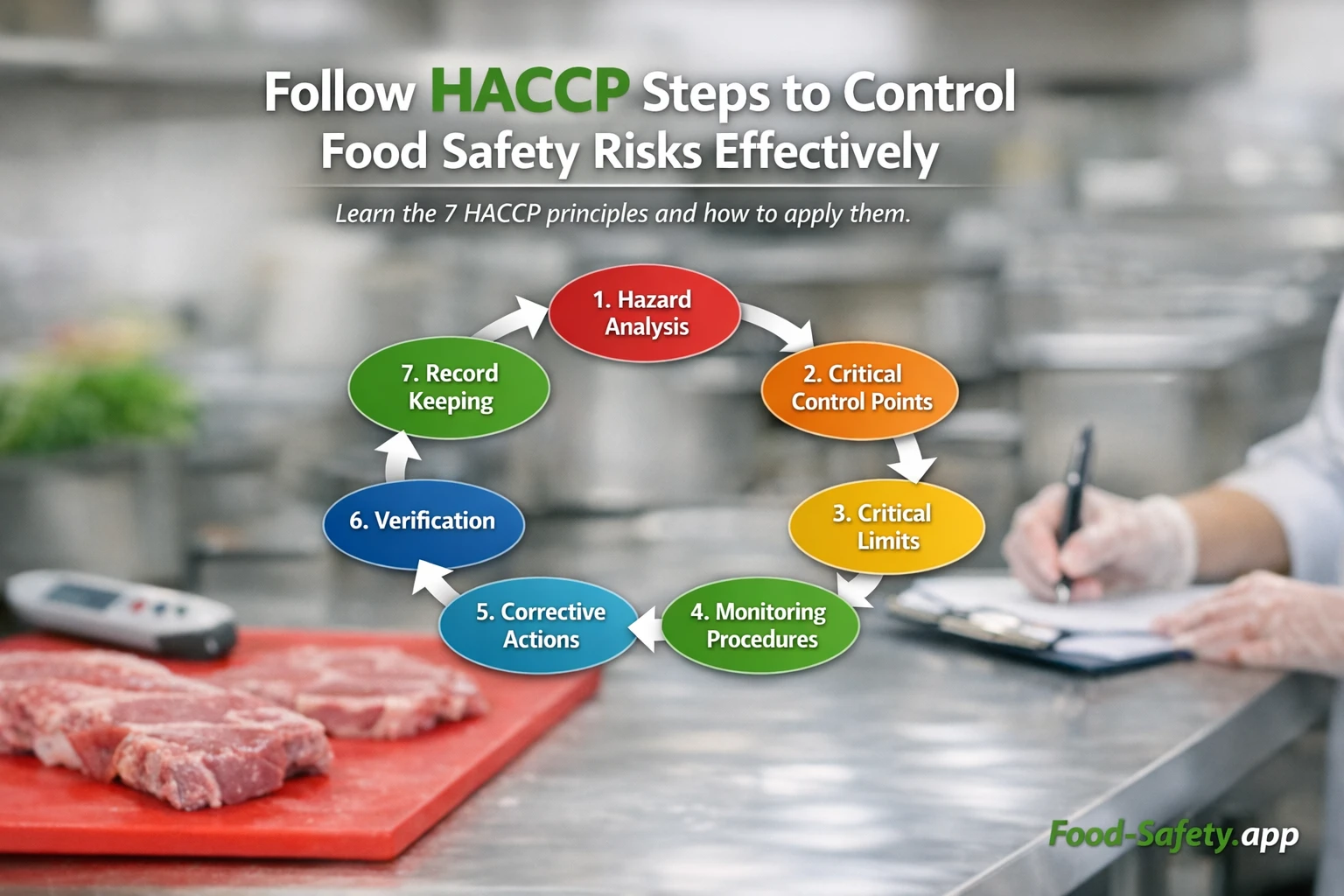
Learn the 7 HACCP principles and how to apply them. This simple guide explains HACCP principles clearly, helping you manage food safety risks with confidence.
Table of Contents
- What are the 7 HACCP principles?
- Explanation of HACCP principles
- Examples in food businesses
- How to apply HACCP principles
- Monitoring and checks
- Review and verification
What are the 7 HACCP principles?
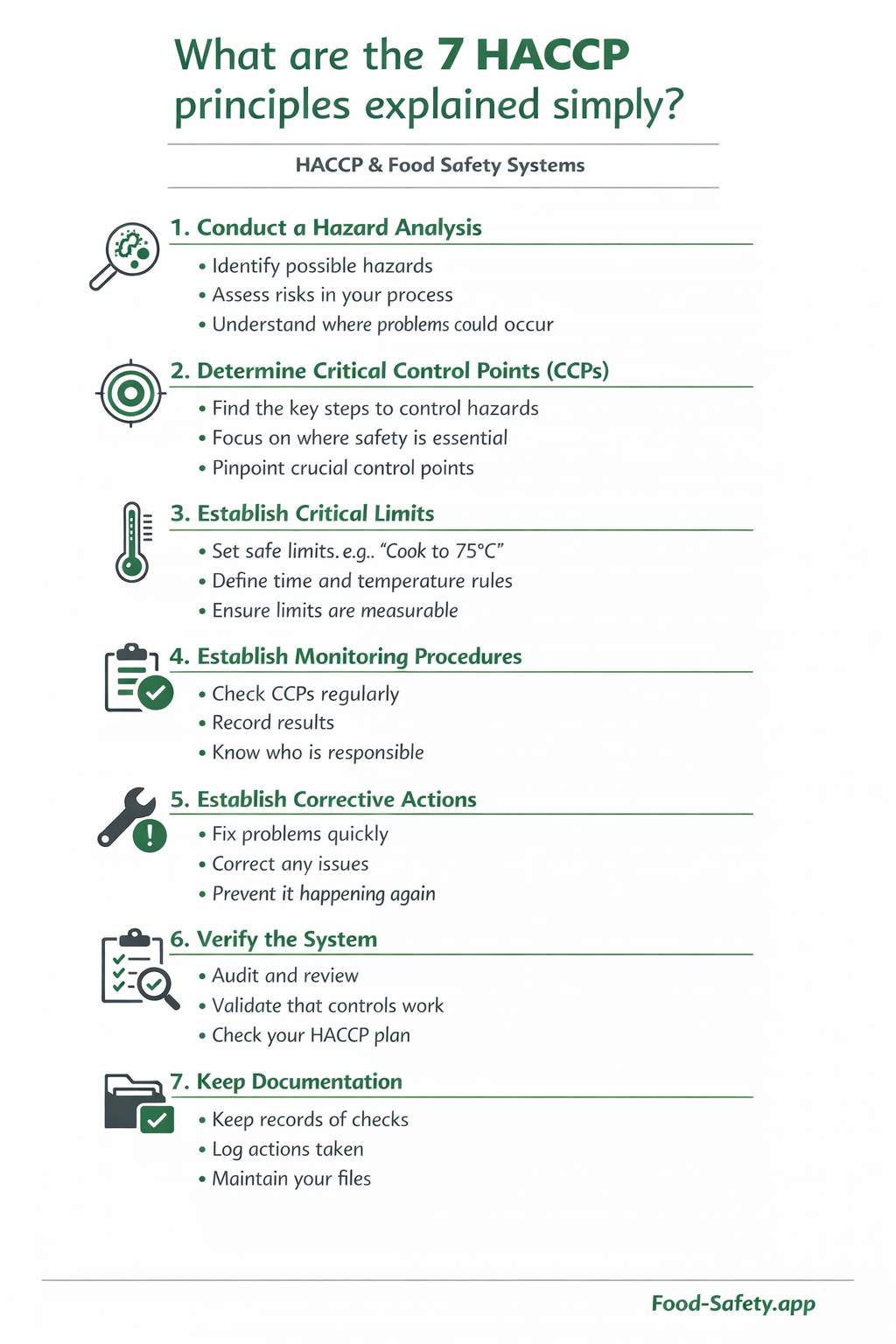
The HACCP principles form a structured approach to identifying and controlling food safety risks. They are recognised globally and underpin most food safety laws and guidance. The seven principles are:
- Conduct a hazard analysis
- Identify critical control points (CCPs)
- Set critical limits
- Establish monitoring procedures
- Define corrective actions
- Verify the system works
- Keep records and documentation
These steps help businesses prevent hazards rather than reacting after something goes wrong, making them essential for safe food operations.
read more
Explanation of HACCP principles
1. Conduct a hazard analysis
This step involves identifying potential biological, chemical, or physical hazards in your food processes. For example, raw chicken may carry harmful bacteria. Understanding hazards helps you focus control measures where they matter most and aligns with guidance from authorities like the FAO.
2. Identify critical control points (CCPs)
CCPs are stages where control is essential to prevent or eliminate hazards. Cooking, chilling, and storage are common examples. If a step directly impacts safety, it’s likely a CCP. Clear identification helps staff prioritise key actions during daily operations.
3. Set critical limits
Each CCP needs measurable limits, such as cooking food to 75°C or keeping chilled items below 5°C. These limits ensure hazards are controlled effectively and consistently across shifts and staff members.
4. Establish monitoring procedures
Monitoring ensures your critical limits are met. This could include temperature checks, visual inspections, or timed processes. Regular monitoring supports compliance and helps businesses align with temperature control guidance to reduce risk.
5. Define corrective actions
If something goes wrong, corrective actions must be clear. For example, if food hasn’t reached a safe cooking temperature, it should be cooked further or discarded. This prevents unsafe food from reaching customers.
6. Verify the system works
Verification checks that your HACCP system is effective. This might include reviewing records, internal audits, or occasional testing. It ensures your controls remain reliable over time.
7. Keep records and documentation
Accurate records show that food safety procedures are being followed. These may include temperature logs, cleaning schedules, and training records. Good documentation supports inspections and demonstrates compliance.
Examples in food businesses
In a restaurant kitchen, HACCP principles might involve checking delivery temperatures, storing ingredients safely, and ensuring food is cooked thoroughly. A catering company may focus on transport controls and reheating procedures. Meanwhile, a café might prioritise allergen separation and cross-contamination prevention, supported by strong cleaning and hygiene practices.
These examples show how HACCP adapts to different operations while maintaining the same core structure.
How to apply HACCP principles
Applying HACCP principles starts with mapping out your food processes from delivery to service. Identify where hazards could occur and assign controls at each step. Keep things practical—procedures should match your size, menu, and workflow. Overly complex systems are harder to follow and more likely to fail in busy environments.
Many businesses use digital tools like Food-Safety.app, a food safety management system for catering businesses, to simplify HACCP. It helps track temperatures, record checks, and maintain organised records without relying on paper systems.
Monitoring and checks
Consistent monitoring is key to making HACCP principles effective. Staff should know what to check, how often, and what to do if results fall outside safe limits. Daily checks might include fridge temperatures, cooking logs, and cleaning completion.
Clear routines reduce errors and help teams stay accountable. Using checklists or digital systems can improve consistency, especially during busy service periods when tasks can be missed.
Review and verification
HACCP isn’t a one-time setup. Regular review ensures your system stays relevant as menus, equipment, or processes change. Verification activities, such as audits or record reviews, confirm that controls are working as intended.
By reviewing your HACCP principles routinely, you can identify gaps early and maintain high food safety standards. This proactive approach protects customers, supports compliance, and helps build trust in your business.