If you are getting ready for what EHOs look for during a kitchen inspection, the best approach is not to panic, but to make sure your food safety systems, records and daily routines are working properly before anyone walks through the door. Environmental Health Officers usually want to see a kitchen that is clean, organised, well controlled and able to show, on paper and in practice, that food is being handled safely. A formal approach such as HACCP plan can help document these controls.
Whether you run a restaurant, café, hotel kitchen, school canteen or takeaway, the same basics tend to matter most: hygiene, temperature control, pest prevention, traceability, staff training and good management. The exact approach can vary between UK local authorities, and rules in other countries may be different, but the practical priorities are similar. If you know what to expect, a food hygiene inspection becomes much easier to handle.
How food hygiene inspections usually work
When EHOs visit a commercial kitchen, they are normally checking two things at once: what they can see on the day, and how well your food safety controls are documented and followed. In practice, that means they may look at the kitchen, stores, fridges, sinks, dishwashers, handwash points, cleaning schedules, labels, delivery checks, staff behaviour and paperwork.
They are not trying to catch you out. They want to know whether your business can produce food safely on a normal busy service, not just on a quiet day after a deep clean. If your processes are clear and staff understand them, the visit usually runs more smoothly. They also check allergen information and management practices.
You can see general public guidance on food hygiene from the Food Standards Agency.
Cleanliness, layout and equipment condition
One of the first things EHOs notice is the overall condition of the kitchen. This does not mean every surface must look brand new, but it should be clean, tidy and maintained. Grease build-up, damaged seals, broken tiles, peeling paint, chipped chopping boards and poorly kept drains can all suggest that cleaning and maintenance are not under control.
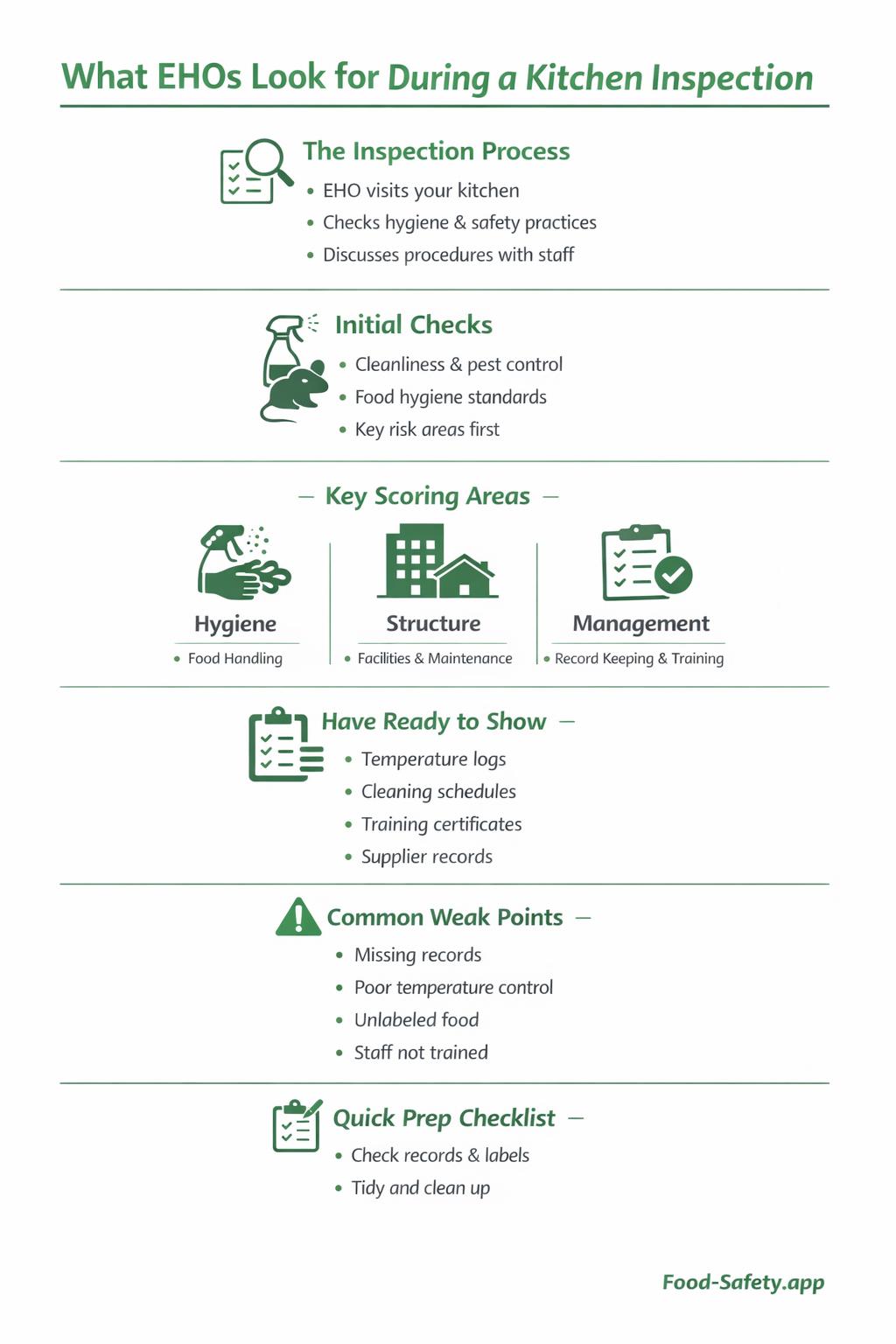
What they usually look at
- Floors, walls, ceilings and light fittings.
- Food contact surfaces and prep tables.
- Fridges, freezers, ovens, dishwashers and sinks.
- Handwash basins stocked with soap and paper towels.
- Utensils, storage containers and shelving.
- Condition of doors, seals and hard-to-clean areas.
Practical routine that helps
Build a cleaning system around actual shifts, not just the end of the day. In busy service, small spillages and splashes build up quickly, so assign cleaning tasks during service as well as after. Use a cleaning schedule that says what gets cleaned, how often, by whom and with what chemical. Kitchen cleaning schedule in action helps implement this. Check wear and tear weekly and log repairs promptly.
Food safety management and records
When people ask what EHOs look for during a kitchen inspection, they often focus on paperwork, but the real issue is whether your paperwork matches what happens in the kitchen. A good food safety management system should be simple enough for staff to use and strong enough to show control.
Records that are commonly checked
- Temperature checks for fridges, freezers, cooking and hot holding where used.
- Cleaning schedules and sign-off sheets.
- Delivery checks and rejection records.
- Training records and induction notes.
- Allergen information and process controls.
- Pest control reports, if you use a contractor.
- Maintenance and fault reports.
- Opening and closing checklists.
The best records are clear, consistent and up to date. If a diary is missing whole weeks, or if every entry looks identical, it can give the impression that checks are being copied rather than actually done. Keep records realistic and easy for the team to complete during a shift.
A useful habit is to review records at the end of each week, not months later. That way, if something has been missed, you can deal with it while it is still fresh. For example, if a fridge temperature was out of range on Tuesday morning, you should be able to show what action was taken, such as moving food, checking the seal or calling an engineer.
Temperature control and safe handling
Temperature control is one of the biggest priorities in any food hygiene inspection. EHOs want to see that chilled food is kept cold, frozen food stays frozen, hot food is held safely and cooking is thorough. They will often ask how you monitor temperatures and what you do if something goes wrong.
Good practice in a professional kitchen
- Check fridge and freezer temperatures regularly and record them.
- Keep doors closed as much as possible during service.
- Do not overload fridges or block air circulation.
- Use clean probes for checking cooked food where needed.
- Cool food quickly using safe, practical methods.
- Separate raw and ready-to-eat food at all times.
In a busy kitchen, the common problem is not the lack of equipment, but poor control during service. A fridge door left open during a rush, pans of hot food cooling too slowly, or trays stacked awkwardly on prep benches can create risk very quickly. EHOs will notice whether staff are managing those pressures sensibly.
If you are not sure whether a process is working, check the system before the next busy shift. For example, if chilled ingredients are being taken out for too long during prep, split the task into smaller batches so only a little food is exposed at once.
Staff hygiene and training
EHOs do not only assess the building. They watch the people working in it. Clean clothing, good handwashing, sensible behaviour and confidence with food safety routines all send a strong message that the business is in control.
Things that commonly stand out
- Proper handwashing after raw food, cleaning, bins and toilet use.
- Hair tied back or appropriately covered where required by your system.
- No jewellery or habits that could contaminate food.
- Separate handling of raw and ready-to-eat items.
- Staff knowing who to tell if they are ill.
- Supervisors correcting poor practice on the spot.
Training does not have to be complicated, but it must be relevant. A new commis chef, a weekend café assistant and a hotel breakfast team member may all need different levels of support, but everyone should know the basics. Keep induction notes simple and make sure refresher training is built into the year, not just done once and forgotten.
Allergens and cross contamination controls
Allergen management is a major focus in modern inspections because mistakes can have serious consequences. EHOs are likely to ask how you know what allergens are in your dishes, how you prevent cross contamination and how staff answer customer questions.
What strong allergen control looks like
For cross contamination guidance, see how cross-contamination happens and how to stop it.
- Accurate allergen information for every menu item.
- Separate storage for ingredients where needed.
- Clear labelling on prepped foods and containers.
- Good cleaning between tasks and between jobs.
- Allergen orders flagged clearly to the kitchen and front of house.
- Staff trained not to guess if they are unsure.
Cross contamination often happens in small moments: using the same tongs, sharing spreaders, reusing wiping cloths or placing bread near flour-dusted prep. A simple fix is to separate work areas and tools wherever possible and keep allergen-sensitive dishes moving through a clear process.
If you serve customers with allergens, make sure the whole team understands that “may contain” or “we can take it off” is not enough on its own. The kitchen needs reliable controls, not assumptions.
Pest control, waste and stock management
A clean kitchen can still fail an inspection if waste and stock are poorly managed. EHOs look for signs that pests could get in, find food or shelter. They also check whether bins, deliveries and dry storage are under control.
What to keep on top of
- Bins emptied regularly and lids kept closed where possible.
- Waste stored away from food prep areas.
- Stock rotated using date labels and first in, first out.
- Dry store floors and shelving kept clean and tidy.
- Food protected from contamination in storage.
- Gaps, damage or droppings reported immediately.
If you use a pest control contractor, keep the reports easy to find. But do not rely on contractor visits alone. Daily housekeeping matters just as much. Spilled flour, open sacks, damaged packaging and clutter behind equipment can all create opportunities for pests and make cleaning much harder.
Common mistakes that raise concern
Many inspection problems are small on their own, but together they paint a bad picture. Common examples include incomplete records, missing cleaning checks, poor handwash supply, unlabeled containers, inconsistent temperatures, and staff who cannot explain basic controls.
Another common issue is a mismatch between policy and practice. For example, a kitchen may have a detailed allergen procedure, but if staff are not following it during a lunch rush, the written document is not much use. EHOs are looking for a system that works on a busy day, not just a folder on a shelf.
Quick warning signs
- People do not know where the records are kept.
- Cleaning is only done when there is time.
- Fridge checks are recorded without any follow-up when something is wrong.
- Staff use the wrong sink for handwashing or food prep.
- Labels are missing from decanted or prepared items.
What to do if something is not right
If an EHO spots a problem, the best response is calm, honest and prompt. Do not try to hide it or argue the point if the issue is genuine. Show what you have already done and explain what you will do next.
For example, if a fridge is running warm, isolate the food, check whether it can be safely moved, record the action and arrange repair immediately. If cleaning records are incomplete, identify the gap, correct the process and retrain staff if needed. The aim is to demonstrate control and improvement.
If your team often struggles to keep up with checks, use a more practical system. Food-Safety.app, a food safety management system for catering businesses, can help you keep daily controls and records together without relying on loose paper files.
Final checklist before an inspection
Before an EHO visit, walk through the kitchen as if you are seeing it for the first time. Look at the spaces, the paperwork and the people together.
Use this final check
- Kitchen, fridges and stores are clean and tidy.
- Handwash stations are stocked and easy to use.
- Cleaning schedules are current and signed.
- Temperature checks are being recorded and reviewed.
- Allergen information is accurate and available.
- Staff know what to do if they are unsure or if something goes wrong.
- Maintenance issues, pest concerns and faults are logged and followed up.
What EHOs look for during a kitchen inspection is really a picture of control. If your team can show that food is safe, records are current and problems are dealt with quickly, you are already in a much stronger position. A well-run professional kitchen does not need to be perfect, but it does need to be organised, consistent and honest.
Focus on daily habits, keep the paperwork meaningful and make sure the team knows the system. That is what gives an inspection the best chance of going smoothly.