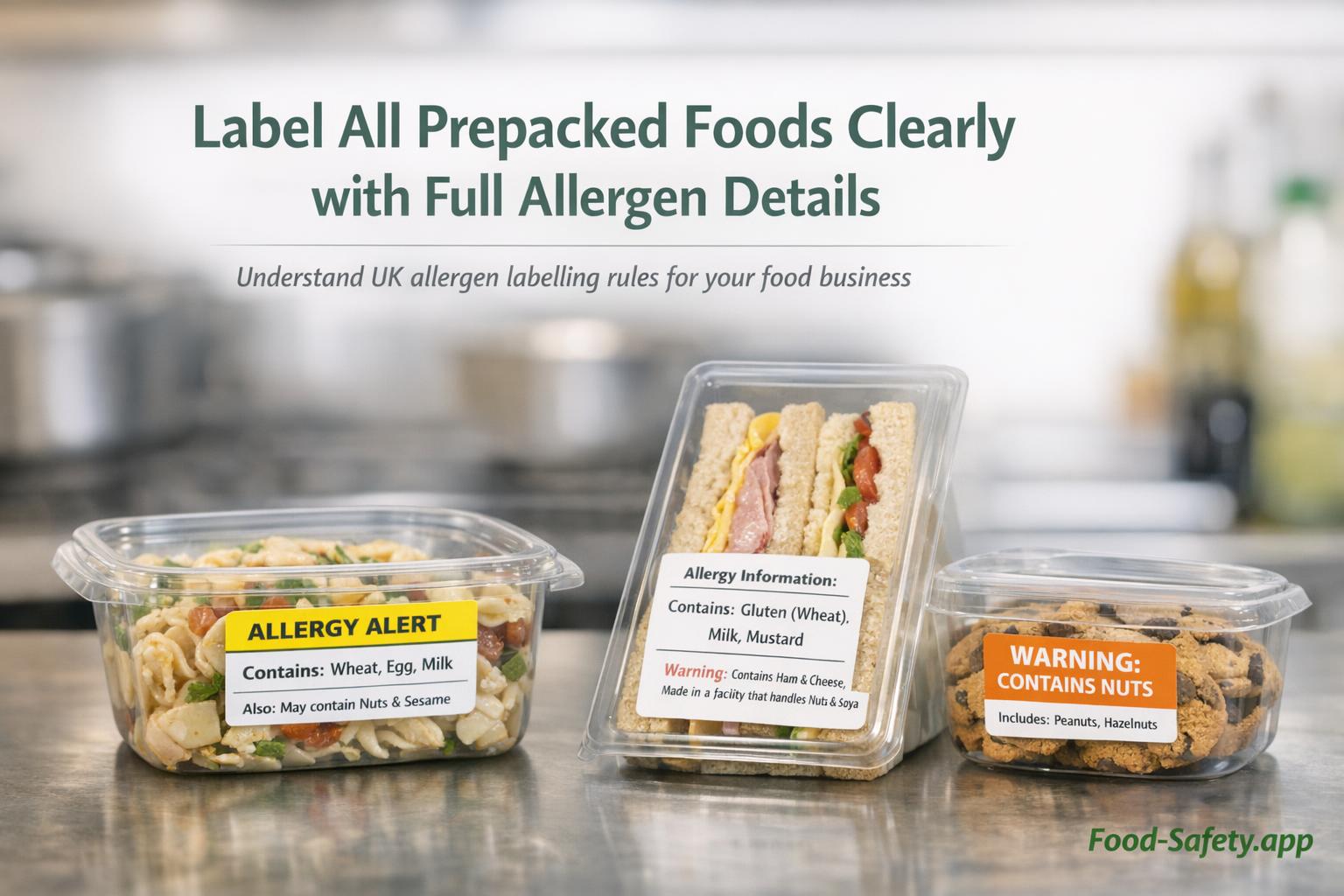
Use this practical guide to understand UK allergen labelling rules for packaged food, avoid common mistakes, and keep allergen information accurate during real day-to-day service.
Who needs allergen labels and when the law applies
Clear allergen labelling is not just about ticking a legal box. It helps customers make safe choices and protects your business from serious mistakes that can damage trust very quickly. In the UK, Natasha’s Law changed the rules for prepacked for direct sale food, usually called PPDS. If food is prepared and packed on the same site before the customer picks it up or orders it, it normally needs a label showing the food name and a full ingredients list, with allergens clearly emphasised.
That matters for many everyday operations. A café wrapping sandwiches before the breakfast rush, a deli sealing pasta pots for the lunchtime fridge, a bakery bagging brownies for the counter and a school canteen packing salads for later sale may all be dealing with PPDS food. Food packed only after the customer orders is different, and loose food still needs reliable allergen information even when a full printed label is not required. For official guidance, see the Food Standards Agency allergen guidance.
What packaged food allergen labels must show
For PPDS food, the label should show the name of the food and a full ingredients list in descending order by weight. Any of the 14 major allergens used as ingredients must be clearly emphasised so they stand out. Many businesses use bold text because it is simple and easy to check quickly during service. The label must match the exact version of the product being sold on that day, not the version you sold last week or the version written in an old recipe file.
That point catches businesses out more often than they expect. A chicken wrap made with a different tortilla, a soup finished with a different cream, or a brownie topped with a new garnish may all need different allergen information. For non-PPDS food, customers still need correct allergen information before they buy, whether that is given in writing, through a digital allergen matrix or by trained staff using up-to-date information. If the recipe changes, the allergen information must change as well.
Label checks in day-to-day service
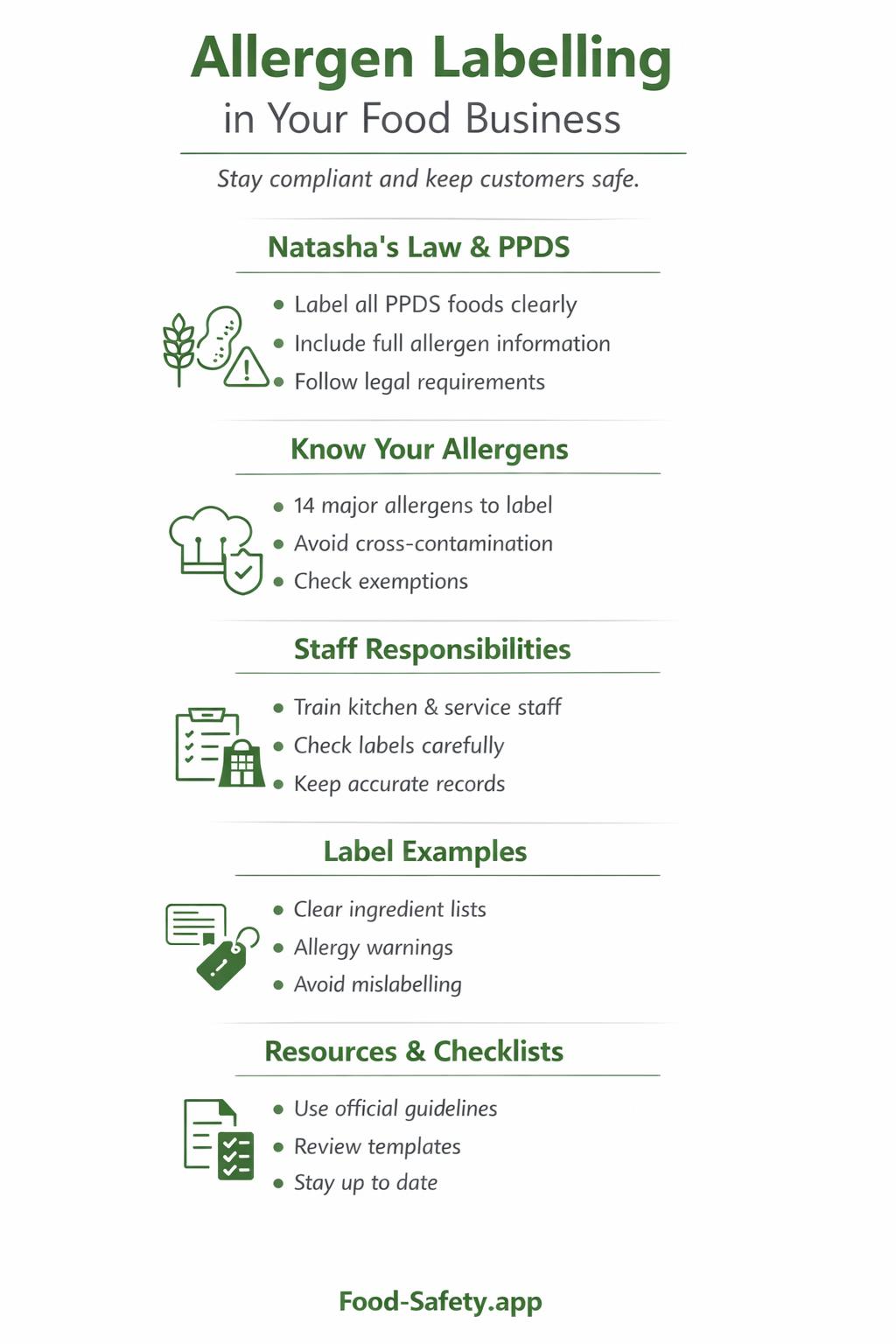
Labels only protect customers when they stay readable, accurate and linked to the right product. A faded sticker, a missing ingredient, or a handwritten amendment added during a busy lunch service can create a real risk. The safest approach is to treat label accuracy like any other critical food safety control: check it before products go out, check it again when ingredients change, and never rely on memory during service.
Common allergen labelling mistakes
Most allergen labelling failures are not caused by complicated law. They happen because day-to-day controls slip. One common mistake is using an old label template after a supplier substitution. For example, a bakery may switch to a different glaze because the usual one is unavailable, not realise the new product contains milk, and keep using the old label. Another common mistake is packing mixed products too quickly and placing the wrong label on the wrong item, such as a tuna mayo baguette receiving the label intended for a cheese salad baguette.
Small changes can also introduce allergens unexpectedly. A café may swap plain burger buns for seeded buns and introduce sesame. A deli may change pesto supplier and add cashew without anyone updating the salad pot label. A nursery kitchen may use a different gravy granule during a stock shortage and introduce celery or soya. These are exactly the kinds of errors that happen in real businesses when communication between purchasing, prep and service is weak.
Another weak point is verbal reassurance from staff that is not backed by written information. If a customer asks whether a packaged flapjack contains nuts, staff should not guess based on yesterday’s batch or what they think the recipe usually is. They should check the current approved ingredients and the current label. Strong staff training records and practical supervision make that much easier to enforce.
Real-world examples by food business type
Bakery example: A high street bakery prepares cheese and onion rolls at 7am, bags them, and places them in a display fridge for self-selection. Because they are packed before sale on the same site, they need a full ingredients list with allergens such as milk and gluten clearly emphasised. If the baker runs out of the normal margarine and uses one containing soya, the label needs updating before the next batch goes out.
Deli example: A deli sells sealed pots of tuna pasta salad. The product may contain gluten, fish, egg and possibly mustard depending on the mayonnaise recipe. If the team switches from one pasta shape to another or changes the dressing to a branded version, they need to check whether the allergen profile has changed instead of assuming the old printed label is still correct.
Café example: A café makes breakfast baguettes to stock the grab-and-go fridge before the morning rush. Those are likely PPDS and need full labels. By contrast, a toasted sandwich made after the customer orders is not PPDS, but the café still needs accurate allergen information available before purchase. That difference matters because many mixed operations sell both types on the same day.
Event catering example: A caterer prepares labelled sandwich wedges in a conference kitchen for delegates to pick up from a service table. Because the food is prepared and packed before selection on the same site, the caterer needs to treat those items as PPDS. If a last-minute platter includes seeded bread instead of plain bread, every affected label needs updating before service begins.
School or workplace canteen example: A canteen packs fruit pots, yoghurt granola pots and pasta pots before break time. A yoghurt pot may look simple, but toppings can introduce milk, nuts, gluten or sesame. Where several team members prep similar items at speed, using the wrong label is a realistic risk, so a final check before display is essential.
Simple daily label checking process
A practical allergen label checking process does not need to be complicated, but it does need discipline. Start each day by confirming the approved recipe or product spec for every packaged item due to be sold. Check any supplier substitutions, temporary shortages or recipe changes before prep begins. Print or write labels only from the current approved information, not from memory and not from an old photo on someone’s phone.
Before products go into display, one person should carry out a quick verification check. Confirm the product name matches the item, the ingredients list matches the actual recipe, allergens are emphasised clearly, and the label is attached to the correct product. If anything changes during service, such as a bread swap or garnish substitution, stop and update the label before more items are sold. That simple pause is often what prevents a serious mistake.
For busy teams, it also helps to build allergen checks into normal opening and handover routines. A short check at the start of service, another when replenishing packaged stock, and a final review when specials or substitutions are introduced can prevent old labels drifting into use. This fits naturally with wider HACCP records and daily checks and can also sit alongside your opening and closing checks.
Records, training and systems that support compliance
Good allergen labelling depends on more than a printer and a template. You need approved recipes, supplier specifications, change control, training and a clear sign-off process. Keep ingredient specifications, label templates, recipe updates and training records together so managers can check them quickly. If there is a complaint, an inspection or a near miss, you need to show what was used, when it changed and who approved it.
This is also where internal food safety systems matter. Better allergen control is easier when it sits inside wider routines for supervision, corrective action and record keeping. Related guides on allergen management and Natasha’s Law, reducing cross-contamination, food safety management culture and compliance and inspections all support the same goal: keeping information accurate and usable when the kitchen is busy.
Digital systems can help because they reduce version confusion and keep a visible record of updates. For example, if a manager changes a recipe after a supplier substitution, they should be able to update the product information, check the allergen impact and show when the change was made. That is where Food-Safety.app fits best: not as the first thing mentioned on the page, but as a practical way to keep allergen information, checks and training records organised once the reader understands the compliance problem they are trying to solve.