HACCP in a small UK kitchen is not about building a mountain of paperwork. It is about spotting the food safety risks that matter most, putting simple controls in place, and making sure they are actually followed during prep, service, cleaning, and delivery. For busy restaurants, cafés, takeaways, school canteens, hotel kitchens, and catering teams, a good HACCP system for a small UK kitchen should be practical enough to use every day and strong enough to protect customers, staff, and the business.
This guide explains how HACCP works in a small commercial kitchen, what needs to be controlled, what records are worth keeping, and how to review the system without slowing down service. Food safety expectations can vary slightly between UK nations and can differ in other countries, so always check the local rules that apply to your business.
For a concise overview of the HACCP principles, see HACCP principles explained.
What HACCP means in a small kitchen
HACCP stands for Hazard Analysis and Critical Control Point. In simple terms, it is a structured way to look at your menu, your process, and your kitchen layout, then decide where food safety problems could happen and how to stop them. In a small kitchen, that might mean controlling delivery temperatures, separating raw and ready-to-eat food, cooking thoroughly, cooling food quickly, and keeping cleaning standards consistent even when the team is under pressure.
A small kitchen does not need a complicated system to be effective. In fact, the best HACCP system for a small UK kitchen is often a short, clear set of controls that staff can follow without guesswork. If your team can understand it in the middle of a lunch rush, it is much more likely to work.
How HACCP works in day-to-day service
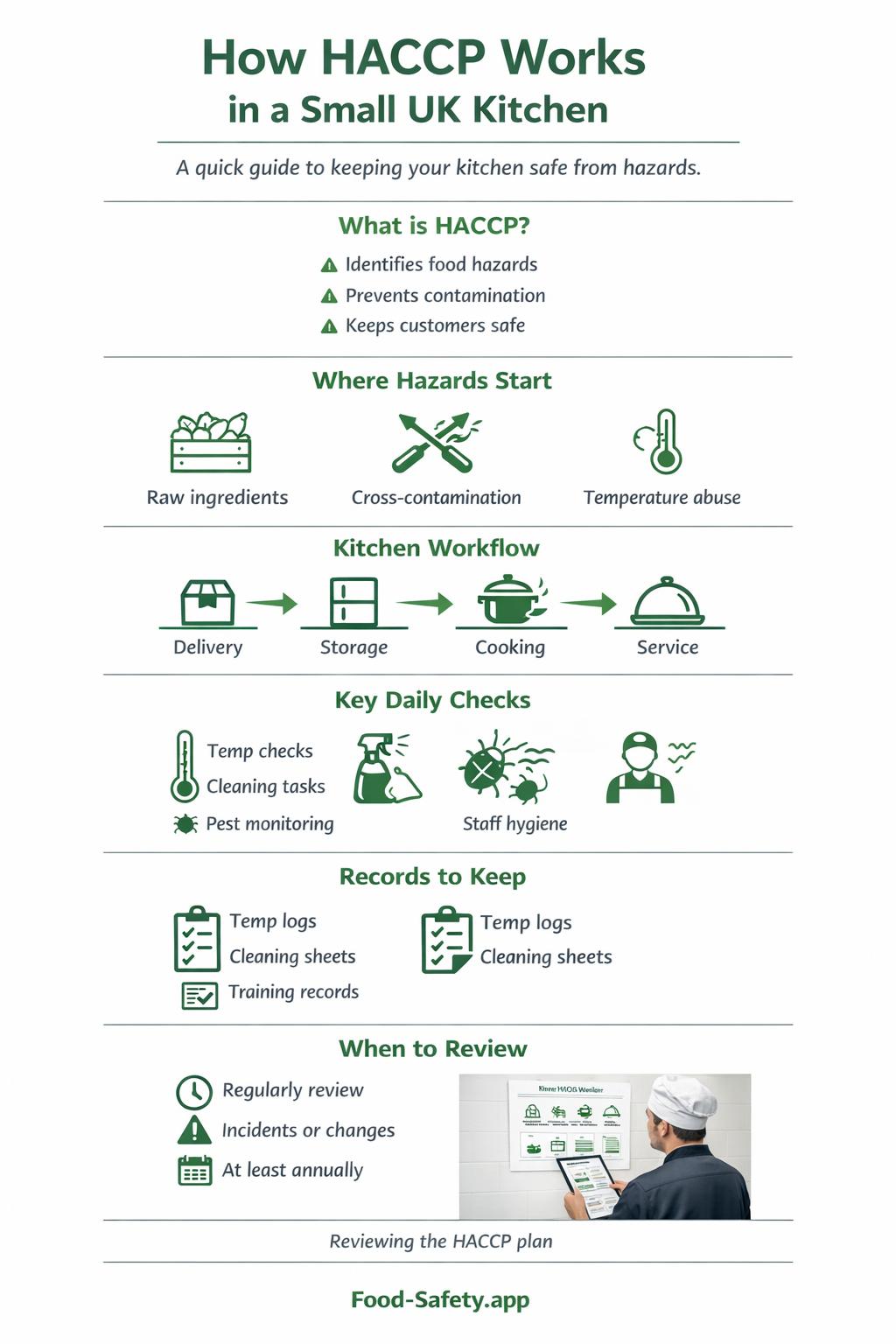
HACCP works by moving from general awareness to specific control. First, you identify the foods and processes that could create harm. Then you decide which steps are critical to food safety. Finally, you check that those steps are being followed and fix problems quickly when they are not.
In practice, that often means:
- Checking deliveries for signs of damage, spoilage, pests, or unsafe temperatures.
- Storing chilled, frozen, and dry goods correctly and keeping raw food away from ready-to-eat items.
- Using separate equipment or colour-coded boards for raw meat, poultry, fish, and ready-to-eat food.
- Cooking food to the right standard for the dish and service style.
- Cooling leftovers safely before chilling or freezing them.
- Reheating food properly if it is being served again later.
- Cleaning and sanitising food contact surfaces, utensils, and equipment.
- Making sure staff wash hands at the right times and change gloves or utensils when needed.
For example, a café making chicken mayo sandwiches needs a control point for cooked chicken handling, a separate area for ready-to-eat assembly, and a clear chilled storage routine. A takeaway doing batch curries needs controls for hot holding, cooling, reheating, and cross-contamination prevention. The method is the same, but the risks change with the menu and service style. Cross-contamination prevention is a key part of this.
The main hazards to control
A useful HACCP system starts with the three food safety hazard types: biological, chemical, and physical. In a small commercial kitchen, biological hazards usually cause the biggest day-to-day risk, but the other two still matter.
Biological hazards
These include bacteria and viruses that can make people ill. They are often linked to poor temperature control, contaminated hands, dirty equipment, or cross-contamination between raw and ready-to-eat food. Staff working fast during busy service may forget basic steps, so controls need to be simple and repeated often.
Chemical hazards
These include cleaning products, allergen cross-contact, pest control chemicals, and contamination from damaged packaging or unsuitable containers. A small kitchen can reduce this risk by storing chemicals away from food, measuring them properly, and using labelled spray bottles. Allergen management made practical for UK food businesses.
Physical hazards
These include glass, metal fragments, plastic, bone, wire, staples, or chipped equipment parts. Good maintenance, safe storage, and visual checks before service help reduce the chance of a customer finding something they should never see in their food.
Building a HACCP plan for a small UK kitchen
You do not need a huge document to get started. A small kitchen HACCP plan should be based on the food you actually make, the equipment you actually use, and the people who actually work on shift. A plan that looks impressive but does not match the daily routine is not useful.
Start with these steps
- List your menu items and note which are high risk, such as cooked rice, cooked meats, dairy-based dishes, chilled desserts, and ready-to-eat foods.
- Map each process from delivery to service, including storage, prep, cooking, cooling, reheating, display, and disposal.
- Identify where contamination or temperature abuse could happen.
- Set controls that staff can realistically follow during normal busy service.
- Decide who checks each step and how often.
- Write down the corrective action if a check is missed or a food safety limit is not met.
For many small kitchens, the main control points are delivery checks, fridge storage, cooking, cooling, hot holding, allergen separation, and cleaning verification. If your kitchen is very small, keep the plan focused on the steps that carry the highest risk rather than trying to control every minor detail on one sheet.
Keep your controls specific
Instead of writing “keep food safe”, write what staff should do. For example:
- Check chilled deliveries before signing.
- Store raw meat below ready-to-eat food.
- Use separate tongs for cooked items and raw prep.
- Cool hot food in shallow containers before chilling.
- Label date opened, date prepared, and use-by date where relevant.
- Discard food that has been mishandled or left out too long to be safe.
Useful records without the paperwork overload
In a small kitchen, records should support control, not slow down service. The most helpful paperwork is the kind your team can complete in under a minute and actually keep up to date. A few reliable records are far better than lots of half-finished forms.
Records that are usually worth keeping
- Delivery temperature and condition checks.
- Fridge and freezer temperature logs.
- Cooking, hot holding, cooling, and reheating checks where needed.
- Cleaning schedules and sign-off sheets.
- Allergen information checks and recipe changes.
- Staff training or induction notes.
- Equipment maintenance and fault reports.
Use records to show a pattern of control. If the fridge is running warm on a Tuesday, a log should help you spot it early, not only after food has been ruined. If the same prep station keeps getting mixed up between raw chicken and salad assembly, your records should make that visible so you can change the process.
What good records look like
Good records are dated, signed, easy to read, and completed at the time of the check. They should also be simple enough for a weekend shift leader or cover supervisor to use without extra training. If a form is too long, staff will rush it or skip it.
What to do when things go wrong
HACCP only works if your team knows what to do when a control fails. A missed check, warm delivery, broken fridge, or contamination issue should trigger a clear response. The goal is not to blame the person on shift. The goal is to protect customers and stop the same problem happening again.
Examples of corrective action
- If a chilled delivery arrives too warm, reject it or isolate it for a decision before use.
- If a fridge is reading high, move food to a working unit and arrange repair or engineer support.
- If cooked and raw foods have been mixed up, treat the food as unsafe unless you can prove it is still suitable.
- If a staff member uses the wrong utensil on ready-to-eat food, discard anything that could have been contaminated.
- If a cleaning task was missed, clean and sanitise the area before production continues.
Write corrective actions down in plain English. Small kitchens work best when staff do not have to interpret vague instructions during service. A clear “stop, isolate, check, decide” process helps prevent confusion.
Training staff so HACCP sticks
Even the best HACCP system for a small UK kitchen fails if staff do not understand it. Training does not have to be formal every time. It needs to be regular, practical, and linked to the actual tasks staff perform. New starters should learn the basics before they handle food alone, and existing staff should get refreshers whenever the menu, equipment, or layout changes.
Training should cover
- Hand washing and glove use.
- Raw and ready-to-eat separation.
- Cleaning and sanitising methods.
- Allergen controls and communication.
- Temperature checks and safe storage.
- What to do if something looks wrong.
Short briefings before service can be very effective. For example, if the kitchen is running a roast dinner special, remind the team which tray is for cooked meat, where the allergen-free meal will be assembled, and who is checking the hot holding unit. Small reminders often prevent bigger problems. Allergen management made practical for UK food businesses.
How to review and improve the system
HACCP should not sit untouched in a folder. In a small kitchen, review it whenever there is a change that affects food safety, such as a new menu item, a new supplier, a repair to the refrigeration system, or a change in staffing. Regular checks also help when the business gets busier and old routines start slipping.
Review your system when
- You add a new dish or cooking method.
- You change equipment or storage layout.
- You notice repeated mistakes on the same shift.
- You get customer complaints linked to food quality or safety.
- Temperature checks or cleaning logs show recurring issues.
A short monthly review can be enough for many small businesses. Ask what nearly went wrong, what kept going right, and what needs changing. A system that improves over time is much more reliable than one that only gets looked at during an inspection.
For practical UK guidance, the Food Standards Agency is a useful place to check current food safety expectations and allergen advice.
Common mistakes in small kitchens
Some problems show up again and again in compact professional kitchens. Most are caused by time pressure, limited space, or unclear routines rather than lack of care.
Typical mistakes include
- Using one chopping board for everything during a busy service.
- Assuming staff know the safe cooling process without being shown.
- Keeping records but never acting on repeated issues.
- Letting fridge shelves become overcrowded.
- Not labelling opened products or prepared food clearly.
- Forgetting to review allergen information after menu changes.
- Relying on memory instead of short written checks.
The fix is usually not more complexity. It is better layout, better labelling, clearer shift handovers, and a shorter list of critical checks that everyone understands. In a small kitchen, consistency beats paperwork volume every time.
Practical takeaway
A strong HACCP system for a small UK kitchen is simple, realistic, and built around what happens during service. Focus on the highest-risk steps, give staff clear actions, keep records that are worth reading, and review the system whenever the menu or operation changes. That approach helps control food safety without slowing the kitchen down.
If you want a better way to keep checks organised, reduce missed tasks, and make daily control easier to manage, Food-Safety.app can help as a food safety management system for catering businesses.
For a concise, practical plan, see HACCP plan made simple for UK catering businesses.
Training records can help you demonstrate competence—see Training records.