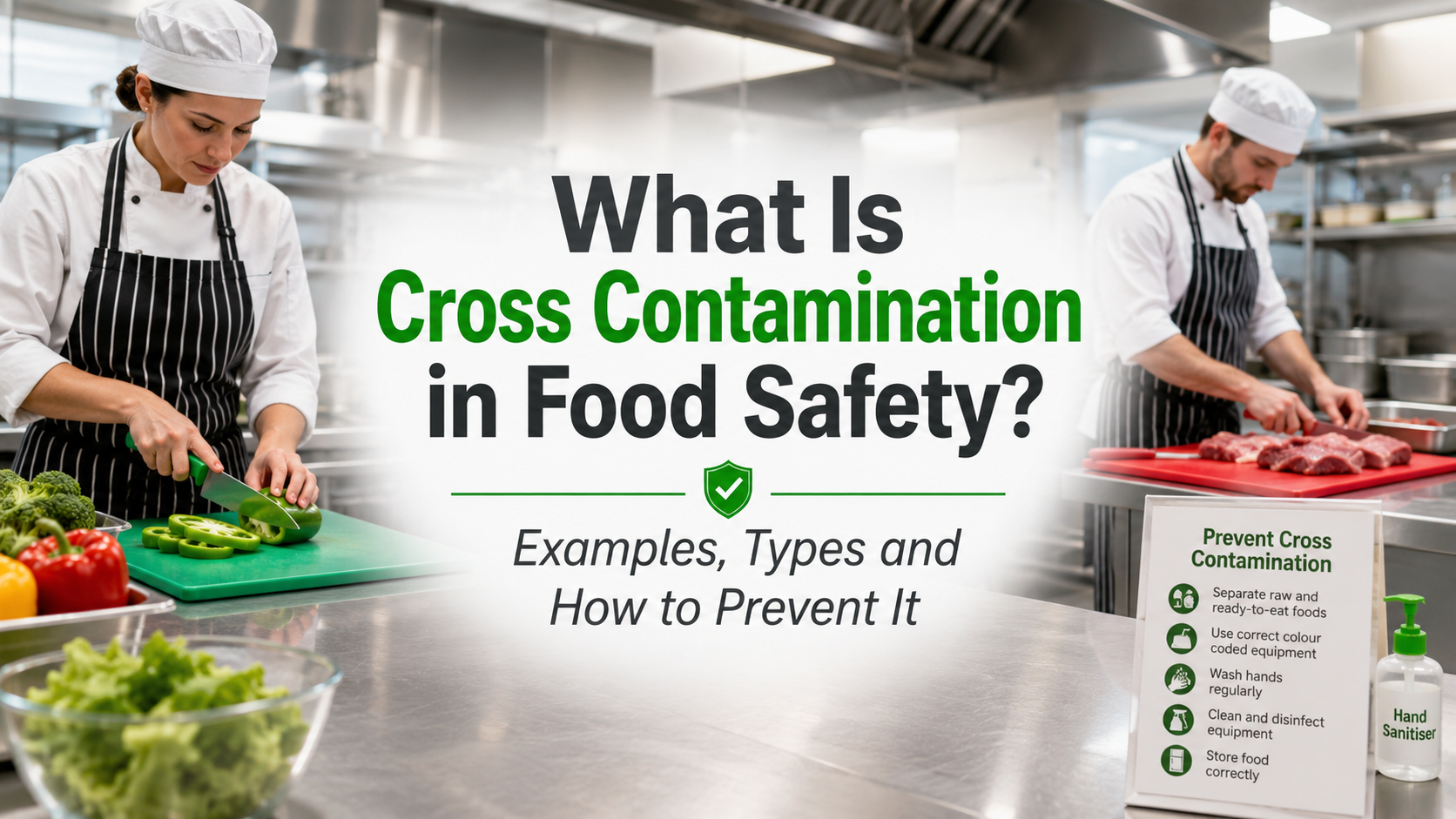
Cross contamination is one of the biggest causes of foodborne illness in catering businesses. If you’re wondering what it is, how it happens, and how to prevent it, you’re in the right place. This guide explains the essentials of food safety management in simple terms to help keep your customers safe.
Table of Contents
What is cross contamination?
Cross contamination happens when harmful bacteria, allergens, chemicals or foreign objects are transferred from one food, surface, piece of equipment or person to another. It can happen at any stage of food preparation, storage or service.
For example, using the same knife to prepare raw chicken and then slicing cooked chicken without cleaning and disinfecting it first could transfer harmful bacteria onto ready-to-eat food.
Preventing cross contamination is a key part of good HACCP records and everyday food safety management.
What are the different types of cross contamination?
Microbiological contamination
This is the spread of harmful bacteria such as Salmonella, Campylobacter, E. coli and Listeria. Raw meat, poultry and unwashed vegetables are common sources.
Allergen contamination
Even tiny amounts of an allergen can make someone seriously ill. Shared utensils, chopping boards or storage containers can all cause accidental allergen contamination. Good allergen management is essential for every food business.
Physical contamination
Hair, glass, plastic, jewellery, packaging and metal fragments are all examples of physical contamination that can end up in food.
Chemical contamination
Cleaning chemicals, sanitisers and pest control products should always be stored separately from food and used according to the manufacturer’s instructions.
How does cross contamination happen?
Cross contamination often happens through simple everyday mistakes, including:
- Poor hand washing.
- Using the same chopping board for raw and ready-to-eat food.
- Dirty cloths or equipment.
- Storing raw meat above cooked food in the fridge.
- Using the same utensils for foods containing allergens.
Many of these risks can be reduced by following the guidance in your SFBB pack or your own documented food safety procedures.
You can also find practical advice in our guide to cleaning, hygiene and cross contamination.
How can you prevent cross contamination?
Good food safety management relies on consistent daily routines. Some of the most effective controls include:
- Keeping raw and ready-to-eat foods separate.
- Using colour-coded chopping boards and utensils.
- Washing hands thoroughly and regularly.
- Cleaning and disinfecting equipment between tasks.
- Storing food correctly in refrigerators.
- Keeping cleaning chemicals away from food.
- Training staff to follow safe working practices.
Cross contamination isn’t prevented by one big action. It’s prevented by hundreds of small good habits followed every day.
What are your legal responsibilities?
UK food businesses have a legal duty to prevent contamination under food hygiene legislation. Your food safety management system should identify contamination hazards and explain the controls you have in place.
The Food Standards Agency provides guidance on food hygiene, safe food handling and managing food safety within catering businesses.
Businesses should also be familiar with The Food Information Regulations 2014, particularly where allergen information is concerned.
Can digital food safety records help?
Paper records are still common, but many businesses now choose digital systems because they can simplify everyday compliance.
Food-Safety.app is a food safety management system designed specifically for UK catering businesses. It helps businesses maintain digital food safety records, monitor daily checks, record corrective actions, manage cleaning schedules, log temperatures and support allergen management without relying on paper forms.
Using digital records can also make it easier to demonstrate due diligence during inspections and support a consistent approach to maintaining a good food hygiene rating. While no system replaces legal responsibilities, keeping accurate records helps show that food safety controls are being followed consistently.
Conclusion
Cross contamination is one of the most preventable causes of foodborne illness. By understanding how it happens and putting simple controls in place, you can reduce risks, protect your customers and support compliance with UK food hygiene law.
If you’re looking for a simpler way to manage your daily food safety checks, Food-Safety.app is a food safety management system that helps businesses maintain digital food safety records, organise HACCP records and support everyday compliance in busy catering environments.
Make food safety easier to manage
Streamline your daily food safety routines with a digital system designed for UK catering businesses. Record checks, manage HACCP documentation, monitor cleaning and temperatures, and maintain organised records that support consistent compliance and make inspections easier to manage.