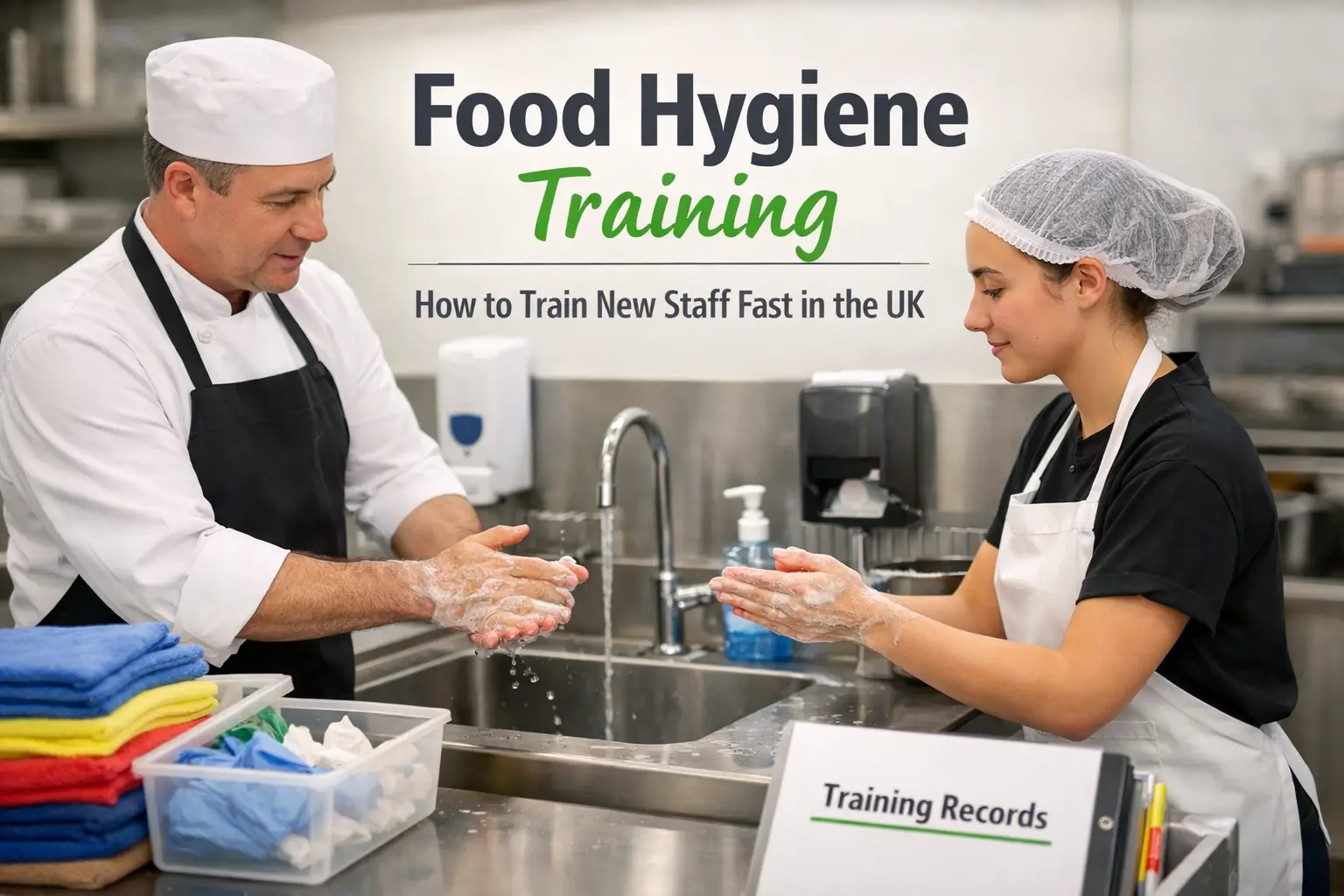
UK-focused guide to train new staff fast in food hygiene with onboarding flow covering handwashing, illness policies, cleaning and cross-contamination.
What every new starter must know on day one
On day one, every new member of staff should be briefed on the essentials that keep a catering operation safe and compliant. This is a practical core of Food hygiene training, designed to be clear, repeatable and quick to audit. In busy service, it’s better to sign off a few solid routines than leave gaps that lead to mistakes later.
For broader allergen controls, see the allergen management protocol.
Handwashing basics
Explain when hands must be washed and demonstrate the correct method. A quick, visible routine helps new starters remember to wash before touching food, after breaks, after handling waste, after cleaning duties, and after coughing or sneezing. Reinforce the habit with short reminders at back-of-house stations.
Illness reporting
Pilots of food safety rely on prompt reporting. Train new staff to tell a supervisor if they have vomiting, diarrhoea, fever, or a persistent sore throat, and to avoid any food handling duties until cleared. Clear rules prevent cross-contamination and protect customers.
Clean uniform and PPE
Explain what constitutes a clean uniform, apron, hairnets, and PPE. Emphasise changing garments after handling raw meat or waste, storing outerwear separately, and following the kitchen’s personal protective equipment policy to minimise contamination risks.
When not to handle food
Even experienced team members pause food handling when unwell, injured, or under the influence of alcohol or non-prescribed substances. A quick checklist sign-off helps supervisors remove the person from food handling duties promptly.
Handwashing rules
Hand hygiene is the single most effective control against cross-contamination. The rules below turn basic hygiene into a practical, trackable routine that new staff can follow without hesitation.
When to wash
Wash before starting work, before handling ready-to-eat foods, after touching raw items, after using the toilet, after coughing or sneezing, after handling trash, and after touching clothing or hair.
How to wash properly
Use warm running water, soap, and scrub for at least 20 seconds, covering wrists, palms, backs of hands, between fingers, and under nails. Rinse well and dry with a clean towel or air dry. Turn off taps with a clean disposable towel to avoid recontamination.
Common mistakes
- Rushing and not scrubbing long enough
- Not cleaning under rings or fingernails
- Using the same towel for multiple people
- Touching the tap after drying hands
For reference, consult official guidance on hand hygiene as part of ongoing Food hygiene training, and embed the routine in opening checks and daily opening tasks.
Illness and exclusion
Illness management protects customers and staff. Clear exclusion rules reduce the risk of spreading illness through food handling and shared equipment. Use practical decision trees to guide managers and supervisors in day-to-day scenarios.
Vomiting and diarrhoea
Staff with vomiting or diarrhoea must be excluded from food handling until 48 hours after symptoms have resolved, or longer if advised by a healthcare professional. Document the return-to-work check to confirm normal tolerance of food handling tasks.
Sore throat and fever
Mild sore throats may not automatically exclude someone, but fever, signs of systemic illness, or a swollen lymph gland can indicate an infectious condition. If in doubt, remove the person from handling duties and seek medical guidance.
Infected cuts and skin infections
Open wounds or infections on hands or arms require appropriate covering or exclusion from food handling. Heavily contaminated injuries should be managed with gloves and dressing changes, paired with a clear policy on when to retire gloves and wash hands again.
Who to tell
Provide a simple escalation path: supervisor, kitchen manager, and site health and safety lead. Ensure staff know whom to contact, and where to log illness and return-to-duty decisions.
Safe cleaning basics
A robust cleaning routine underpins hygiene training. Distinguishing cleaning from disinfection, using colour-coded tools, and storing chemicals correctly stops cross-contamination before it starts.
Colour-coded equipment
Use colour coding for boards and cloths to separate raw and ready-to-eat tasks. For example, red for raw meat, blue for ready-to-eat foods, and yellow for high-risk surfaces. Train new starters to swap cloths and boards after each task.
Cleaning vs disinfection
Cleaning removes visible soil; disinfection kills remaining pathogens. Establish which tasks require disinfection (e.g., food contact surfaces, sinks, benches) and ensure staff apply the correct product at the correct contact time.
Storage of chemicals
Chemicals must be stored securely, labelled, and segregated from food and clothing. Never decant chemicals into drink bottles or food containers. Check expiry dates and keep a visible inventory.
Approved cleaning routines
Publish simple daily routines: opening, mid-shift, and closing checks. Include specific tasks, responsible person, and sign-off space to verify completion. Include a short reminder on ensuring containers are replaced when empty.
Preventing cross contamination
Preventing cross contamination requires consistent practices across prep, storage, and service. Build a habit loop that staff can repeat during peak service.
Raw and ready-to-eat separation
Store raw meat below ready-to-eat items where possible, and never above foods that will be eaten without further cooking. Ensure sealing and covering of all raw products during storage.
Utensils and boards
Keep separate utensils for raw and cooked foods. Sanitize boards and utensils between tasks, and never use the same knife on raw chicken and produce without washing and sanitising first.
Storage order
Arrange storage so that lower shelves hold raw items, with ready-to-eat products higher up. Label shelves clearly, and check that stored foods are within use-by dates.
Allergy awareness
Be vigilant about allergen controls. Prevent cross-contact by using dedicated equipment for allergen-free items and clearly communicating any ingredient changes to staff and customers.
First week supervision checks
The first week is critical for embedding the right habits. Use simple, objective checks to observe tasks, sign off competence, and correct poor habits early.
Watching tasks
Assign a supervisor to shadow the new starter during the first shifts. Look for adherence to handwashing, uniform and PPE usage, correct cleaning routines, and proper segregation of tasks.
Signing off competence
Create a short sign-off log for each starter. Each section should confirm understanding, practical demonstration, and a final confirmation that the staff member can perform the task independently without prompting.
Correcting poor habits early
If a bad habit surfaces—such as skipping a step in handwashing or mixing cloths—address it immediately with a quick coaching moment and a documented corrective action. Reinforce the correct approach and re-check the task before the shift ends.
To support ongoing compliance, keep a simple induction checklist for hygiene essentials, record training and supervision, and link training to cleaning schedules, opening checks, and cross-contamination controls. Regularly review illness reporting, cleaning tasks, and allergen awareness, and use documented evidence to support inspections and internal audits.
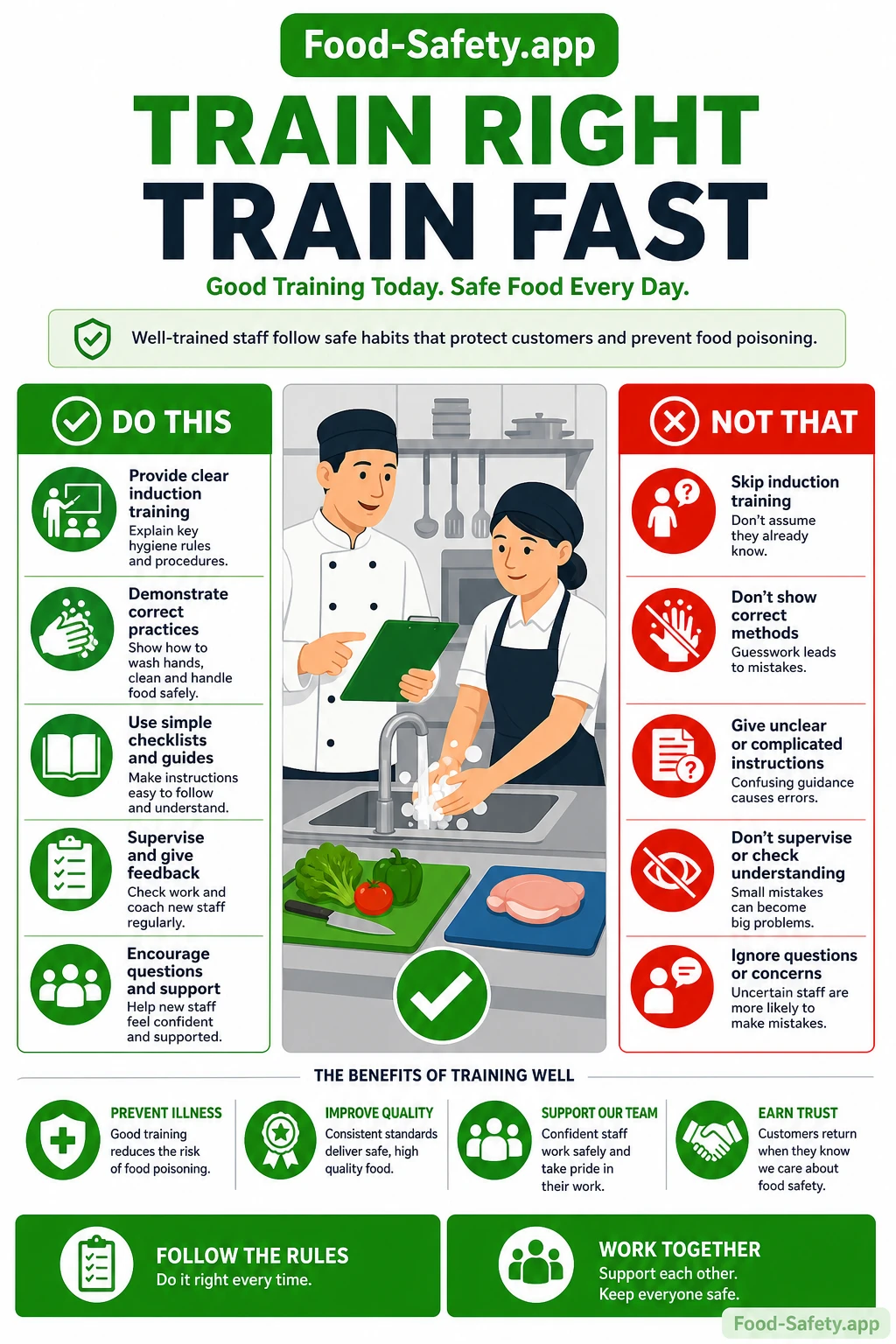
Refresher training points
Refresher training is essential after absences, when procedures change, or after hygiene incidents that reveal gaps. Short, focused refreshers keep standards high and reduce relapse.
After absences
Require a quick return-to-work briefing and a practical demonstration of any updated steps before resuming food handling duties.
When procedures change
Whenever cleaning products, storage practices, or allergen controls change, run a targeted refresh and update the induction checklist for the next onboarding cycle.
Following hygiene incidents
Review what happened, what went wrong, and what will be done differently. Document the lessons learned and share a short summary with the team to prevent recurrence.
Practical examples to anchor learning:
- A new commis chef moves from raw prep to salad work and needs a quick refresher on handwashing and glove changes
- A café assistant reports sickness before a shift and is kept off food handling duties
- A cleaner uses the wrong cloths in the prep area and is shown the correct colour-coded system
- A supervisor spots raw chicken stored above dessert ingredients during a first-week check
| Induction task | Completed | Notes |
|---|---|---|
| Handwashing demonstration | Yes | Observed 20s scrub |
| Uniform and PPE check | Yes | Hairnet worn |
| Cleaning routine sign-off | Yes | Benchtop disinfected |
| Raw vs ready-to-eat separation | Yes | Colour code applied |
For ongoing record-keeping and supervision, consider a dedicated platform that stores staff training records, runs opening checks, logs cleaning tasks, and keeps a clear history of hygiene controls. A system designed for offline use with automatic timestamps and exportable records can boost inspection confidence without complicating daily workflows. Food-Safety.app is a food safety management system for catering businesses.
Interested in a streamlined solution for your catering business
Learn how to simplify food safety with a compliant, offline-ready platform that stores training records and supports audits. Ensure ongoing compliance without adding complexity to daily tasks.