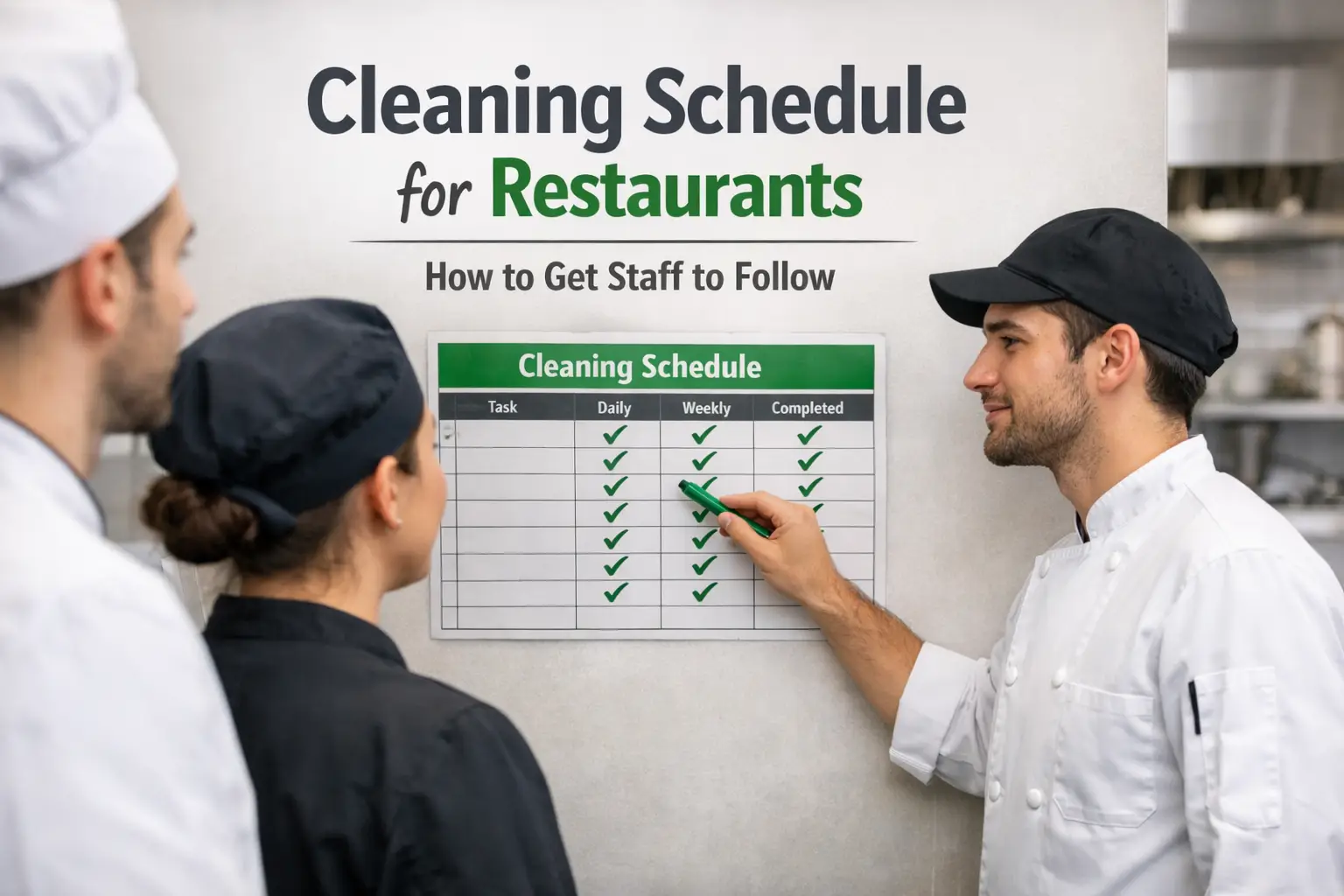
Keeping a bustling kitchen clean and compliant is tougher than it looks. A kitchen cleaning schedule that’s vague or misaligned with your layout quickly falls apart as service ramps up. This guide shows how to create a practical, easy-to-follow plan for small food businesses and catering teams. You’ll learn how to separate daily tasks from deep-clean work, prioritise high-touch and high-risk areas, assign clear owners, and verify standards, not just activity. It also covers updating the plan when menus, equipment or staffing changes, so hygiene keeps pace with operations.
Why generic cleaning schedules fail in real kitchens
Important: A cleaning plan that mirrors real duties, not a static document, is what keeps hygiene goals achievable in busy service.
Generic schedules often come from a safety checklist or a brochure, not from your actual workflow. They tend to be too vague, too long, or not matched to your site layout and service style. As a result, staff treat them as background noise rather than a live control in the kitchen.
Common failures to watch for:
- Tasks that are broad or open-ended, like “clean all surfaces,” without specifying areas or frequency.
- Timing that doesn’t fit the service rhythm (e.g., deep-clean tasks scheduled during peak service).
- No clear owner or sign-off, so responsibility drifts.
- Missing critical zones (high-risk or high-touch areas) that aren’t explicitly addressed.
Split the schedule into daily and deep-clean tasks
Key takeaway: Daily work keeps the operation clean in real time; deep cleaning targets hidden or hard-to-reach places that affect long-term hygiene.
Divide work into what must be done every day and what needs a deeper, less frequent clean. This alignment helps teams prioritise effectively and reduces the risk of lengthy backlogs.
Daily tasks (examples)
- Clean food-contact surfaces and prep areas
- Wipe fridge doors and handles, and sanitise sinks
- Clear and wipe prep counters between tasks
- Tidy waste and recycling areas
- Sanitize high-touch points in service areas (till screens, door handles)
Deep-clean tasks (examples)
- Clean behind equipment and underneath heavy apparatus
- Rebuild or replace seals on fridges and freezers
- Clean drains, vents, extractors and hoods
- Sterilise storage areas and delivery bays
| Task type | Examples |
|---|---|
| Daily | Food-contact surfaces, prep areas, fridge doors, handles, sinks, waste areas |
| Deep-clean | Extractors, behind equipment, seals, drains, storage areas, vents |
Key takeaway: Daily work keeps the operation clean in real time; deep cleaning targets hidden or hard-to-reach places that affect long-term hygiene.
Focus on high-touch points and high-risk areas
Important: Visible cleanliness is essential, but the plan must also address areas where pathogens or spoilage risk is higher.
High-touch points are where contamination travels or spreads quickly. Prioritising these areas makes a noticeable difference in everyday hygiene and in inspections.
Examples of high-touch points
- Door handles and taps
- Switch plates and till screens
- Fridge doors and storage bins
- Utensils and shared tools
- Sinks and waste compactors
High-risk zones to watch closely
- Raw and prepared foods’ contact surfaces
- Refrigeration seals and gaskets
- Drains, floor drains, and capture trays
- Extraction hoods and vents in contact with steam and grease
Practical alignment tip
Mark high-risk zones on your kitchen layout and attach quick checklists beside each area. Short, frequent checks are far more effective than long, infrequent ones.
Assign clear owners and set realistic times
Clear ownership improves reliability; if no one is accountable, tasks slip and margins degrade.
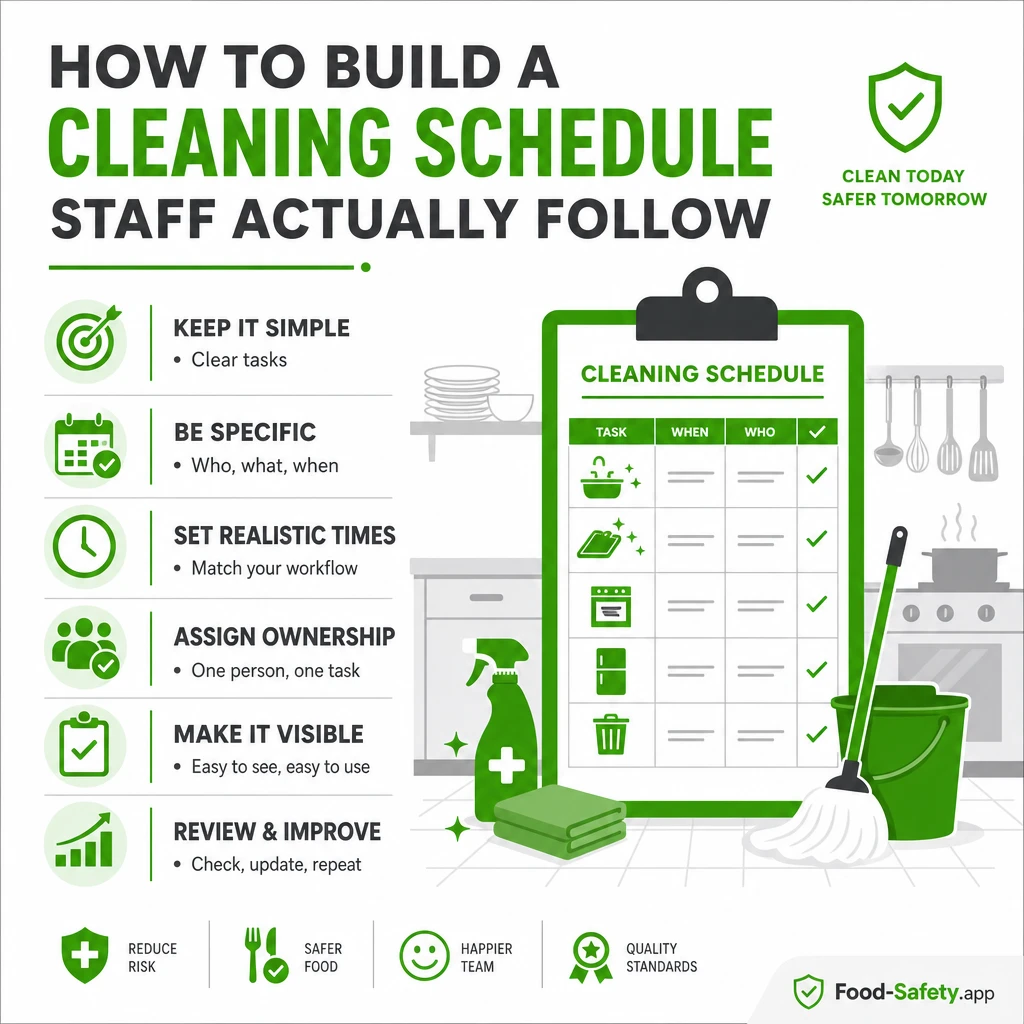
Ambiguity is the enemy of compliance. The schedule must name who is responsible, when the task must be done, and how it’s signed off.
Guidance for assigning ownership
- Name a specific person for each task, not “the team.”
- Break tasks into time-bound windows (e.g., “between 15:00–16:00” or “end of service”).
- Use a simple sign-off method (initials, timestamp, or a digital checklist).
A practical sheet can look like this (sample only):
| Task | Owner | Time window | Sign-off |
|---|---|---|---|
| Clean prep surfaces | Jamie | Between service and close | Jamie initials |
| Wipe fridge doors and seals | Priya | End of day | Priya initials |
Clear ownership improves reliability; if no one is accountable, tasks slip and margins degrade.
Verify standards, not just completion
Important: Verification demonstrates hygiene control, not merely task completion.
Completing a task is not the same as achieving the required hygiene standard. Verification involves checking the quality of cleaning and recording what was found, with actions to address issues.
Verification steps
- Use a simple visual check against a standard (e.g., surfaces look clean, no residue).
- Record any issues and the corrective action taken.
- Include a brief note on the method used (e.g., spray and wipe, sanitiser contact time).
- Keep records accessible for inspections and internal reviews.
- Review sign-offs at supervisor handovers to ensure accountability.
Update the plan when menus, equipment, staffing, or layout changes
A living plan beats a static one; keep the schedule aligned with daily realities rather than hoping things stay the same.
A cleaning schedule is only useful if it reflects how you actually operate. Update it when there are changes to menus, equipment, staffing, or the workspace.
Key updating practices
- Schedule a regular review after any major change (e.g., new oven, new supplier, seasonal menu shift).
- Update task descriptions, owners, and time windows to mirror the current workflow.
- Maintain a change log so inspectors can see how the plan adapts over time.
- Link cleaning records to HACCP controls and opening/closing checks where appropriate.
- Ensure staff understand the new procedures through short training or a briefing.
Practical scenarios
- A café forgets to clean fridge seals daily, leading to build-up and poor inspection notes.
- A busy lunch service requires cleaning prep tables between tasks, not only at close.
- A school kitchen needs separate deep-clean tasks for ovens, vents and delivery storage areas.
- A takeaway assigns opening and closing cleaning tasks to avoid gaps between shifts.
Important: When staff see the schedule matching real moments in service, adherence improves and surprises drop.
If you’d like a ready-to-adapt template, I can tailor a one-page daily/deep-clean split with owners, times and a sign-off flow for your space.