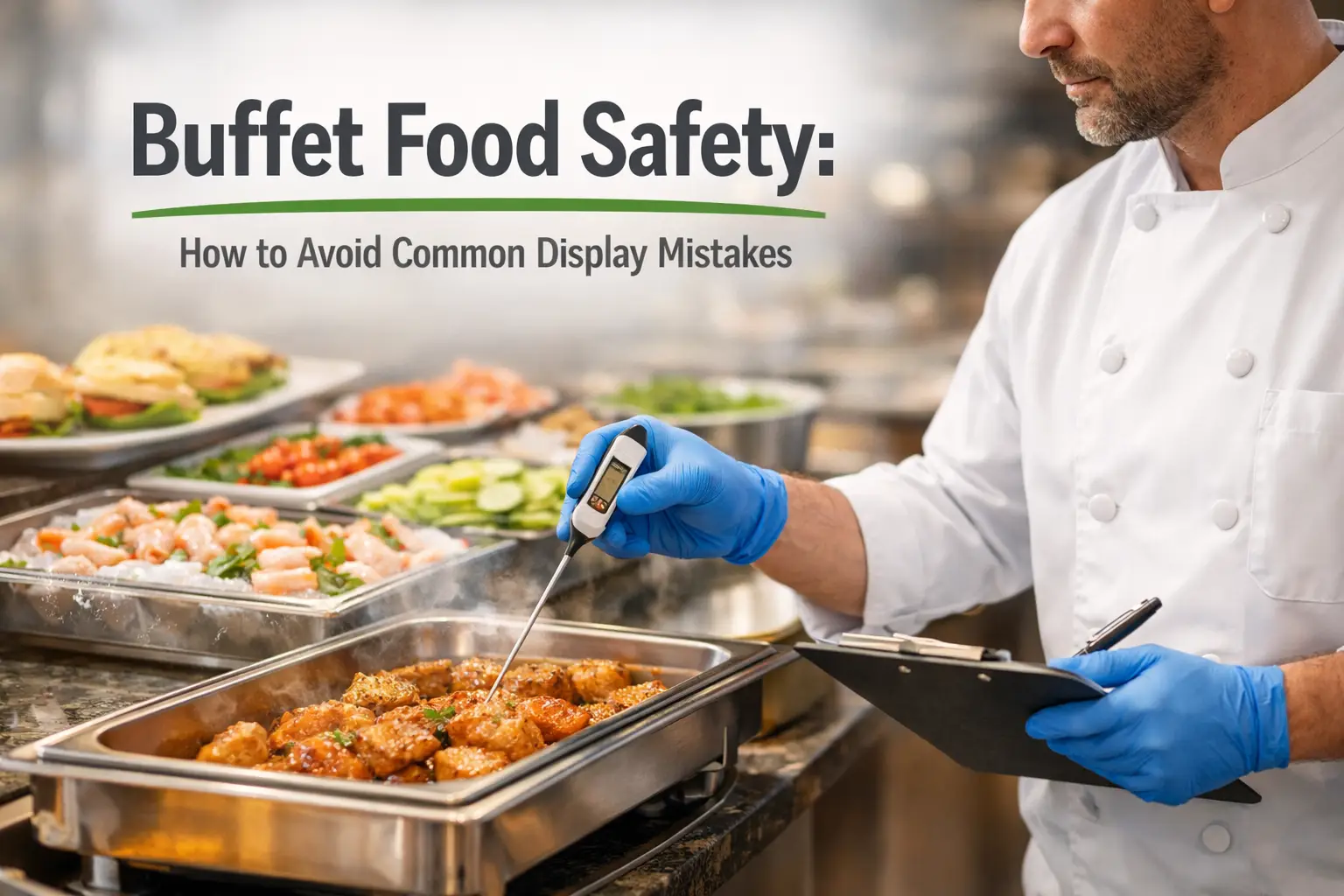
Buffet displays invite quick service, but they also invite temperature abuse, cross-contamination and lapses in monitoring. This article explains why display food is riskier than plated service, identifies hot-hold and cold-hold weak points, and calls out refill and topping-up mistakes that invite bacteria growth. You’ll find practical, record-friendly practices tied to real-world scenarios—from breakfast sausages to wedding buffets—and simple checks that support daily compliance and inspector confidence.
Why display food is higher risk than plated service
Key principle: displayed foods are more vulnerable to temperature shifts and cross-contact than plated portions, so monitoring and disciplined handling are essential.
Display setups expose ready-to-eat foods to more handling, more air exchange, and more time at ambient temperature. Each time a lid comes off, a scoop is used, or a tray is moved, the opportunity for contamination and temperature fluctuation increases. In plated service, portions are served to guests with less repeated exposure; in displays, the same dish may be touched, opened, and replenished repeatedly during service.
- Frequent opening and self-service access disrupts surface temperature.
- Visible surfaces and utensils can transfer microbes between items.
- Inadequate separation of raw and ready-to-eat foods increases cross-contamination risk.
Practical takeaway: design your display to minimize handling, segment raw from ready-to-eat, and keep lids or barriers in place when feasible.
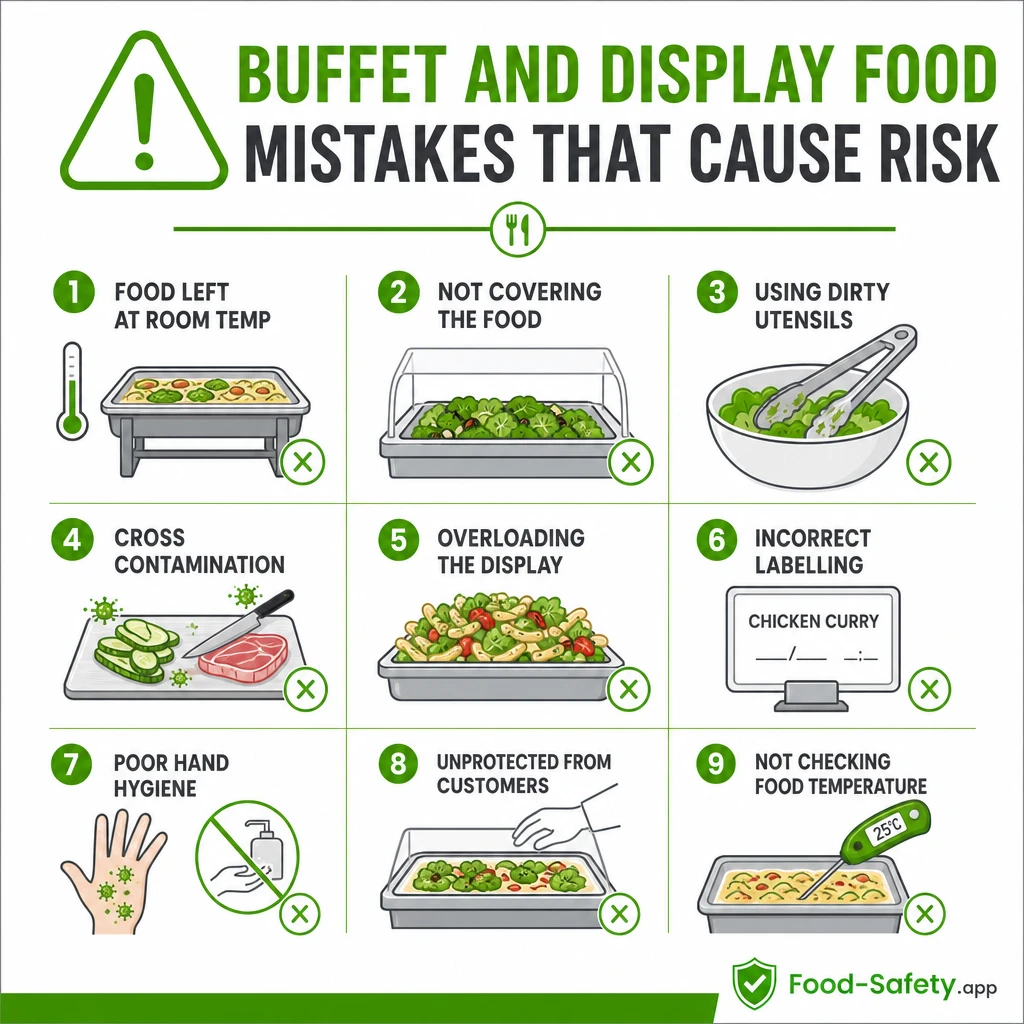
Hot hold failures and how to spot them
Remember: a single poorly heated batch can compromise a whole service cycle; act quickly to reheat and recook if in doubt.
Hot-held items should stay in the hot zone during service. Failures often show up as dips in temperature, improper lid use, or overfilled bain-maries that prevent even heating.
Common failure points:
- Food not kept at a safe hot holding temperature due to slow recovery after a busy rush.
- Lids left off or shields removed, speeding heat loss.
- Bains-marie overflows or is overfilled, leading to uneven heating and cold pockets.
- Uneven heating within large trays or slow-stirring of thick dishes.
How to spot issues:
- Check the core of the thickest piece with a probe before serving.
- Observe for signs of condensation draining from lids and cooling on the surface.
- If a dish remains visibly steaming on the surface but cools elsewhere, investigate the heat distribution and container load.
Remember: act quickly to reheat and recook if in doubt.
Quick check tip: reheating to safe uniform temperature should be done following local guidance and then returned to hot hold with fresh stirring and proper coverage.
When in doubt, split a thick dish into smaller portions to improve heat recovery and uniformity.
Cold hold weak points in display setups
Important reminder: cold-hold failures often look minor but can create substantial risk if not corrected promptly.
Cold-hold displays rely on reliable chilling and tight control of open service: small losses accumulate quickly when trays are shallow or the cabinet is overloaded.
Weak points to watch:
- Shallow trays that expose more surface area to warmer air, accelerating warming.
- Fridges overloaded or not airflow-friendly, causing uneven cooling.
- Salad bars and open cold displays that lose chill with repeated opening.
- Ice or coolant not replenished, allowing surface temperatures to drift upward.
- Frequent topping-up without rechecking the core temperature, which hides a warming trend.
Practical fixes:
- Use full or carefully staged trays to preserve chill and reduce air ingress.
- Do not overcrowd refrigerated sections; keep airflow clear.
- Maintain adequate ice or coolant in display reservoirs and refresh regularly.
- Close shields and lids when not actively serving to conserve cold.
Core principle: refrigerate items promptly after service, and avoid leaving cold foods in shallow, partially exposed states.
Refilling and topping up without creating risk
Practical rule: if you’re unsure about the safety of an item, set it aside, reheat or discard, and rely on the documented decision rather than appearance.
Refilling is a frequent source of risk in busy buffets. Mistakes include mixing fresh food with older batches, using the wrong utensil, and topping up without checking core temperature.
Best practices:
- Use separate utensils for new and old batches; label or designate zones to prevent cross-contact.
- Do not top up a display with food until the core temperature of the existing batch is verified and written in the log.
- Maintain clean separation between utensils for different items to reduce cross-contamination.
- Follow first-in, first-out (FIFO) principles; rotate stock and retire old trays.
- Refill after a quick review: confirm temperature, appearance, and aroma before adding to the display.
Clear action: document the topping-up decision and the next check time to ensure accountability.
Time and staff checks how to stay compliant
Visual recordkeeping matters: it demonstrates consistent control and supports any inspections or audits.
Time control is the backbone of safe display practice. Clear records help during inspections and day-to-day operations. Use simple, consistent logs to show who checked what, when, and what happened next.
Key elements for a display log:
- Item name or display location
- Core temperature or “not at safe temp” verdict
- Time started and time removed for service
- Corrective action taken (reheat, discard, return to hot or cold hold)
- Name or initials of the staff member completing the check
Sample compact log (illustrative only):
| Item | Core temp check | Time started | Time removed | Action | Checked by |
|---|---|---|---|---|---|
| Sausages | OK | 08:22 | 10:15 | Reheated to serving temp and returned to hot hold | J.S. |
| Scrambled eggs | Not OK | 08:24 | 08:49 | Replaced with fresh batch and kept on temp control | M.K. |
Practical guidance: calibrate thermometers regularly and document calibration dates; train staff to record each check consistently.
Bottom line: time-based decisions should be supported by timely, traceable records rather than memory.
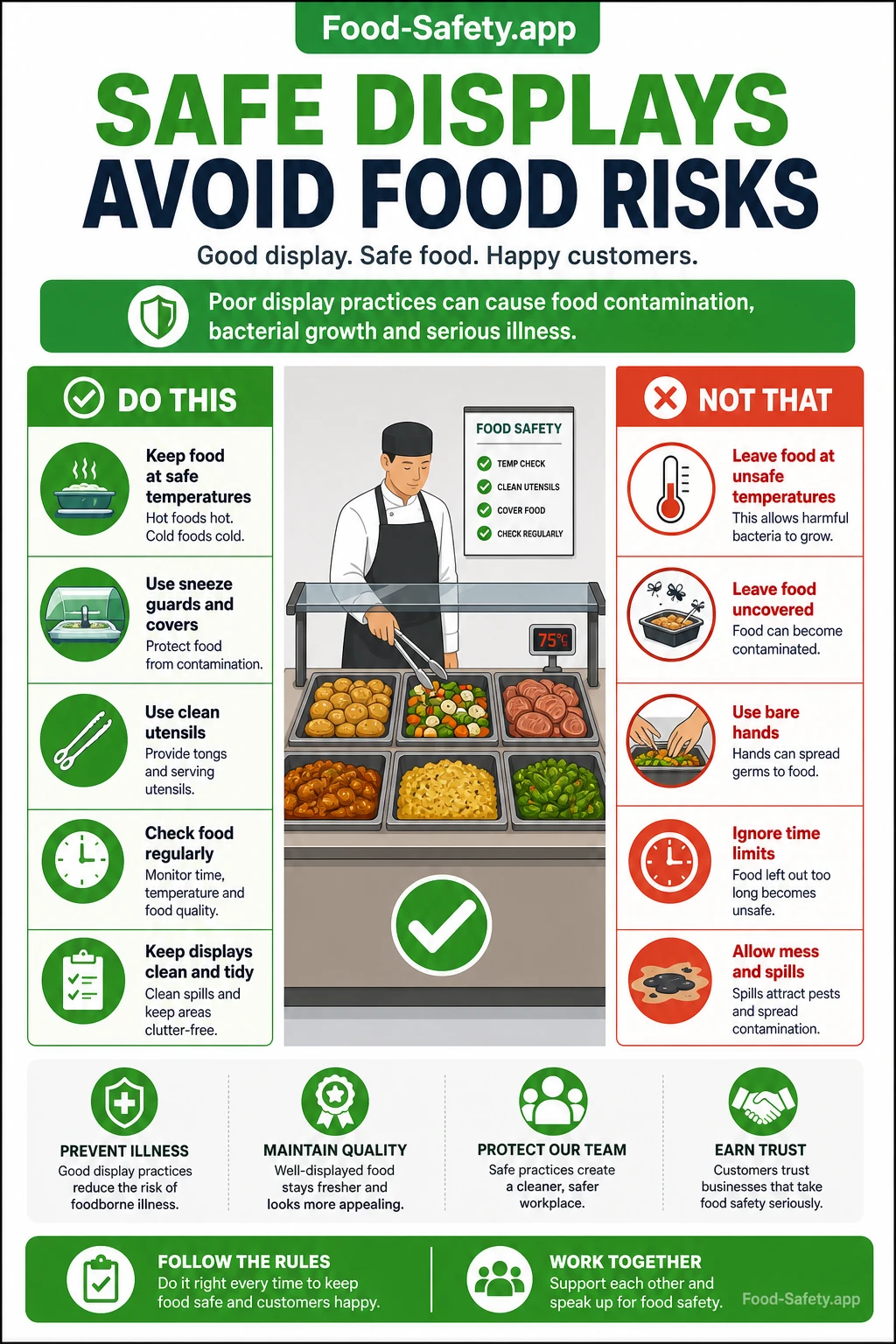
Practical scenarios and best-practice examples
- Breakfast buffet with sausages and scrambled eggs dropping below hot hold during a busy service. Practice: keep a higher lid profile on hot cabinets to reduce heat loss, monitor with frequent quick checks, and reheat in small, safe portions to regain uniform heat.
- Salad counter where ready-to-eat food warms up after repeated opening. Practice: keep cold displays fully loaded to minimize air flow, limit opening times, and ensure lids or shields are in place when not actively serving.
- Carvery or deli counter where a fresh tray is tipped into an older tray. Practice: discard or re-balance old portions, use separate utensils for old and new batches, and document the handover in the log.
- Wedding buffet where labels, times, and temperature checks are missed during a rush. Practice: pre-assign rotation and labeling roles, use quick-check sheets at each station, and attach visible time-stamps to display trays.
- Self-service display where customer handling creates extra contamination risk. Practice: minimize contact, provide hand sanitizer near the display, and enforce utensils-based serving with frequent sanitation.
Final takeaway: routine, visible checks and disciplined topping-up, labeling, and timing are what separate safe displays from risky ones.
Would you like a ready-to-adapt printable temperature log template or staff-check workbook to pairing with this article? You can adapt the concepts here into a local protocol that fits your venue’s equipment and regulatory expectations.