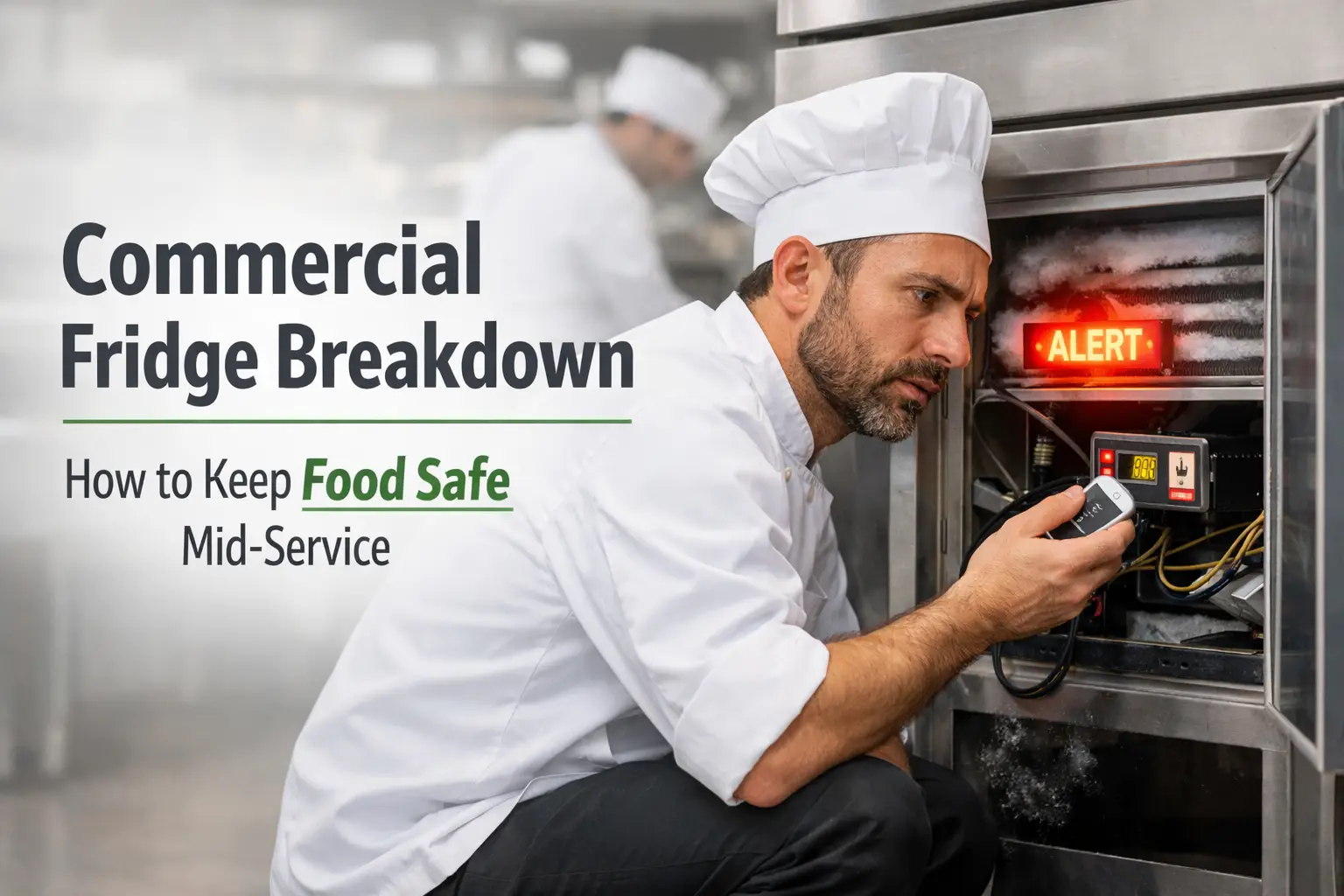
A fridge failure during service can trigger rapid temperature rises and threaten high‑risk foods. This guide helps catering teams act quickly to protect safety, reduce waste, and document actions for compliance. Learn immediate checks, how to decide whether to move or discard foods, how to keep service running, and how to log faults and follow‑ups.
Immediate checks when a fridge stops working
Important: Keep raw and ready‑to‑eat foods physically separated during transfer and handling, to minimise cross‑contamination risk.
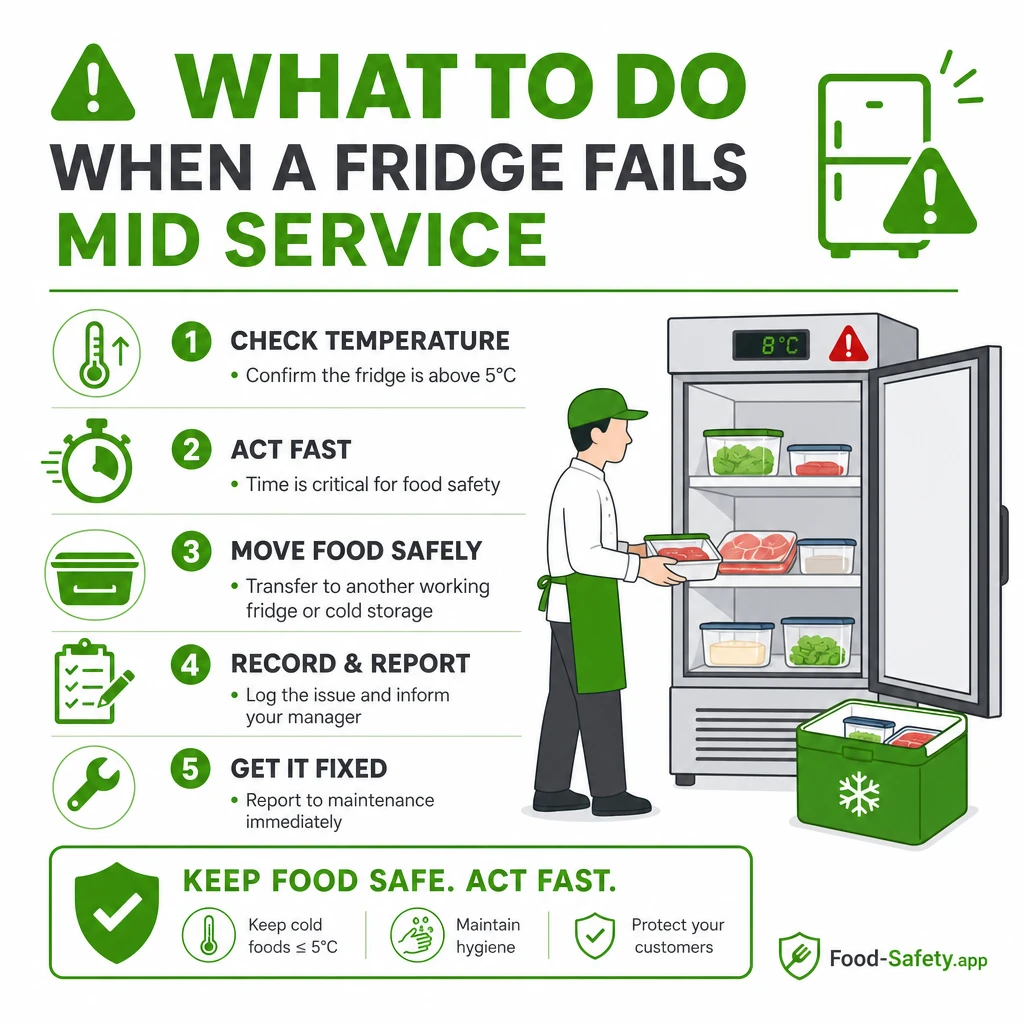
Act quickly to protect exposed food and keep service moving. Start with basic fault isolation, then protect high‑risk items.
- Verify power to the unit: mains switch, outlet, and any surge protectors. Check the breaker and any display alarms.
- Keep doors closed where possible to preserve cold temperature and reduce heat gain.
- If you have a working backup unit or a cold room, begin transferring high‑risk items there while you assess the primary unit.
- Note the time of outage and the initial internal temperatures where available.
- Tag items that must not be cross‑contacted with ready‑to‑eat foods and separate any questionable items promptly.
Prioritising highrisk foods and safe temperatures
Remember: High‑risk foods must be protected first; failures here drive the risk to patrons and compliance.
During a breakdown, safeguarding high‑risk foods is the highest priority. A structured approach helps prevent unsafe sale and reduces waste.
- High‑risk items include dairy products (milk, cream, soft cheeses), cooked meats, prepared salads, desserts with dairy or eggs, and any ready‑to‑eat items.
- Target temperatures are the practical standard used in many settings: aim for 5°C or cooler in refrigerated spaces. If a unit rises above that, treat the contents as potentially unsafe and act quickly.
- Actions to take immediately:
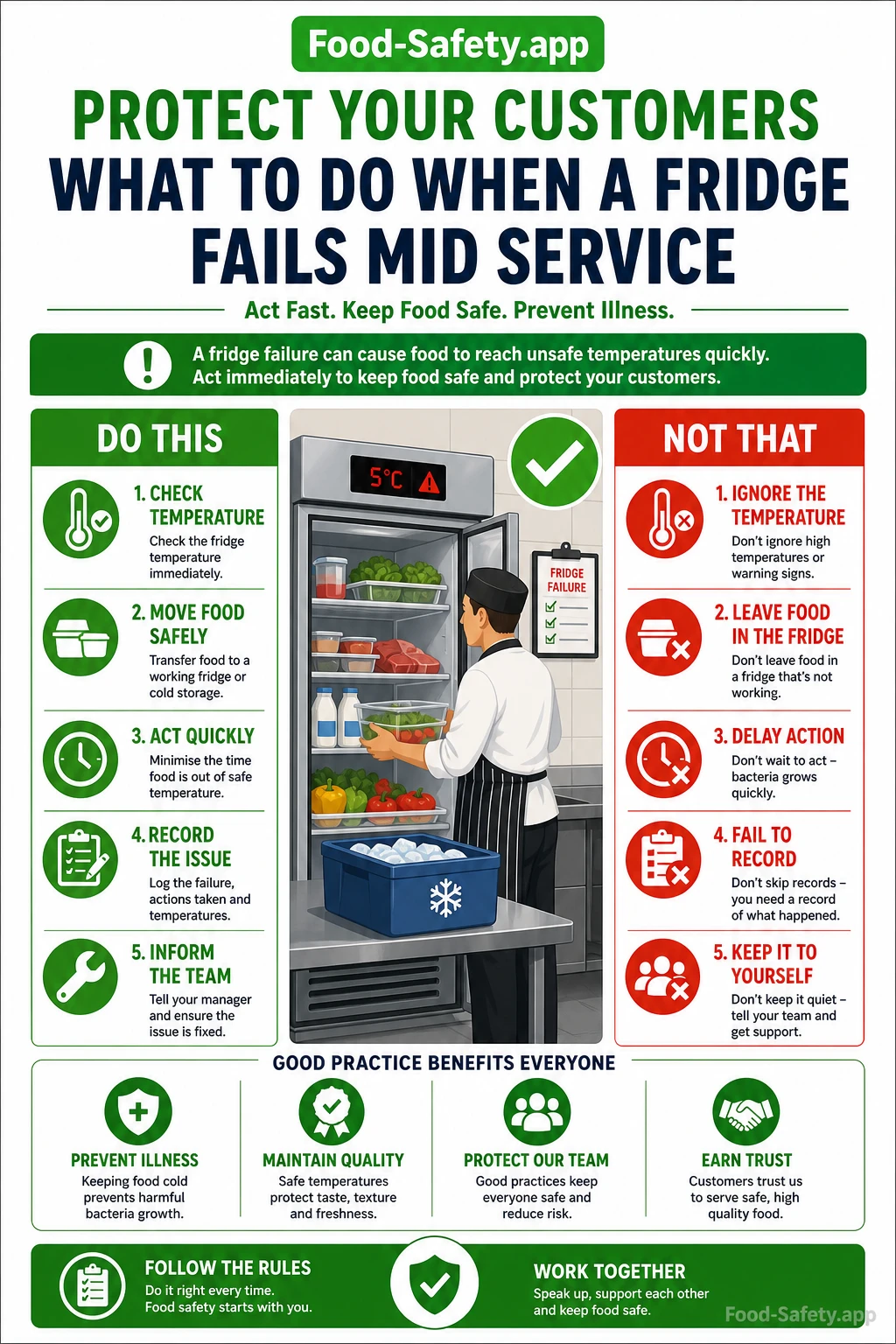
- Move high‑risk foods to a functioning fridge, cold room, or insulated backup cabinet if they can be kept at safe temperatures.
- Do not rely on visual cues alone to judge safety; temperatures drive decisions.
- Re‑check frequently as service continues and temperature conditions change.
Scenario: A prep fridge fails during lunch service. High‑risk fillings are moved to a working unit, and the team continues service with adjusted inventory.
Temperature recording and decision making
Important: Always record temperatures with a timestamp. This data supports decisions and compliance checks.
Timely, accurate temperature data supports fast decisions and helps during inspections. Record‑keeping matters as much as the actions taken.
- Use calibrated thermometers or built‑in digital probes; place them in the coldest part of each container when possible.
- Log the following for every affected item: product name, batch/label, time observed, temperature, location, and whether it was moved, discarded, or stored in backup.
- Note who performed the reading and who approved the subsequent action.
- If a backup unit stabilises, continue monitoring and document the new readings at regular intervals (e.g., every 30 minutes during the outage).
Rule of thumb: If food has been above a safe temperature for an extended period, assume it’s unsafe and follow discard procedures where required.
Scenario: A display fridge climbs above 5°C; ready‑to‑eat items are pulled and temp checks are logged before the items are re‑screened for sale.
Keeping service running communication and backups
Tip: Clear on‑shift communication is essential; designate a fridge‑safety point person to coordinate actions and keep logs updated.
Communication and a clear plan keep service safe when temps are unstable. Assign roles, align actions, and protect guests.
- Assign a lead on the shift to coordinate the fridge issue and ensure all actions are documented.
- Tell kitchen staff, front‑of‑house, and delivery teams what items have been moved or removed from sale, and where they have been relocated.
- Use backup equipment if possible (backup chilled cabinet or an additional cold room); label moved items with time and current storage location.
- Adjust service workflow to reduce door openings and maintain cold loads, e.g., pre‑portion items, stagger service windows, or switch to cold‑holding plates from the backup unit.
- Keep customers or supervisors informed as appropriate, especially if service delays occur.
Scenario: A display fridge rises above safe temperature during a busy service; the team removes all ready‑to‑eat items from sale, places them on a backup cabinet, and reroutes orders to maintain service.
When to discard and calling an engineer
Important: Early engineer call‑out minimizes downtime and reduces the risk of repeated faults if there’s an underlying issue.
Knowing when to discard and when to escalate to maintenance helps prevent unsafe sales and further downtime.
- If high‑risk foods have been stored above safe temperatures for too long, or if the unit cannot be returned to safe operation promptly, discard according to your food safety policy.
- Do not rely on “it’ll cool down later” as a justification to sell potentially unsafe items.
- Call an engineer early, especially if there are signs of compressor failure, refrigerant issues, door seal damage, or persistent temperature drift.
- Document every discard decision and engineer notification for the ongoing record.
Example: A freezer door is left ajar overnight, leading to partial thawing. Stock is checked, temperatures logged, and a plan is made for assessment and repair.
Note: If safe storage cannot be guaranteed, follow discard procedures and quarantine affected items until a formal decision is made.
Documentation, corrective actions and improvement
Important takeaway: A well‑kept corrective actions log demonstrates control during inspections and informs future preventive maintenance.
Practical note: Include a short post‑incident debrief with staff to identify any process gaps and update the fridge failure log accordingly.
Closing thought: Reviewing the incident, not just reacting to it, is how a team improves safety and reliability.
Final reminder: Treat every fault as a chance to tighten procedures, not just to patch the current outage.