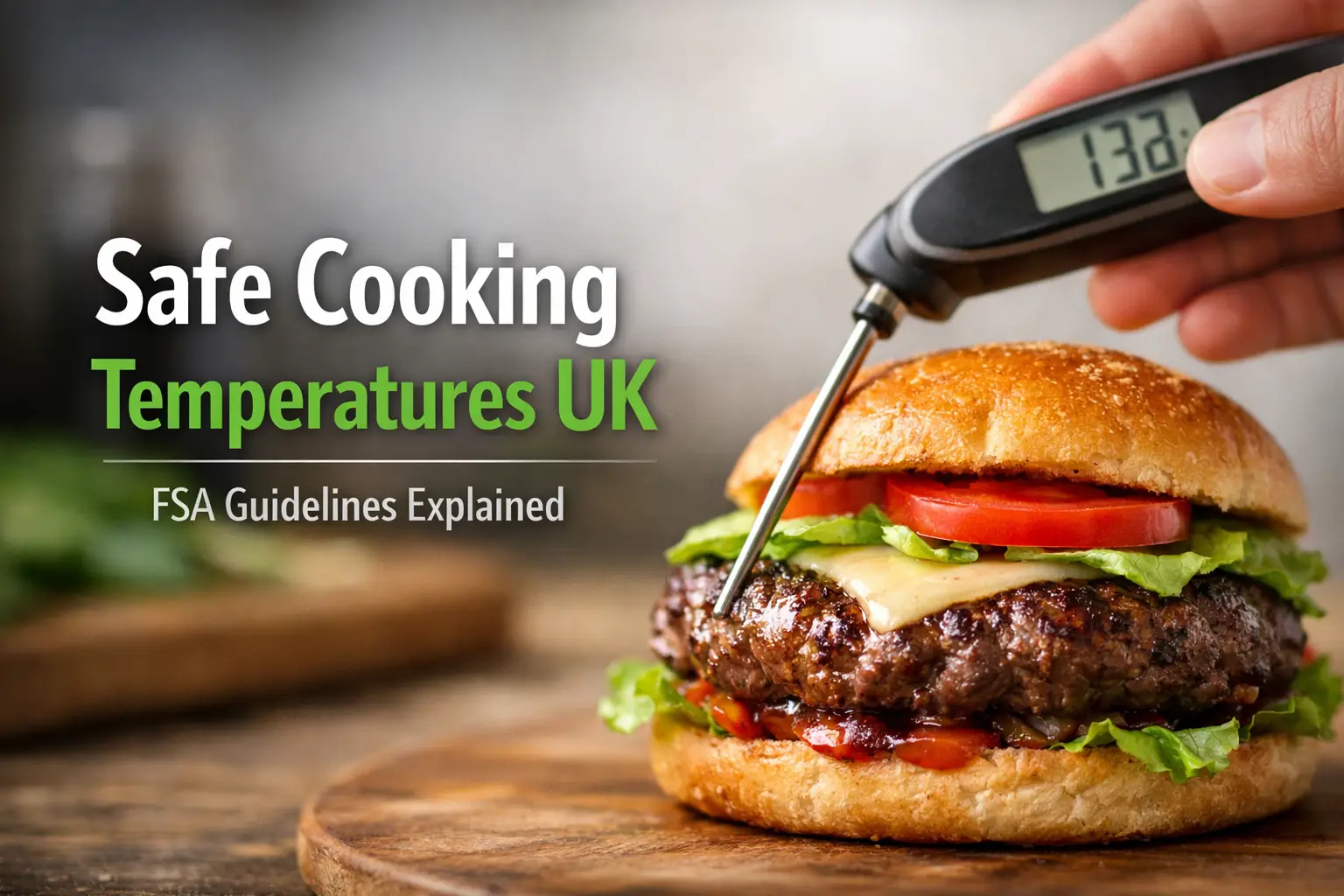
Core temperature checks provide a reliable way to confirm food is cooked safely, especially in busy kitchens. Relying on colour or cut surfaces can miss centre undercooking. This guide explains what core temperature means, practical targets for common items like chicken burgers, how to probe correctly, and how to document checks for audits and inspections.
What core temperature means and why it matters
Important: A reliable thermometer and proper technique are the backbone of safe cooking.
Core temperature is the heat reading at the very centre of the food. It reflects doneness inside the item, not just the outside. Visual cues like browning or juiciness can mislead, especially with thick cuts, stuffed items or bulk batches. By relying on core temperature, teams reduce the risk of undercooked poultry, minced meat dishes and reheated meals.
Measuring core temperature consistently supports HACCP objectives, helps with hot holding decisions, and provides a traceable record for inspections. Regular calibration of probes and clean preparation of cooking equipment are essential foundations.
Probe technique matters
Insert the probe into the thickest part, perpendicular to the surface, so the sensing area reaches the center. Avoid bones, fat pockets, and skin. Do not assume a thin edge reflects the centre. Allow readings to stabilise before recording.
Safe cooking targets for common catering items
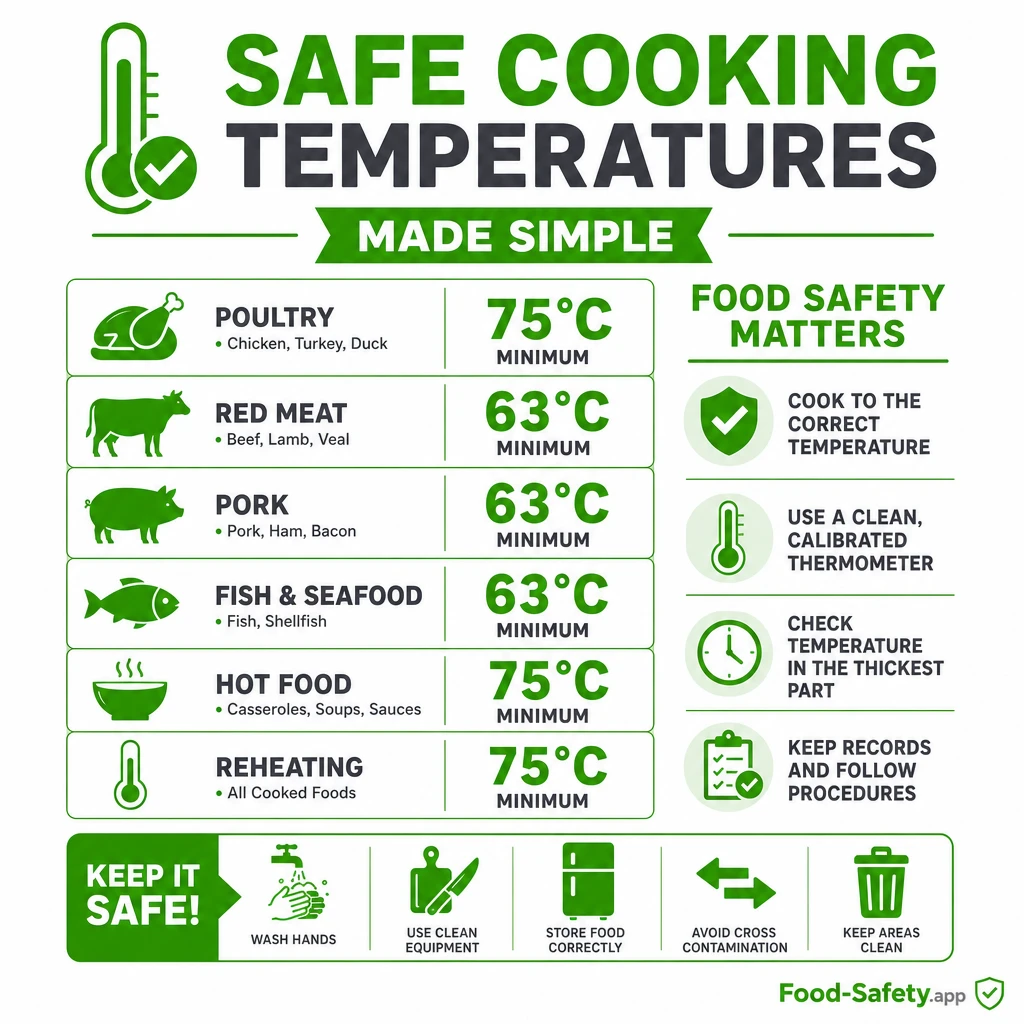
Restaurants commonly use 75°C for poultry and 70°C for most minced meat products as a baseline. Always tailor targets to your menu and audits.
Setting practical core temperature targets helps teams standardise service. The targets below reflect common industry practice in UK catering and are meant as guidance to be aligned with your HACCP plan and local authority expectations.
| Item | Target core temperature | Notes |
|---|---|---|
| Poultry (e.g. chicken, turkey) | 75°C | Probe the thickest part; ensure the centre reads ≥75°C |
| Burgers and minced meat dishes | 70°C | Ground meat requires thorough cooking; check the centre |
| Sausages (pork, poultry or mixed) | 70–75°C | Ensure even heat; verify the centre is within this range |
| Reheated meals | 75°C | Reheat quickly and ensure the core reaches target throughout |
| Stuffed items (e.g. stuffed poultry) | Centre of filling ≥75°C | Check both meat and filling where applicable |
Practical tips
- When cooking multiple items in a batch, check the thickest piece in the batch rather than a sample from the thinnest piece.
- If you’re unsure about a centre reading, test from another portion or stage, but do not assume doneness from similar-looking items.
- Recalibrate thermometers regularly to avoid drift, especially in hot service.
Probing the thickest part and avoiding false readings
A pulled centre reading from a thick piece is not reliable if the probe touched bone or was placed only on the surface.
Correct probe placement is key to accurate readings. Here’s how to avoid common pitfalls:
- Identify the thickest portion before you start cooking; the centre of that portion is the target point.
- Insert the probe straight into the centre, avoiding contact with bones or gristle.
- Leave the thermometer in place for long enough for the reading to stabilise, typically a few seconds depending on the model.
- If the reading caves or flickers, pause, reinsert, or test a second piece to confirm consistency.
- Clean the probe between checks to prevent cross-contamination and to prevent readings from one item affecting another.
Common false readings to avoid
- Probing beside a bone or dense fat reduces accuracy.
- Reading without allowing stabilisation can give a falsely low or high value.
- Using an uncalibrated thermometer introduces systematic error.
Foods most often undercooked in busy kitchens
In busy kitchens, the temptation to rely on sensory cues rises; core temperature checks counteract that risk.
High-volume service creates pressure to speed up checks, but undercooking tends to crop up in particular items. Being aware helps teams prioritise accurate checks.
- Poultry: chicken burgers or chicken fillets in bulk often stay undercooled in the centre during rushed service.
- Burgers and minced meat dishes: surface browning can hide a centre that hasn’t reached target.
- Sausages: thick sausages can have cold spots inside when not cooked evenly.
- Reheated meals: reheating may heat the outer portions faster than the core, especially in large batches.
- Stuffed items: filling portions may reach the centre later than the surrounding meat.
Recording checks for traceability and audits
Well-maintained records make it easy to review performance after a rush and during inspections.
Documenting core temperature checks creates a transparent trail for audits and internal reviews.
Recommended data to capture
- Date and time of check
- Food item and batch/quantity
- Target core temperature
- Actual core temperature
- Staff initials or identifier
- Any corrective action taken or notes on readings
Simple example record formats
- Digital log template: date, time, item, batch, target temp, actual temp, initials, action
- Paper record: same fields in a neat grid that fits your kitchen workflow
Tips to improve records
- Use automatic timestamps where available to reduce typing and errors.
- Keep records in a structured format that can be exported for audits or management reviews.
- Regularly review recent records at shift handovers to confirm standards were followed.
Structured records are not just for compliance; they’re a valuable tool to drive continuous improvement in kitchen practice.
Final notes
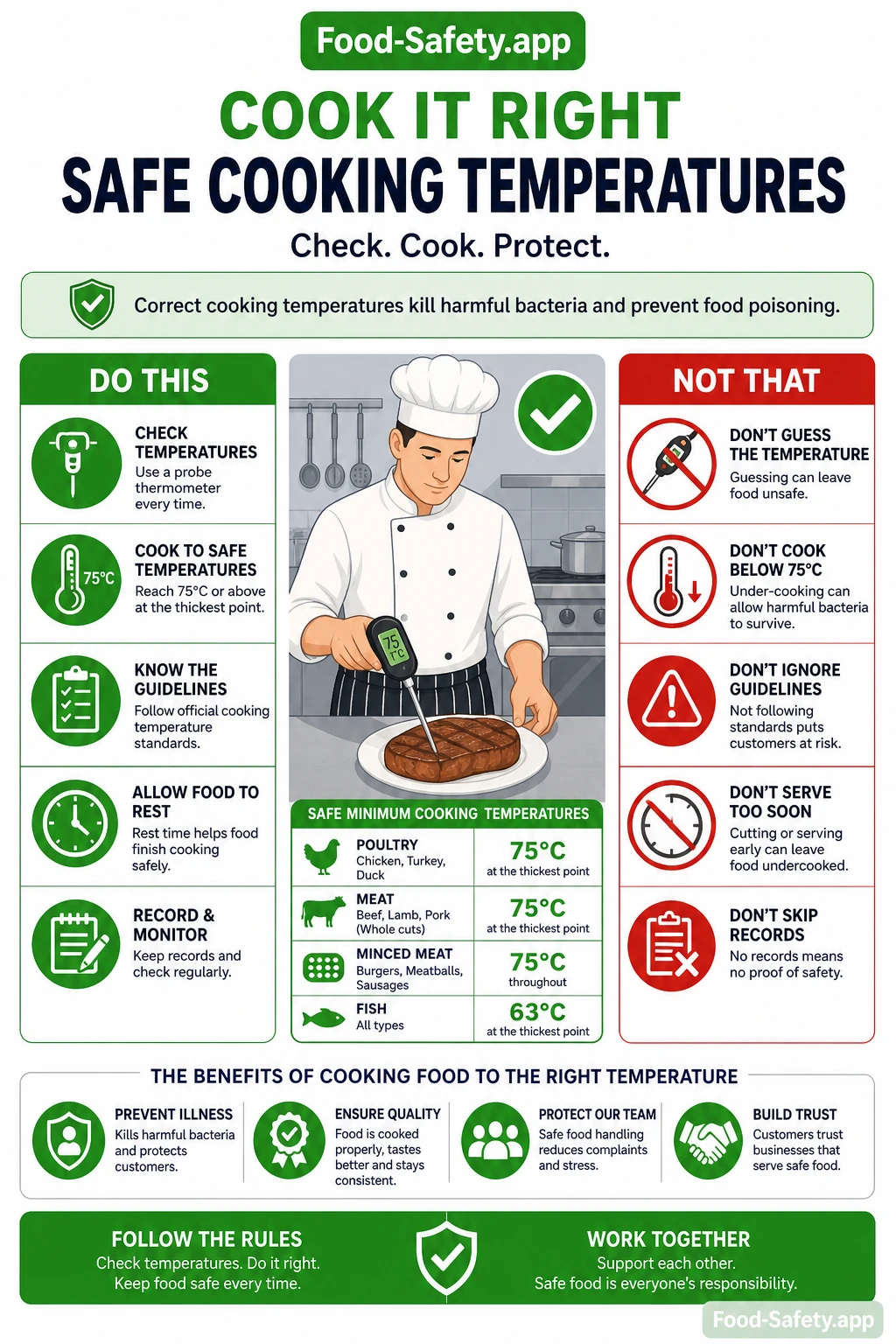
Core temperature checks are a practical, repeatable control that helps protect customers and support confident audits. By understanding what core temperature means, applying consistent probing techniques, following sensible targets, and maintaining clear records, catering teams can reinforce food safety as part of every service.
Building a culture of precise checks, clean equipment, and complete records reduces risk and increases trust with customers and inspectors alike.
If you’d like to integrate these checks with your existing systems, consider aligning them with broader temperature control tasks in your operational software, including reheating, hot holding and corrective actions when targets are missed.