Small teams in UK hospitality need fast, practical food safety induction that doesn’t slow service. This guide focuses on core basics new starters must grasp on day one, with short 10–15 minute topics, quick checks, and simple ways to record progress. You’ll learn how to train during service, explain rules in plain terms for kitchen and front‑of‑house, and keep records that stand up to inspection.
What every new starter should know on day one
On day one, the most important habits are clean hands, clean surfaces and accurate illness reporting.
On their first shift, a new starter needs a practical grasp of six areas that matter most in daily operations: handwashing and personal hygiene; illness reporting and exclusion; preventing cross‑contamination; basic temperature control concepts; cleaning and sanitising practices; and allergen awareness and how to communicate risks to the kitchen and front‑of‑house.
- Handwashing and personal hygiene: demonstrate proper handwashing practice, keep nails short, and wear clean protective clothing as appropriate.
- Illness reporting: ensure staff know who to tell if they’re sick or have symptoms that could put customers at risk, and understand when to stay away from work.
- Cross‑contamination: reinforce clean work habits, colour‑coded boards, and separate utensils for raw and ready‑to‑eat foods.
- Temperature control concepts: explain why hot foods, cold foods and storage conditions matter, and who checks temperatures during service.
- Cleaning and sanitising: distinguish cleaning (removing dirt) from sanitising (reducing microorganisms) and perform quick, visible checks at the end of every shift.
- Allergen awareness: stress clear communication with the kitchen about allergen ingredients and how service staff confirm customer needs.
Short addition: give each starter a compact, written checklist they can keep in their pocket or apron, covering these six areas with one‑line prompts. A quick sign‑off from a supervisor after the shift offers visible confirmation of understanding.
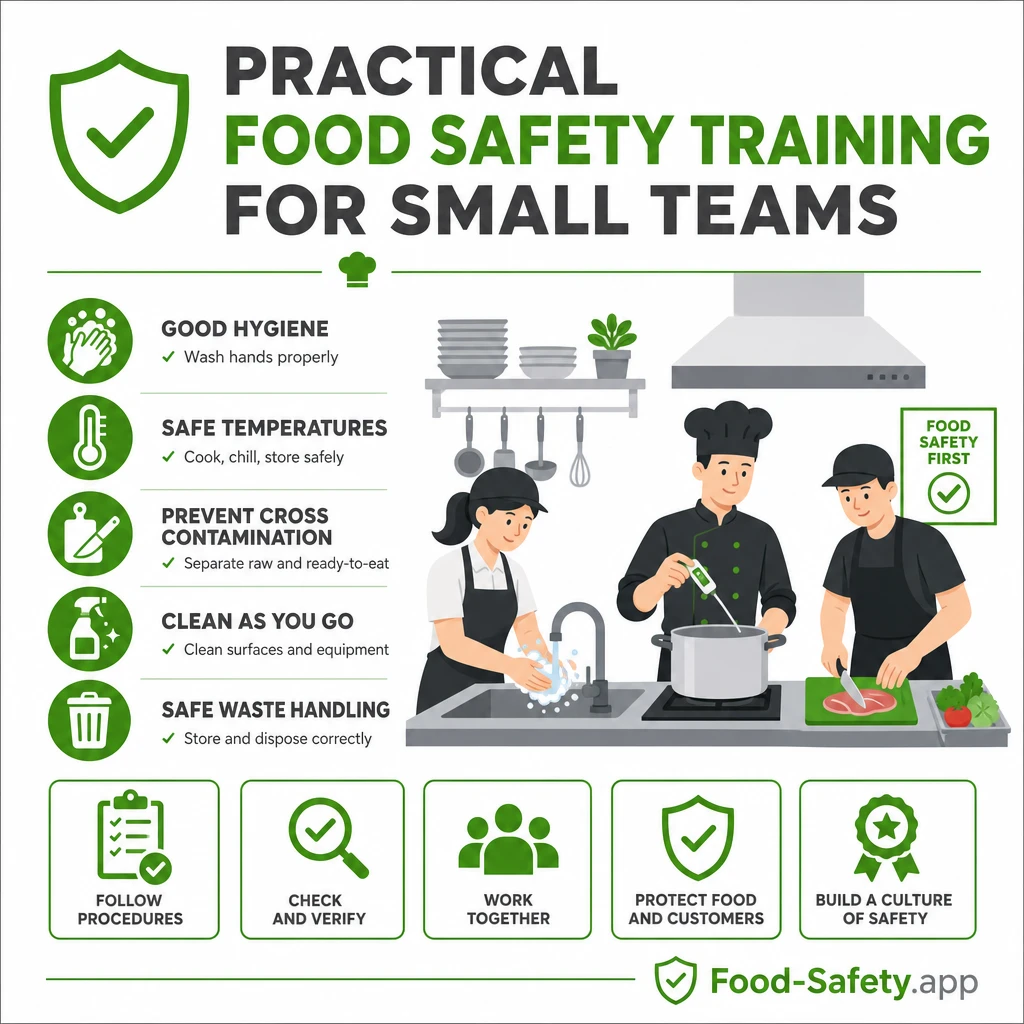
The best five-minute training topics for busy kitchens
- Handwashing technique: show the steps and have the trainee perform a quick practice.
- Personal hygiene and PPE basics: cap or hair restraint, clean attire, and avoiding jewellery where relevant.
- Cross‑contamination controls: demonstrate board colour coding and utensil separation.
- Allergen awareness in orders: practice confirming allergy details with a guest and relaying them to the kitchen.
- Temperature control reminders: describe hot holding and cold storage checks during prep and service.
- Quick recap of cleaning and sanitising: perform a fast wipe test on a surface to illustrate active cleaning.
Short, practical reminders work best in a busy kitchen; avoid long slides.
These topics should be delivered as micro‑sessions at the start of a shift or during handovers, with a simple note-taking sheet that staff can sign off on immediately.
How to spot whether training has actually worked
Training is only helpful if it translates into safer, more consistent practice. Use fast, observable checks and brief questioning to confirm understanding.
- Observe hands‑on demonstrations: can the trainee wash hands, wear PPE correctly, and handle raw and cooked foods without cross‑contamination?
- Ask quick questions: what should you do if a fridge door is left ajar? how do you verify a dish is allergen‑safe?
- Check task sign‑offs: has the trainee completed a mini‑checklist, with a supervisor sign‑off, on a real task?
- Look for daily habits: does the employee routinely separate boards, sanitise surfaces after prep, and report hazards promptly?
- Use a short end‑of‑shift debrief: what did you learn today, and what would you do differently tomorrow?
If you can’t observe it, you can’t verify it. Keep checks simple and repeatable.
Document the results shortly after each shift, noting strengths and any gaps, and tailor the next micro‑session to address those gaps.
Keeping records that stand up to inspection
Clear records help your business show you take safety seriously, even under pressure. Keep concise induction notes and signed confirmations that cover both knowledge and practice.
- Induction records: date, trainee name, role, topics covered, and assessor name.
- Signed task or competency checklists: confirm mastery of key tasks (handwashing, cross‑contamination controls, allergen handling, temperature monitoring).
- Supervisor notes on supervision and refresher training: dates and brief observations.
- Records of improvements and remedial coaching: what was done and by whom.
- A simple, searchable storage method: either a secure physical binder or a digital system that’s accessible to supervisors during inspections.
Clear, legible records backed by signatures show you’ve checked competence.
Keep records up to date and review them periodically so they remain accurate as your team grows or menus change.
Training small teams without slowing service
Small teams can train efficiently without compromising service by embedding micro‑learning into daily routines and using practical, collaborative approaches.
- Plan micro‑sessions into handovers and prep: a two‑minute refresher on cooling or reheating during prep, for example.
- Buddying and shadowing: pair a new starter with an experienced team member for the first shifts.
- Use plain language and visual cues: avoid jargon; use quick posters or fast demonstrations in plain English.
- Focus on the highest‑risk tasks: prioritise critical points like cooling, storage order, and allergen communication.
- Keep the system light but effective: short observations, small sign‑offs, and a basic digital record to track progress.
- Encourage reporting of hazards: a trainee who spots a dirty cloth or unsafe storage should report it immediately.
The safest procedure is the one you can follow consistently during a busy service.
A good practice is to allocate a dedicated buddy to new starters during their first week, with short, daily checks that feel like support rather than extra workload.
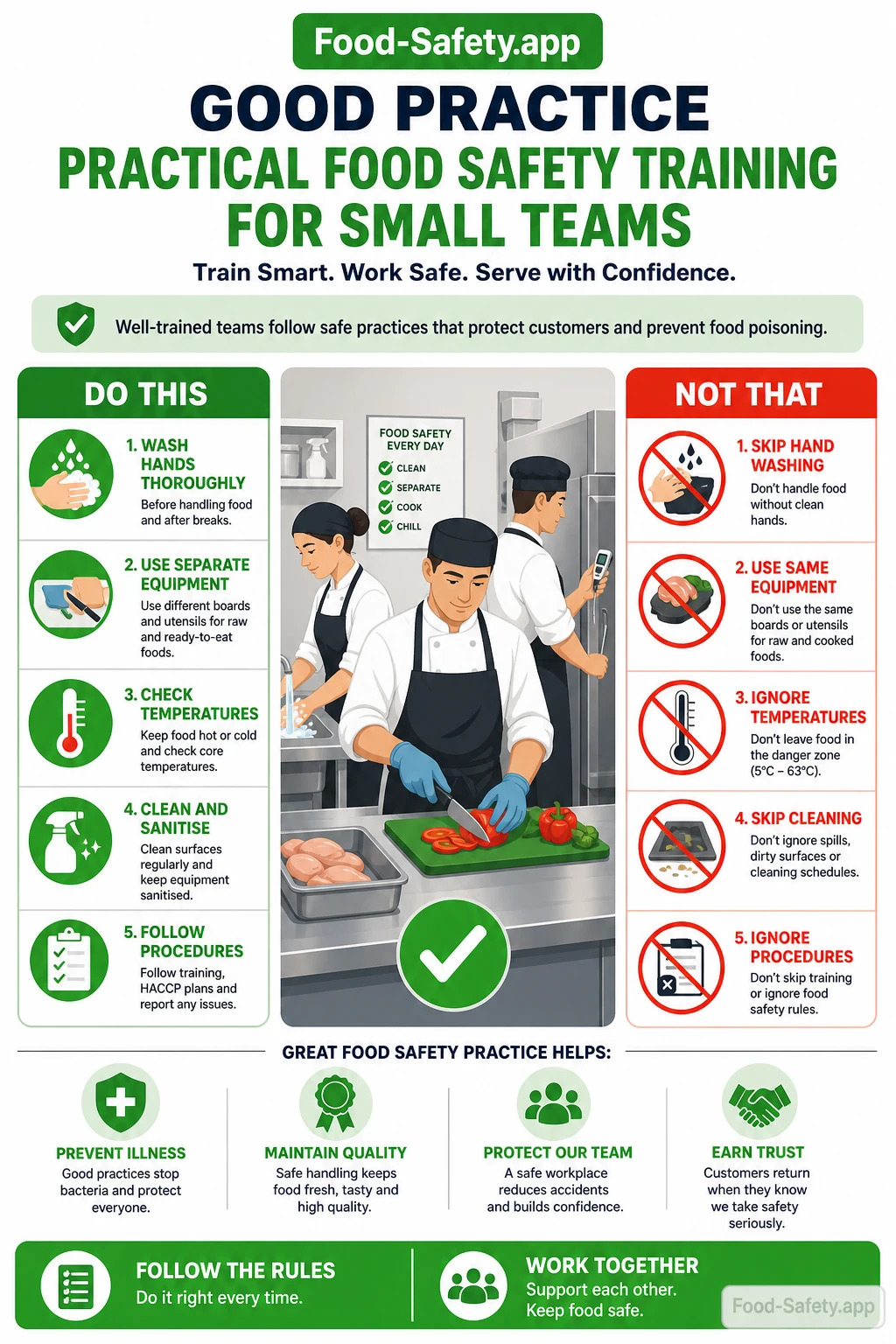
Practical examples and scenarios
Commis chef on a first shift: handwashing, probe use and fridge checks
A commis chef is shown the correct handwashing steps, then practices using a thermometer probe on a cooked item and verifies fridge temperatures with a supervisor. They sign off once confident in basic checks and reporting any anomalies.
Front‑of‑house allergen orders: confirming details with the kitchen
A front‑of‑house team member takes an allergen order, repeats the details back to the guest, and communicates clearly with the kitchen team. The trainee uses a simple checklist to confirm every allergen is understood and acted on.
Supervisor refresher during prep: cooling and reheating
During prep, a supervisor gives a two‑minute refresher on cooling practices and safe reheating. The trainee demonstrates the steps on a sample dish and completes a brief sign‑off sheet.
Spotting hazards and reporting immediately
A new starter notices a dirty cloth and unsafe storage on the pass. They stop and report it to a supervisor, who records the incident and outlines the corrective action to be taken.
End‑of‑shift checks: confirming understanding
At the end of a shift, the trainee is asked to recap the key tasks covered that day and demonstrate a final quick check of the area. The supervisor signs off and notes any small follow‑ups.
If you’re new to managing training in a small team, these scenarios can be rotated weekly, with a simple one‑page checklist to track what each person has practised and understood.