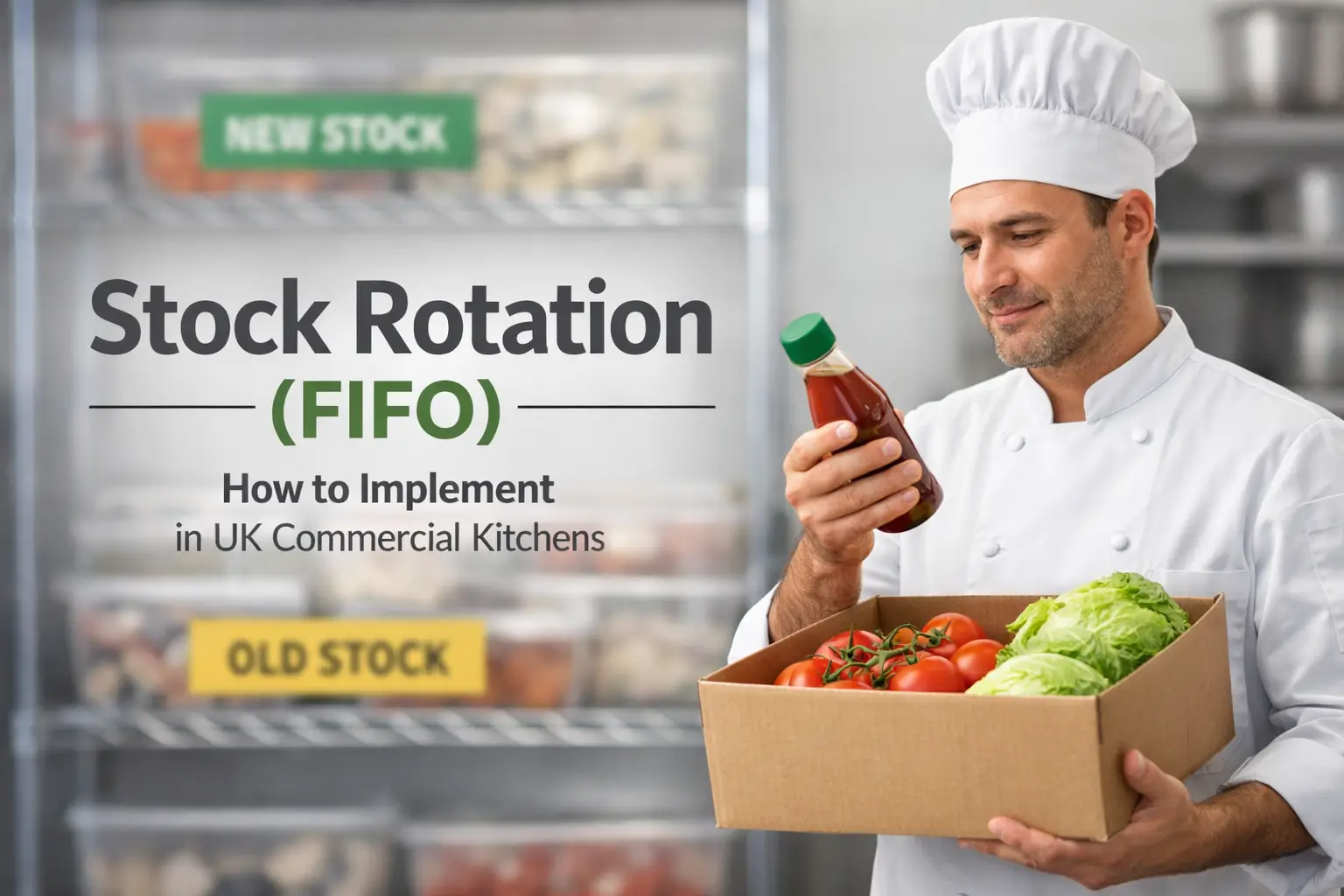
FIFO keeps stock moving in the right direction, cutting waste, saving money and reducing safety risks. This guide shows how to apply first in, first out across dry goods, chilled items and opened packs, with simple dating, labelling and fridge checks that work in busy kitchens. It also includes practical scenarios to help you prep for EHO inspections with a straightforward system.
What FIFO means in practice
FIFO is the backbone of safe, efficient stock management. Use the oldest stock first to prevent waste and limit risk.
FIFO is the practical rule that the oldest stock is used first. In dry goods, place older products at the front of shelves; in chilled items keep the earliest expiry items within easy reach; for prepared foods and opened packs, label with a date and rotate to the front. A simple, visible system stops “last in” from being used before older stock.
To embed FIFO, train staff to check dates at delivery, during prep and at service. Use a dedicated rotation cue, like a front-to-back approach on shelves and a clear expiry-based order on the packing line. Regular quick checks during opening and closing help keep the rule automatic rather than optional.
A clear rotation plan reduces waste and makes daily checks faster.
Practical scenario: during a busy lunch service, a prep fridge front shelf holds opened sauces and cooked proteins. Staff check expiry daily, rotate items so the oldest date sits at the front, and move any item nearing discard to the top of the stack for quick access.
Use-by vs best-before: safety matters for high-risk foods
Use-by dates indicate safety; do not rely on best-before for perishable items.
Use-by dates indicate safety and are critical for high risk items such as dairy, meat, prepared salads and ready-to-eat foods. Best-before dates relate to quality rather than safety and may not be reliable for perishable items once opened. Treat high-risk foods by use-by and practice strict discard rules when the date has passed, even if the product looks and smells fine.
For low-risk items, best-before can guide quality but should not replace sound rotation. Always separate opened items from unopened stock and maintain a visible discard window for items once a seal is broken or a container is opened.
When in doubt, err on the side of caution and rotate out-of-date items promptly.
Date labelling across delivery prep and opening
Label everything, every time, and keep labels legible and durable.
From delivery to prep and opening, consistent date labelling keeps FIFO alive. On delivery, attach a label with the product name, the arrival date and a discard window if applicable. During prep, mark the container with the prep date and the earliest use date. For opened packs, write the opening date and a discard date if the item has a limited shelf life after opening. Cooked and cooled items should be labelled with the cooling date/time and a discard date if not used promptly.
- Use a simple, legible label that survives the kitchen environment.
- Keep labels with the container or packaging so they aren’t mislaid.
- When decanting, relabel every transfer to maintain traceability.
Practical scenario: during a busy lunch service, a prep fridge front shelf holds opened sauces and cooked proteins. Staff check expiry daily, rotate items so the oldest date sits at the front, and move any item nearing discard to the top of the stack for quick access.
A reliable label system helps staff at all shifts follow FIFO without delay.
Chilled storage checks for safety and organisation
Keep raw and ready-to-eat separate; use dedicated shelves and colour-coded containers.
Chilled storage is where FIFO fails most if checks are inconsistent. Aim for a practical target fridge temperature that keeps most items stable. Keep raw foods separate from ready-to-eat items, and place high-risk foods in clearly segregated zones or separate shelves to prevent cross-contamination. Organise by type and by rotation date, not by supplier only; ensure shelves have clear divisions and dedicated containers for each category.
- Regularly verify fridge temperature and log it.
- Use clearly marked zones for raw, ready-to-eat and high-risk items.
- Keep older stock at the front and newer stock behind, or on a separate rear rail.
- Minimise the time products spend in the temperature danger zone by planning more frequent checks.
Keep raw and ready-to-eat separate; use dedicated shelves and colour-coded containers.
In busy service, a quick 2-minute fridge check at opening time and a 2-minute check at closing can catch misplacements before they become waste or risk.
Labelling essentials and managing decanted ingredients
A simple label with product name, prep date, discard date and initials helps traceability.
Good labelling goes beyond the basic product name. Essential labelling fields include prep date, discard date, allergen notes and initials of the person responsible. For decanted ingredients—sauces, stocks, mashed items—label the container with content, date opened and a discard date if applicable. Where possible keep original packaging and a batch code log for traceability.
- Label on delivery with product name and date.
- Label prep containers with prep date and earliest use date.
- For opened or decanted items, include opening date and discard date.
- Include allergen information to help staff and customers.
Practical example: opened dairy is transferred to a clean labelled container with today’s date and a discard date set for the earliest recommended use-by after opening. A separate sauce bottle is labelled with content and opened date so the team can rotate it correctly.
Common mistakes and practical improvements in a busy kitchen
The safest procedure is the one you can follow consistently during busy service.
Common errors in fast-paced kitchens include failing to date deliveries, stacking older items behind newer ones, and treating best-before as a safety limit. Train staff to check items on arrival, prep and opening, and to record every step in a simple log. Link stock rotation to opening and closing checks, cleaning routines and corrective actions. Clear, timestamped records make it easier to demonstrate controls during inspections and audits.
- Don’t rely on memory; write it down and date it.
- Keep storage organised into raw, high-risk and ready-to-eat zones.
- Use a straightforward label system that staff can follow every shift.
- Regularly audit fridge checks and act swiftly on anomalies.
- Use temperature monitoring and full history views to evidence safe storage and rotation.
The safest procedure is the one you can follow consistently during busy service.
Regular practice with these steps strengthens safety, reduces waste and helps your kitchen run smoothly under pressure. By making date coding, labelling and fridge organisation a habit, you’ll be better prepared for inspections and everyday service alike.